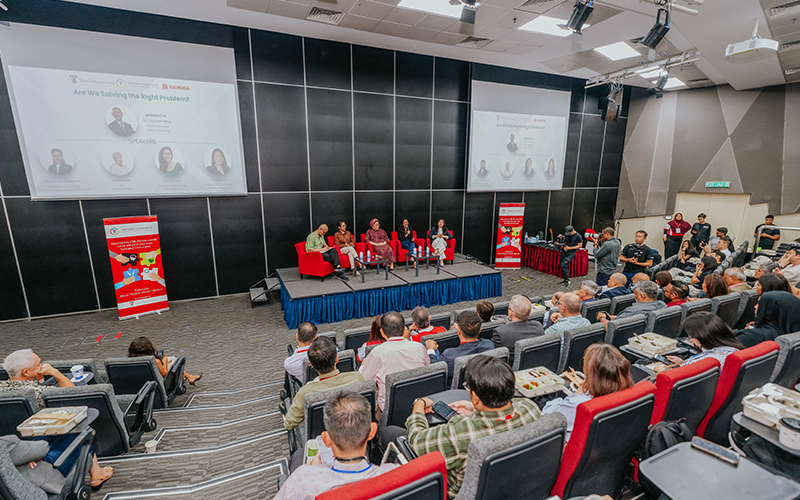
Ong Jee Lian: Designing for Outcomes, Not for Branding
Ong Jee Lian, Group Chief Sustainability & Communications Officer at Gamuda, drew a sharp distinction between developments that are genuinely designed for long-term sustainability and those that adopt sustainability features primarily for branding purposes. Truly sustainable decisions, she argued, are built on systems thinking, lifecycle considerations, and measurable outcomes from the outset. Sustainability should be evident in how decisions are made, not only in how projects are eventually presented.
Bea Camacho: Making ESG Information Decision-Useful
Bea Camacho, Director for SEA at IDEO, challenged the room to think about what sustainability data is actually for. ESG information becomes meaningful, she argued, when it informs capital allocation, investment priorities, risk assessments, and strategic planning. Reporting is a means to an end, valuable only insofar as it provides evidence that supports better decisions. For ESG to influence real investment and risk decisions, sustainability data must be credible, decision-useful, and integrated into governance processes from the start.
Datin Sunita Rajakumar: Accountability Cannot Be Delegated
Datin Sunita Rajakumar, Founder, Non-Independent Director and Council Member of Climate Governance Malaysia, centred her provocation on a warning against lofty goals that become a form of greenwashing in practice. Leadership accountability for sustainability, she stressed, cannot be delegated. Boards and senior leaders must actively oversee ESG priorities, ask difficult questions, challenge assumptions, and ensure sustainability is embedded in strategic decision-making. Culture follows leadership behaviour. Meaningful outcomes depend on leaders demonstrating commitment through action, not endorsement alone.
Anita Ahmad: Beyond Compliance, Toward Impact
Anita Ahmad, CEO of Yayasan MySDG, highlighted that institutions contribute most meaningfully to national sustainability goals when they move beyond compliance and public commitments into the territory of measurable impact. That means using education, research, partnerships, and institutional influence to develop future leaders, generate solutions to societal challenges, and contribute evidence-based practices that advance Malaysia's sustainability priorities.
A Tension That Remains
Across the four perspectives, one area of strong agreement emerged: sustainability must move beyond reporting and become embedded within decision-making, governance, and everyday practice. But the most significant unresolved tension concerned the pace of change. While there was broad consensus on what needs to be done, questions remain about how quickly institutions, businesses, and society can transform existing systems while balancing financial realities, operational constraints, and stakeholder expectations.