Degree Deep Dive: Inside An Electrical and Electronic Engineering Degree

{{ vm.tagsGroup }}

10 Min Read

AP Ir Dr Pang Wai Leong (Academic Contributor), The Taylor's Team (Editor)

IN THIS ARTICLE

Electric vehicles (EVs) from companies such as BYD, Tesla, and Zeekr are increasingly appearing on the streets of Kuala Lumpur. Solar panels are becoming a more common sight on rooftops across Malaysia as households and businesses explore renewable energy. Data centres backed by global technology giants such as Microsoft, Google, and Amazon Web Services are expanding across Southeast Asia to support the region’s rapidly growing digital economy. Artificial intelligence systems run on powerful semiconductor chips manufactured across Asia, from Taiwan and South Korea to Malaysia’s own semiconductor ecosystem in Penang.


Behind many of these technologies shaping the region’s future is a discipline that often goes unnoticed: Electrical and Electronic Engineering. But just how much of the modern world is powered by electrical and electronic engineering?
Understanding Electrical and Electronic Engineering

At its core, Electrical and Electronic Engineering focuses on understanding, designing, and managing systems that use electricity and electronic signals. These systems range from large-scale infrastructure such as national power grids to tiny electronic circuits embedded inside modern devices.


You may encounter electrical engineering in technologies such as renewable energy systems, EVs, communication networks, robotics, and advanced computing hardware.  Because electricity underpins almost every modern technology, this field plays a vital role in shaping how societies operate and advance.

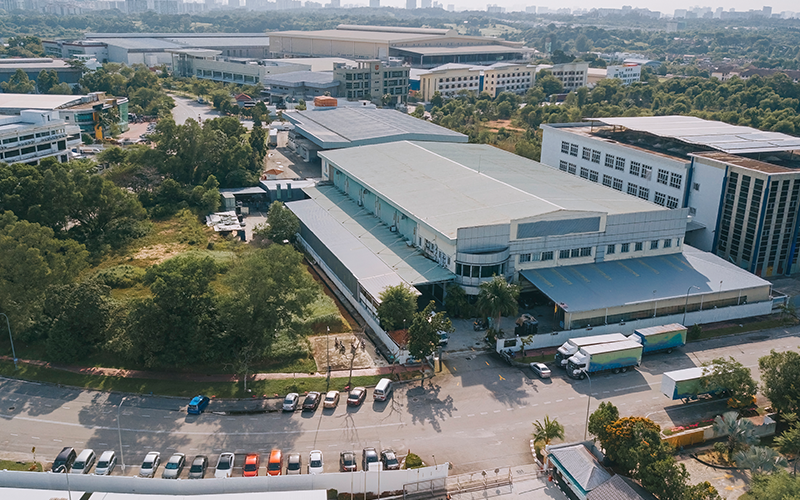
Drone point of view Factory warehouse logistic building Industrial District in the morning

Malaysia plays a significant role in the global semiconductor supply chain, accounting for around 13% of the world’s semiconductor assembly, testing, and packaging activities and ranking among the top semiconductor exporters globally. The country’s electrical and electronics (E&E) sector also remained Malaysia’s leading export industry in 2025, recording its highest value on record at RM711.61 billion, an 18.3% increase year-on-year. Altogether, the sector contributed 44.3% of Malaysia’s total exports, highlighting its central role in the country’s economy and the global electronics ecosystem.

Another question you might have is how electrical engineering differs from electronic engineering. Traditionally, electrical engineering focuses on large-scale systems involving the generation, transmission, and utilisation of electrical power. This includes technologies such as power plants, electrical grids, and industrial machinery. Electronic engineering, by contrast, focuses on smaller systems that process and transmit information through electronic circuits. These systems include microchips, sensors, communication devices, and digital electronics.


However, in practice, modern technologies rarely exist in isolation. An EV, for example, requires electrical engineering to manage energy flow and power systems while relying on electronic engineering for sensors, control systems, and onboard computing. Because these two areas are deeply interconnected, universities often combine them into a single Electrical and Electronic Engineering (EEE) programme that equips you with knowledge from both domains.

What It Is Like to Study Electrical and Electronic Engineering

If you pursue a degree in Electrical and Electronic Engineering, your academic journey will combine mathematics, fundamental sciences, computational thinking, hands‑on laboratory experience, analytical modelling, programming, creative engineering design, and research skills.


Many people often wonder why electrical engineering is considered one of the more mathematically intensive engineering disciplines. The reason lies in the nature of electricity itself. Electrical signals, electromagnetic waves, and energy systems follow precise physical laws, which means engineers rely heavily on mathematical models to analyse and predict how these systems behave.


Early in your studies, you will build this analytical foundation through subjects such as engineering mathematics and engineering modelling. These areas introduce mathematical tools engineers use to study complex systems, including calculus, differential equations, matrices, and transform methods such as the Fourier and Laplace transforms. These tools allow engineers to analyse how electrical signals behave over time and how energy flows through circuits, communication systems, and power networks.

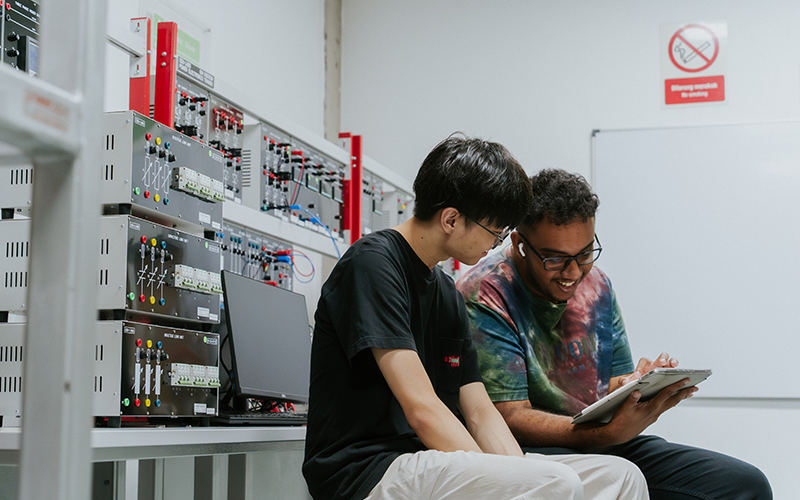
Taylor's student discussing about project

Alongside this mathematical foundation, you will explore core technical concepts that explain how electrical and electronic systems work. Topics such as circuits and signals introduce how electrical currents move through components, while electromagnetic fields and waves explain how energy travels through space and enables technologies like wireless communication.

However, electrical engineering is far from purely theoretical. A large part of your learning takes place in laboratories and practical design environments. Through areas such as digital and analogue electronics, you will gain hands-on experience working with electronic circuits that power devices ranging from smartphones to intelligent machines.


Programming has also become an essential skill for modern engineers. Through programming techniques and computing-related modules. You may learn languages such as C or C++ for embedded systems, Python for data analysis and automation, and MATLAB for engineering modelling and signal processing. These tools allow engineers to analyse engineering data, simulate complex systems, and develop software that interacts directly with electronic hardware and control systems.


As you progress further in the programme, the curriculum begins to connect theory with real-world technologies. You may explore how microprocessors and computer architecture form the backbone of modern computing systems, while communication systems explain how signals travel through networks that support technologies such as mobile networks and the internet.

Teamwork, electrical engineer and inspection in power station with tablet for electricity transmission and tower check

Another major focus area is power engineering, which deals with how electricity is generated, transmitted, and managed. In these subjects, you will learn about electrical machines, power electronics, and the systems that ensure electricity flows safely and reliably across power networks.

You may also encounter automation and control systems, where engineers design technologies that allow machines to monitor conditions, adjust operations automatically, and maintain stable performance. These systems are widely used in industries ranging from manufacturing to robotics. In addition, specialised areas such as high‑voltage engineering cover the safe and efficient design of large‑scale electrical infrastructure, especially in power transmission.


As you progress into the later stages of the programme, your learning becomes more application-driven. Industrial training gives you exposure to real engineering environments, while group design projects and your final-year project (FYP) allow you to tackle practical technical challenges.

Taylor's engineering student showcasing project

At Taylor’s University, your FYP can reflect current industry and research trends, with some projects even published in international journals. Recent examples include using machine learning to optimise 5G network performance and designing user-centric Quality of Service (QoS) systems. These experiences highlight the programme’s strong focus on innovation, research, and solving real-world engineering problems.

Studying Electrical and Electronic Engineering in Malaysia

If you are considering studying Electrical and Electronic Engineering in Malaysia, it is helpful to understand how students typically prepare for the degree and what factors to consider when choosing a programme.


Many aspiring engineers begin their journey through secondary qualifications such as SPM, UEC, or O-Levels, before progressing to pre-university pathways such as Foundation programmes in Engineering or Science, STPM, or Cambridge A Levels. Regardless of the pathway you take, subjects such as Mathematics, Physics, and Additional Mathematics are particularly important because they provide the analytical foundation required for engineering studies.

Taylor's engineering student in 3D printing lab

Another key factor when choosing an engineering programme is the learning environment. Engineering education is highly practical, so programmes typically provide specialised facilities such as electronics laboratories, power engineering labs, and control systems laboratories. These facilities allow you to build and test circuits, analyse electrical signals, and experiment with engineering systems in a controlled setting.

In addition, it is worth checking whether the programme is accredited by recognised professional engineering bodies. In Malaysia, this may include accreditation by organisations such as the Board of Engineers Malaysia (BEM) and the Engineering Accreditation Council (EAC). Accreditation ensures that the curriculum meets established academic and industry standards and can support your pathway toward becoming a Professional Engineer (PE) in the future.

Where an Electrical and Electronic Engineering Degree Can Take You

With this degree, you could work in sectors such as power generation, telecommunications, semiconductor technologies, robotics, automation, IC design, advanced electronics, renewable energy, aerospace, automotive and electric vehicles (EVs), smart manufacturing, smart systems, and healthcare electronics. Electrical engineers play a crucial role in designing power systems that keep cities running, developing control systems used in automated manufacturing, and building communication technologies that allow devices to connect and exchange information.


Another important area is the transition toward clean energy and electrification. As countries invest in renewable energy technologies such as solar and wind power, electrical engineers are needed to design energy systems, manage electrical grids, and develop technologies that store and distribute electricity more efficiently.

Aerial top view image of progressive green energy-powered charging station, electric vehicle at public car park

The rapid growth of electric vehicles is also creating new opportunities. Electric vehicles rely on complex electrical systems involving battery technologies, power electronics, and charging infrastructure. Engineers are responsible for developing systems that allow these vehicles to operate safely, efficiently, and reliably.

At the same time, advances in automation, robotics, and intelligent systems are transforming many industries. Modern machines increasingly rely on sensors, control systems, and embedded electronics that allow them to operate autonomously. Electrical and electronic engineers design the hardware and control systems that enable these technologies to function.


Because the discipline also overlaps with computing technologies, some engineers move into roles connected to software development, artificial intelligence, and embedded systems, particularly in industries where hardware and digital technologies intersect.

Is Electrical and Electronic Engineering the Right Degree for You?

You may find this degree particularly suitable if you enjoy understanding how technologies work, solving complex technical problems, and applying mathematics and science to real-world challenges. Many students who thrive in this field share a natural curiosity about how systems operate, from the electricity that powers cities to the electronic circuits inside modern devices.


You do not need to be exceptionally gifted in mathematics at the beginning. What matters more is a willingness to develop analytical thinking and problem-solving skills over time. Engineering education is designed to gradually build these capabilities, helping you move from fundamental principles to designing and analysing complex systems.


At Taylor’s University, the Electrical and Electronic Engineering programme offers specialised pathways that allow you to explore areas aligned with emerging global technologies.

Engineer at the roof examining solar cell

If you are interested in sustainability and the transition toward cleaner energy systems, you may choose to explore the Renewable Energy specialisation, where topics such as sustainable buildings, engineering economics and environmental impact, renewable and alternative energies, as well as energy storage and transmission introduce the technologies driving the global shift toward greener energy solutions.

Taylor's student working on the project

Alternatively, if you are curious about how artificial intelligence is transforming engineering, the AI for Engineers specialisation provides exposure to areas such as machine learning, deep learning, digital imaging, and unmanned systems. These technologies are increasingly used in intelligent machines, autonomous systems, and advanced robotics.


These specialisations allow you to tailor your learning experience based on the areas of technology that excite you most, while still building a strong foundation in electrical and electronic engineering.

Portrait photo for Associate Professor Ir Dr Pang Wai Leong

"Studying Electrical and Electronic Engineering at Taylor’s University emphasises hands-on learning from year one through real-world projects, labs, and system design. The EAC-accredited programme ensures strong industry relevance, global recognition, and pathways to professional certification, while offering specialisations in areas such as AI and renewable energy."


Associate Professor Ir Dr Pang Wai Leong, Programme Director for Bachelor of Electrical and Electronic Engineering (Honours)


Powering the Technologies of Tomorrow

Electrical and Electronic Engineering forms the backbone of many technologies shaping the world today, from renewable energy systems and EVs to advanced computing and intelligent infrastructure. By studying this field, you build the knowledge and hands‑on skills needed to understand complex systems and to design and improve technologies that solve real‑world challenges.


If you are curious about how technology powers modern society and motivated to build solutions that can shape the future, Electrical and Electronic Engineering offers a pathway where your ideas and technical skills can make a meaningful impact. As industries continue to evolve and new technologies emerge, engineers who understand both electrical systems and electronic technologies will remain essential in driving innovation and progress.

Ready to take the next step towards becoming an electrical and electronic engineer?


Speak with our education counsellors to learn more about the programme, entry requirements, and how it can prepare you for careers in emerging industries.

YOU MIGHT BE INTERESTED
{{ item.articleDate ? vm.formatDate(item.articleDate) : '' }}
{{ item.readTime }} Min Read