Equal on Paper, Unequal in Practice: A Forum Reopens the Question of Article 8

{{ vm.tagsGroup }}

17 Jul 2026

8 Min Read

Dr Jenita Kanapathy (Academic Contributor), Taylor's Team (Editor)

IN THIS ARTICLE

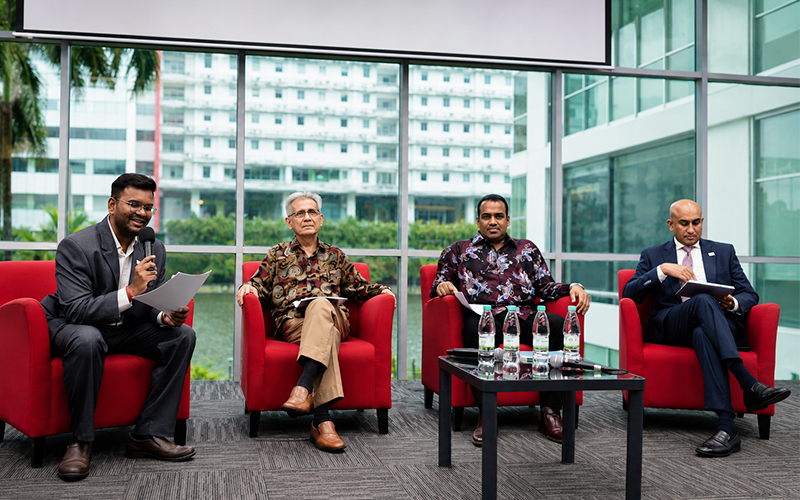
On 24 June 2026, the School of Law and Governance, in collaboration with RDS Advocates & Solicitors, hosted the forum titled 'Advancing Equality in Malaysia: Legal Frameworks and Challenges in Achieving Social Justice' at Taylor’s Lakeside Campus. As part of the Perspectives on Public Law series, the forum examined whether Article 8 of the Federal Constitution, which guarantees equality before the law, continues to provide meaningful protection against the various forms of discrimination experienced by Malaysians today. It also explored the reforms necessary to ensure that the provision delivers substantive equality, rather than merely the appearance of equal treatment. 


Article 8 has remained part of the Federal Constitution since independence, but society’s understanding of equality has continued to evolve. Disability, poverty, gender identity, sexual orientation and technology-driven discrimination now raise pressing legal concerns that were not contemplated in the same way when the provision was drafted. As several of these issues remain sensitive in Malaysia, the forum was particularly significant in creating space to examine them openly and seriously as legitimate questions of law and social justice. 
The Gap Between Treating People The Same And Treating Them Fairly

Much of the afternoon discussion centred on a distinction that may sound academic but has significant consequences in real cases: the difference between formal and substantive equality. Formal equality requires everyone to be treated in the same way. Substantive equality asks a more difficult question: whether a law that appears neutral on its face has a disproportionately harmful effect on a particular group and whether genuine fairness requires courts to take that unequal impact into account.


This distinction exposes the limitations of the doctrine traditionally applied by Malaysian courts. Under the reasonable classification test, differential treatment is permitted where there is a rational basis for the distinction. The panel’s concern was that this test focuses primarily on whether the classification serves a logical or legitimate purpose, rather than on whether it produces unfair or discriminatory consequences in practice. A law may therefore satisfy the test while still placing a vulnerable group at a significant disadvantage.


The issue becomes even more pronounced when the scope of Article 8(2) is considered. The provision’s expressly enumerated grounds of discrimination do not clearly include disability, socioeconomic status, gender identity or sexual orientation. Those whose circumstances fall outside the listed categories are consequently required to advance their equality of claims from a less secure legal position. As the discussion made clear, the consequences of these constitutional gaps are not merely theoretical but have a direct and tangible impact on the lives of affected individuals. 

Professor Dr Adnan

The Case That Anchored The Room

This issue was brought into sharp focus through the case repeatedly revisited by the panel, Muhamad Juzaili, which concerned the rights of transgender individuals. Dato’ Seri Mohd Hishamudin Yunus, who decided on the case in the Court of Appeal, guided the audience through the reasoning and deliberations underpinning the judgement. His reflections illustrated how Articles 5 and 8 of the Federal Constitution may be read together to safeguard both personal liberty and equality. 


For many students, hearing a former superior court judge speak candidly and supportively on questions still treated as taboo was the moment that stayed with them. Law student Mohamed Taufiq admitted he was "mainly surprised by the discussion regarding gender, which I always thought was taboo in Malaysia," and found that the judge's "staunch and open support for the LGBTQ community" carried particular weight coming from a former Court of Appeal judge. For him, it pointed to something larger, evidence that there are "individuals amongst the branches of government who are true advocates for equality", which he read as a possible shift in the country's paradigm.

Panelist of the event

That sense of recognition was clearly reflected in the audience’s response. For fellow student Norhannah Zahyrah, the judgement articulated a conviction she already held, and she described her surprise on hearing that the decision in Muhamad Juzaili "reflected my views in establishing a liberal approach to Article 5. " What she valued most, she said, was simply having "a space to discuss what it means to be equal in the Malaysian context" and hearing the different interpretations of Articles 5 and 8 that each speaker brought to it.


The case also highlighted a tension embedded within Malaysia’s legal system. Although Article 8 prohibits discrimination on the ground of religion, the country maintains distinct legal frameworks for Muslims and non-Muslims. The relationship between the civil and Syariah jurisdictions was identified as one of the most significant challenges in the pursuit of equality, giving rise to complex jurisdictional questions for which there are no straightforward doctrinal answers.

New Frontiers The Constitution Was Not Built For

A central concern was discrimination in the private sector, particularly where companies rely on personal data and artificial intelligence to make decisions relating to employment, education, housing and access to services.


In this context, the limitations of the constitutional framework become apparent. Article 8 primarily protects individuals against discriminatory action by the state. Where the source of discrimination is a private company or digital platform, the Constitution may provide little direct recourse. Automated systems may silently reject a job applicant, deny a loan or restrict access to education, while reproducing existing social biases on a much larger scale. Those affected may have no meaningful way of knowing how the decision was reached or of challenging its outcome.


The panel's view was that Malaysia needs clearer rules on transparency, accountability, and human oversight of automated decision-making before such harms become firmly embedded in everyday systems and institutions.

Three Vantage Points, One Shared Concern

A key strength of the forum was the distinct perspective each of the three speakers brought to the same set of questions. Dato’ Seri Hishamudin offered insights from the bench, shedding light on the practical realities and deliberative process through which judicial decisions are reached. Dr Jaganraj Ramachandran provided academic clarity on the relevant constitutional doctrines.


Mr. Vinayak Sri Ram broadened the discussion beyond Malaysia by drawing on an American case and comparative policy approaches to illustrate how other jurisdictions have addressed similar issues, while emphasising that any approach adopted from abroad must be carefully adapted to Malaysia’s constitutional framework and social context. 


Although there was no sharp disagreement among the speakers, their differing perspectives were precisely what made the session valuable. The judge brought an understanding of how cases are deliberated and decided in practice; the academic offered doctrinal precision, and the practitioner highlighted how other jurisdictions have responded to similar challenges. Together, these perspectives demonstrated that questions of equality rarely yield a single, straightforward legal answer.


Law student Low Yongliang Wayne found "all three panellists insightful", singling out Dato' Seri Hishamudin's detailed breakdown of the transgender case he judged, Dr Jagan for being "concise and precise", and Mr Vinayak for offering perspective that "exceeded our local bounds". The result, he said, deepened his understanding and appreciation for fundamental rights and equality.


The speakers nevertheless converged on one essential point: individual rights and equality must be meaningfully protected, and stronger laws on paper are not sufficient on their own. Courts, lawyers, and public institutions must interpret and apply those laws fairly and effectively. In this regard, Dato’ Seri Hishamuddin's account of judicial decision-making was especially significant, illustrating how an abstract constitutional principle can be transformed into a judgement with real consequences for people’s lives.

From Doctrine To Reform

The forum concluded by considering what should come next. Among the most practical reforms discussed were clearer and more comprehensive anti-discrimination laws and policies that provide effective remedies, including protection against discrimination in the private sector. The speakers also highlighted the need for greater legal recognition of discrimination based on gender identity and sexual orientation.


A more ambitious reform would involve amending Article 8 itself to expand its protected grounds and expressly address indirect discrimination where a law or policy may appear neutral but has a disproportionately harmful effect on a particular group.


These concerns are closely connected to Sustainable Development Goal 16 and its commitment to peace, justice, and strong institutions. Institutions cannot be truly fair, inclusive, or accountable unless they protect the rights of all those they serve. The forum discussion of how constitutional principles are interpreted and applied by judges made this connection tangible, demonstrating how equality moves from an aspiration on paper to a practical safeguard in people’s lives.

Dr Jenita

Possible next steps include a policy paper, concrete reform proposals, further events, and a continued partnership between Taylor's University and RDS Advocates & Solicitors. But the organisers framed the most important outcome in simpler terms: planting what they called the 'seeds of justice' in a room full of future lawyers and encouraging the next generation to hold on to equality, fairness, and human rights as more than examinable concepts.


Judging by the students who filled the theatre, those seeds appear to have found fertile ground.

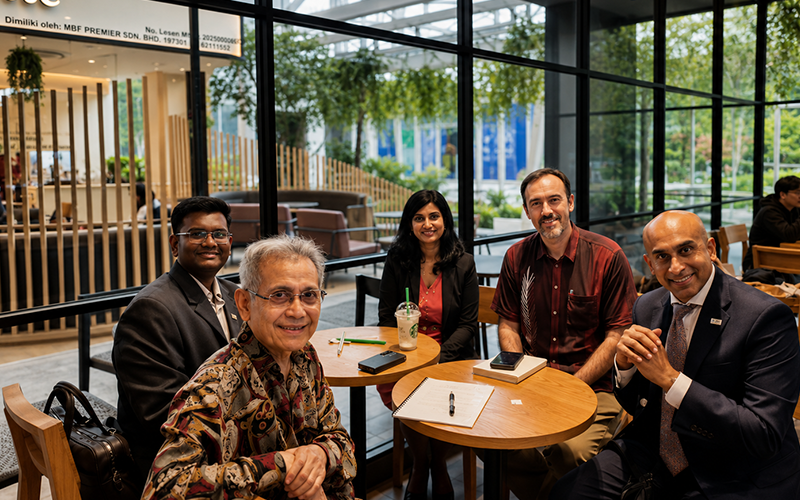
Lunch together with the panelist

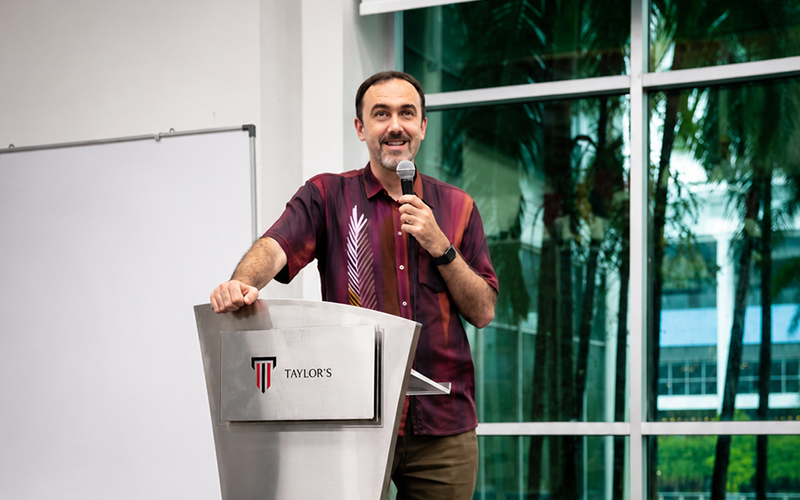
'Advancing Equality in Malaysia' was hosted by the School of Law and Governance in partnership with RDS Advocates & Solicitors, moderated by Mr Nishooldran Ravindran, with welcome and closing remarks by Dr Jenita Kanapathy, Director of Peace, Justice and Strong Institutions Impact Lab.


If questions about equality, fundamental liberties, and social justice inspire you, a law degree at Taylor's University can equip you with the constitutional knowledge, critical thinking, and analytical skills to engage meaningfully with the issues that shape society.

YOU MIGHT BE INTERESTED
{{ item.articleDate ? vm.formatDate(item.articleDate) : '' }}
{{ item.readTime }} Min Read