How a Master of Education Empowers Research That Changes Education

{{ vm.tagsGroup }}

27 Jun 2026

8 Min Read

AP Dr Jasmine Jain (Academic Contributor), The Taylor's Team (Editor)

IN THIS ARTICLE

There are two ways to shape education. The first is to be in the room: to teach, to guide, to watch understanding form in real time. Most people who enter education choose this path, and many spend an entire career within it, growing more skilled, more attuned, and more effective with every year.


The second is less visible but no less consequential. It is the work of those who step back from the room to ask why education produces the outcomes it does, where its systems fail, and what evidence should guide the decisions that affect millions of learners.


And this is the work of education research.

Understanding the Master of Education

The Master of Education at Taylor's University is offered as a research degree. Rather than being centred on taught coursework, the programme is structured around independent scholarly inquiry, with the thesis serving as its principal outcome. The programme trains you to move from practitioner to researcher, from someone who applies what is known to someone who investigates what is not yet fully understood.


In practice, education research asks questions at two very different scales.


At the macro level, education is a system shaped by forces beyond any single institution. National policy, funding architecture, ideological frameworks, labour market demand, demographic shifts, and geopolitical pressures all determine what education looks like, what it prioritises, and who it serves. A researcher working at this level might examine how Malaysia's national education blueprint is reshaping graduate outcomes, or why certain equity gaps persist across ASEAN despite decades of intervention. The work is structural and societal.


At the micro level, education is a set of relationships and encounters: between teacher and learner, between school leadership and classroom practice, between institutional culture and individual experience. A researcher here might investigate how feedback practices affect motivation in secondary students, or how a school's approach to inclusive education translates at the level of individual teachers. The work is granular and human.

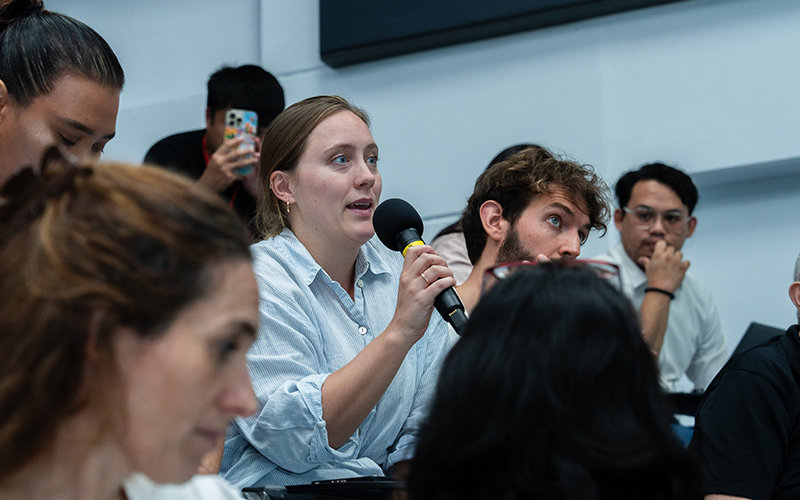
Taylor's master of education student participating in the conference

What makes education research powerful is that it can operate across both levels simultaneously, or trace the connection between them. A policy that looks coherent at the macro level may produce contradictions at the micro level. A classroom innovation that works in practice may have no theoretical grounding. Research is the discipline that makes these tensions visible, and rigorous.

While the programme undoubtedly informs educational practice, its primary purpose is to develop researchers capable of generating new knowledge about education. Those seeking a structured programme focused primarily on advancing classroom practice may find a coursework based qualification, such as the Master of Teaching and Learning, more aligned with their goals. The Master of Education is designed for educators and professionals who seek not only to understand educational challenges, but also to generate rigorous evidence that informs practice, shapes policy and advances the field of education.

What the Research Process Actually Involves

A research master's offers something most postgraduate programmes do not: the freedom to pursue a question that is genuinely yours. Unlike coursework programmes, there is no prescribed sequence of taught subjects determining your research direction. Instead, students progress through structured research milestones, including proposal development, ethics approval, candidature reviews and thesis examination, while pursuing an inquiry that is uniquely their own.


Developing Research Foundations


The early stages of candidature are devoted to developing methodological competence through proposal development, critical engagement with the literature, refinement of the research problem and research training activities conducted under academic supervision. You will study how knowledge in social science is constructed, validated, and contested. You will choose between qualitative and quantitative approaches, or design a study that draws on both. Your methodological choices determine what kinds of claims you can make, what counts as evidence, and how your findings will be evaluated by the scholarly community.


This stage is often where the gap between prior knowledge and research knowledge becomes most visible. A school principal with fifteen years of experience may arrive with deep insight into how schools function but encounter real difficulty translating that insight into a researchable question with a clear theoretical framing. That tension is not a failure of preparation. It is the beginning of research training.


Choosing Your Inquiry


The research focus in a Master of Education is self-directed, which is both the programme's greatest strength and its most significant challenge. You will identify an area of investigation aligned with your professional experience, intellectual interest, or career direction. Research topics reflect both the interests of candidates and the expertise of the University's academic supervisors. Common areas include curriculum and pedagogy, educational leadership, assessment, higher education, educational technology, inclusive education, policy studies and teacher professional learning.

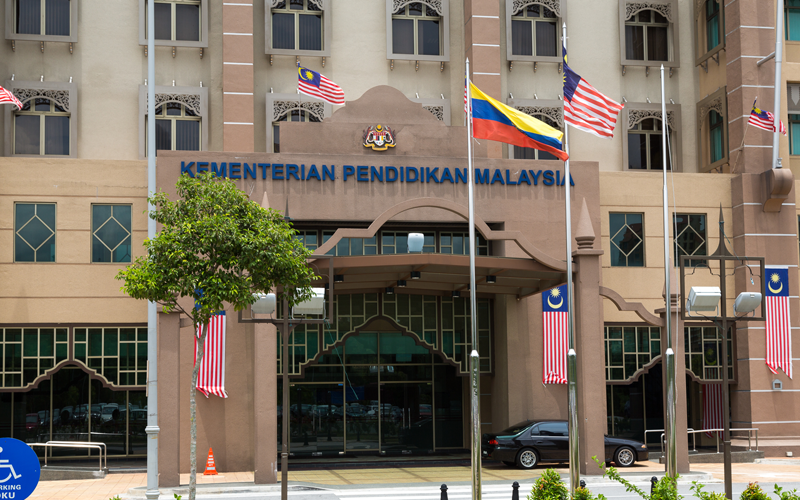
The building for Ministry of Education, Malaysia

Consider a curriculum officer who has spent a decade implementing a national literacy programme, watching the data consistently fall short of what the policy intended. That gap between policy design and ground-level outcome is not an operational problem. It is a research question. The programme gives them the theoretical frameworks and methodological tools to investigate it properly, and to produce findings that can genuinely inform what comes next.

Supervision and the Research Relationship


Unlike coursework degrees, progress in a research master's is structured through your relationship with a supervisor rather than scheduled classes. Your supervisor guides your literature review, challenges your methodology, and helps you interpret your findings. The relationship carries significant weight. Successful candidature depends on a productive partnership between student and supervisor.


While alignment of supervisory expertise is important, progress also relies on the student's independence, effective communication, critical thinking and sustained engagement throughout the research process. At Taylor's University, this relationship is strengthened through supervisors who are active researchers, with several recognised by the UK Council for Graduate Education (UKCGE) for their expertise in research supervision. This provides candidates with mentorship grounded in internationally recognised principles of effective research supervision.

The Current State of Education

Education systems globally are under sustained pressure, and the pressure is producing questions that practitioners alone cannot resolve.


The integration of artificial intelligence into learning environments is accelerating faster than the evidence base that should guide it. According to IDC research cited in Microsoft's 2025 AI in Education Report, 86% of education organisations now report using generative AI, the highest adoption rate of any industry. A February 2026 Coursera survey of more than 4,200 students and educators across five countries found that AI adoption has dramatically outpaced governance.


Schools and universities are making decisions about AI tools, adaptive platforms, and automated assessment without adequate research into their pedagogical implications, equity consequences, or long-term effects on learning quality. The gap between adoption and understanding is widening.


At the same time, the relationship between education and economic participation is being renegotiated in ways that confuse both policymakers and educators. The Cengage Group's 2025 Graduate Employability Report found that only 30% of 2025 graduates secured jobs in their field, while 48% reported feeling unprepared for entry-level positions.


The International Labour Organization's Global Employment Trends for Youth 2024 noted that there are not enough high-skill jobs for the supply of educated youth, especially in middle-income countries, widening the gap between education systems and labour market needs. These are not problems that can be solved by better teaching alone. They require systematic investigation.


These emerging challenges exemplify the kinds of complex educational questions that demand rigorous research rather than simple solutions,. Within a Master of Education, students are equipped to investigate such issues systematically, generating evidence that informs educational practice, institutional decision making and policy development.

Secondary school at Penang

In the Southeast Asian context specifically, the pressures are sharply localised. Research published in 2025 documents that only 30% of rural schools in the region have reliable high-speed internet compared to 85% of urban schools (SEAMEO, 2024). Malaysia's own urban-rural achievement gap remains a policy priority, with the Education Minister acknowledging in 2025 that disparities in SPM performance, attendance, and core subject pass rates still warrant sustained attention. Malaysia's education landscape, with its complex interplay of national curriculum, vernacular schooling, private higher education, and ongoing policy reform, represents a terrain where research-led insight is urgently needed.

Is This the Right Path for You

This programme suits a specific kind of person at a specific point in their career. If you find it genuinely rewarding, you likely have practitioner experience behind you: years in teaching, school leadership, curriculum development, education policy, or higher education administration. That experience gives you the interpretive context that makes research meaningful rather than merely academic.


The honest question to ask yourself is not whether you are interested in education. It is whether you are interested in investigating it. You are probably the right fit if you are carrying a specific unsolved problem that your professional experience alone cannot resolve, a question you keep returning to no matter how long you have been in the field.


If you are primarily seeking to advance within a teaching or lecturing role, or to develop stronger instructional practice, a coursework-based programme like the Master of Teaching and Learning may serve you better. If your goal is to move into senior educational leadership with a practical orientation, there are degrees designed around that outcome. But if your next contribution to education runs through research, this is the programme built for that.


The timeline deserves honesty as well. If you study full-time, expect to commit two to four years. Part-time candidature can extend to six. This is not a programme you complete on the side of a full workload without deliberate planning.

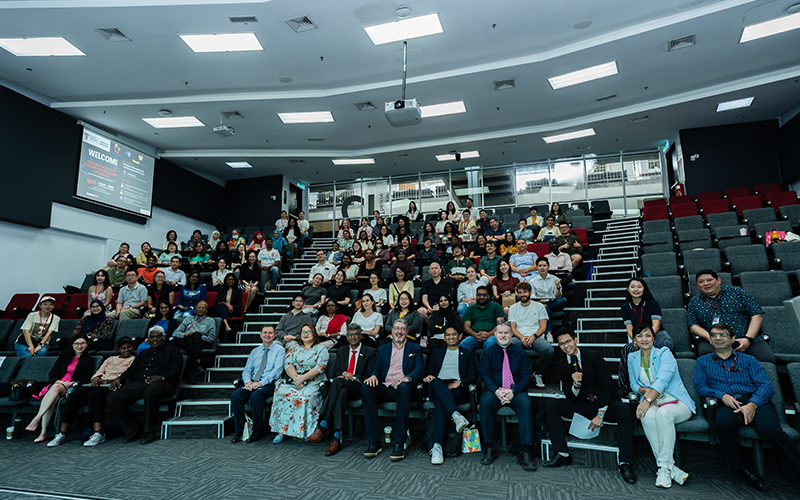
Taylor's education conference

At Taylor's University, the Master of Education is embedded within a vibrant research ecosystem where candidates work alongside experienced academics across diverse areas of educational research. Research supervision is one of the defining strengths of the programme.

Several members of the supervisory team are recognised by the UK Council for Graduate Education (UKCGE), demonstrating the programme's commitment to internationally recognised standards of research supervision. Candidates are mentored by supervisors who are not only active researchers but are also recognised for fostering scholarly independence, academic rigour and research excellence.


Beyond one to one supervision, candidates become part of an active research community through seminars, scholarly dialogues, publication opportunities and academic networking. They may also contribute to the School's Education for All Impact Lab, where research is translated into meaningful community engagement and educational initiatives that address authentic societal challenges. These experiences enable candidates to connect rigorous inquiry with educational practice, policy and societal impact while developing a strong foundation for doctoral study and research informed leadership.

From Practitioner to Researcher. And From Researcher to Impact Leader

High-quality education research does more than add to the academic literature. It influences institutional practice, informs policy, and shapes the debates that drive the future of education. If you are motivated by questions that challenge existing thinking, the Master of Education provides the research environment, expert supervision, and opportunities to transform those questions into meaningful impact.


At Taylor's, we ensure our graduates leave not only with a qualification, but also with the capability to investigate educational challenges rigorously, generate robust evidence, and lead evidence-informed change across schools, higher education, and the broader learning ecosystem.

If the kind of work described here feels like the direction you are heading, the next step is a conversation. You can book an appointment with an education counsellor to learn more about the programme and whether it is the right fit for where you are in your career.

Portrait photo for AP Dr Jasmine Jain

This article was developed with insights from Associate Professor Dr Jasmine Jain, Programme Director for the Master of Education at Taylor’s University. She can be reached at jasmine.jain@taylors.edu.my.

YOU MIGHT BE INTERESTED
{{ item.articleDate ? vm.formatDate(item.articleDate) : '' }}
{{ item.readTime }} Min Read