Steadfast Voices, Transformative Change

{{ vm.tagsGroup }}

10 Mar 2026

8 Min Read

The Taylor's Team (Editor)

IN THIS ARTICLE

This International Women’s Day, we honour the women at Taylor’s University who are driving meaningful change through advocacy and community engagement. From climate resilience to menstrual equity and food security, their work reflects the power of leadership grounded in purpose, empathy, and impact.

Cooling the Heat, Healing the Mind

Dr Praveena Nair Sivasankaran

After years of observing how heat quietly erodes human functioning, Dr Praveena Nair Sivasankaran was moved to act. This conviction inspired her to start ‘Cooling the Heat, Healing the Mind’ (CHHM) to examine the impact of extreme heat on mental health while evaluating cooling strategies. Grounded in the belief that climate resilience must include the human nervous system, not just infrastructure, her defining moment came when she was invited as a panellist at a mental health forum organised by the Malaysian police force. 


Listening to uniformed personnel speak about operating under constant heat, long hours, public scrutiny, and high emotional demand was deeply impactful. What stood out was how endurance is often treated as a professional requirement, while the psychological toll of heat and stress remains largely unspoken, she recalls. That experience reinforced her belief that climate stress extends far beyond physical exhaustion, shaping judgment, emotional regulation, and safety.


Her advocacy for climate-responsive urban design and mental health is visible in her campus work. Together with students from The Design School, they proposed wearable cooling designs and monitoring concepts after working directly with outdoor vendors to understand how heat affects focus, mood, and work performance. When sustainability is designed around human capacity and dignity, especially for those most exposed to climate stress, it becomes something that genuinely improves lives rather than just meeting targets, she shares.

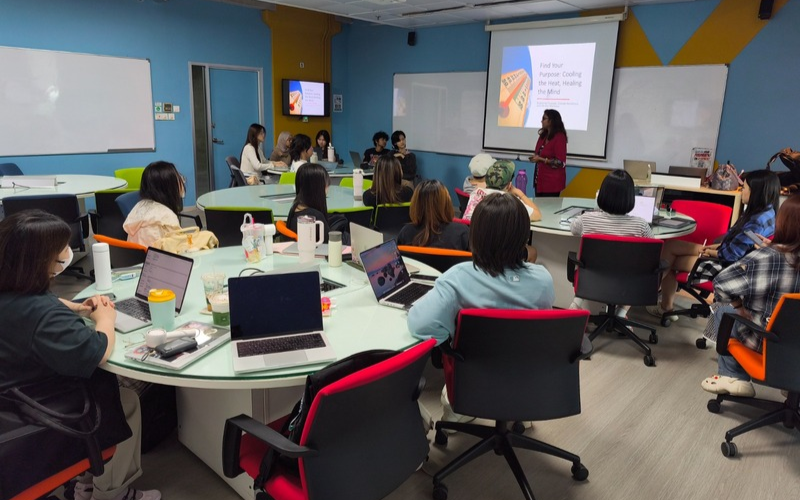
Dr Praveena stands at the front of a classroom giving a presentation while a group of students sit around round tables with laptops and notebooks, watching a projected slide on a screen.

As a woman leading climate and sustainability initiatives, Dr Praveena notes that women tend to perceive environmental stress more relationally, recognising its effects on behaviour, emotional regulation, caregiving capacity, and safety long before these impacts show up as a formal metric. In leadership spaces, however, such insights might be dismissed as being too soft or subjective. 'As a woman, I have had to navigate the tension between being precise and being heard, without diluting the substance of the message. I stay anchored to evidence while remaining honest about lived experience.'


A firm advocate of inclusive leadership, Dr Praveena believes women’s voices are central to effective sustainability work. She intentionally designs engagement processes that are accessible and meaningful for women, ensuring they have equal opportunity to speak and influence decisions. An avid animal activist, she credits much of her compassion-driven leadership to her work with animals. 'Working with animals humbles you quickly. Compassion, I have come to realise, is not about fixing, controlling, or rescuing. It is about creating a safe and consistent environment where growth can happen naturally, without pressure or agenda', she says.


Today, Dr Praveena sees growing clarity and maturity in women’s climate leadership - women asking better questions, thinking in longer timeframes, and refusing to separate technical competence from human wellbeing, 'Most importantly, I see women leading with steadiness rather than urgency, and with clarity rather than noise. In a world facing complex climate challenges, that kind of leadership is not just hopeful. It is necessary.'

Dr Praveena is a dedicated academician, researcher, and educator with over 10 years of experience in clean technology. Currently serving as the Director of Clean Technology Impact Lab at Taylor’s University, she is passionate about promoting sustainable solutions and environmentalism.

ArtsProud: An Intervention Study Using Artistic Methods to Reduce Cognitive Decline in Normal Elderly and Individuals with Dementia

Professor Dr Rozainee Khairudin

When Professor Dr Rozainee Khairudin’s late mother suffered a stroke, the physical effects were visible — but it was the quiet shifts in memory, identity, and connection that left the deepest impression. Yet there were also moments — sparked by music, a remembered story, a shared laugh — when recognition flickered back to life. 'That experience strengthened my resolve to pursue interventions that are not only scientifically grounded but also humane and dignifying.'


That became the emotional seed behind her project, ‘ArtsProud: An Intervention Study Using Artistic Methods to Reduce Cognitive Decline in Normal Elderly and Individuals with Dementia’ in Malaysia. It recognises the impact of the original initiative ArtsProud, co-founded in Malaysia by Peny Chan and Jeth Leang as a social enterprise dedicated to reimagining eldercare through creativity, using arts-based engagement to support older adults facing loneliness, social isolation, and cognitive decline.


If the original ArtsProud initiative laid the groundwork in community-based creative care, Professor Rozainee and her research team’s study strengthens that foundation with formal research, measurement, and evidence-building to prove that art-based interventions can reduce cognitive decline. In doing so, she bridges practice with academia, ensuring that creative eldercare is not only meaningful but also empirically supported.

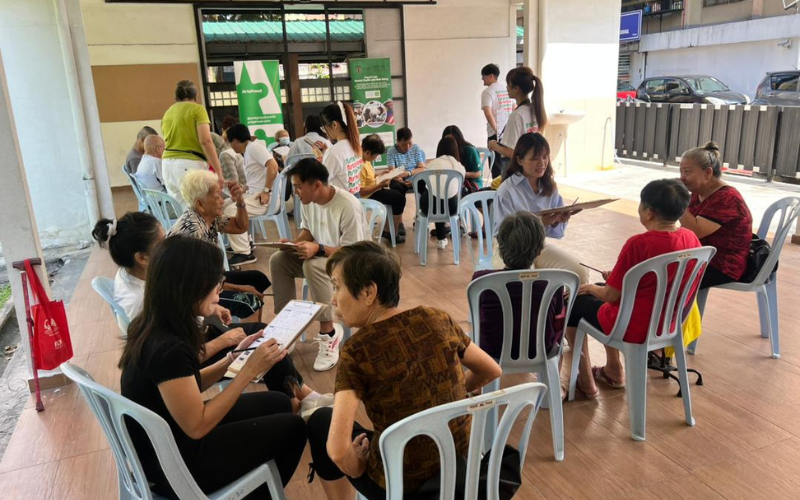
Several volunteers sit with elderly people in small groups on plastic chairs at an outdoor covered area, talking and filling out forms on clipboards.

While conventional approaches to dementia and cognitive decline often centre on pharmacological treatment, she believes strongly in expanding the lens. 'As a psychologist specialising in cognitive decline, I deeply believe that interventions can and should also be grounded in behavioural science and brain plasticity. Structured cognitive, social, emotional, and sensory engagement, such as through music, movement, storytelling, and art, can activate neural networks without requiring pharmacological intervention.'


Yet championing a creative, non-medical model has not always been easy. In a landscape where measurable biomedical outcomes are prioritised, arts-based interventions can be dismissed as 'soft' or supplementary. Part of her work has therefore involved demonstrating that creativity and science are not opposite. They are partners. Structured artistic engagement can be evidence-informed, outcome-driven, and deeply transformative — without losing its human touch.

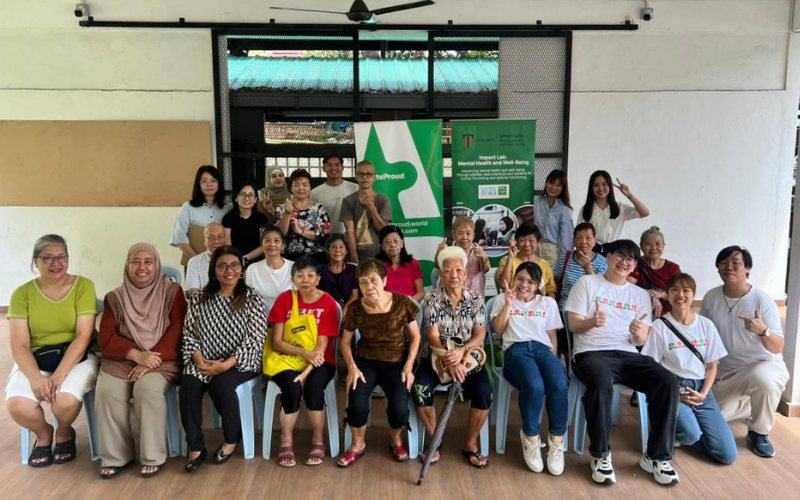
A large group of volunteers and elderly participants pose together for a group photo in a covered community space..

As a woman in academia, she is aware of the subtle expectations placed on women — that empathy may be seen as softness, and softness as weakness. Her journey has shown her the opposite. In ageing and dementia care, empathy is a strength. Listening builds trust. Compassion fosters collaboration. Relational awareness deepens impact.


Through her project, she hopes not only to empower older adults but also women, supporting their cognitive wellness and overall quality of life. 'Women, whether as caregivers, researchers, or changemakers, deserve support to thrive and achieve a high quality of life. In my role, I am committed to leveraging my expertise to drive positive change, ensuring these communities receive the guidance and opportunities they need to flourish.'


This International Women’s Day, her message to young women is clear: pursue ambitions with courage but also protect your well-being. 'True leadership and impact come not just from hard work, but from sustaining yourself, nurturing your mind, and seeking support from family, mentors, and communities.'

Professor Dr Rozainee Khairudin is the Director of the Mental Health and Well-being Impact Lab at Taylor’s University, with research interests in mindset and cognitive decline. Supporting older adults’ cognitive and psychological well-being is both her professional mission and personal calling, driven by a commitment to dignity, purpose, and connection in ageing.

Nourish-U

Professor Ts. Dr. Chong Li Choo

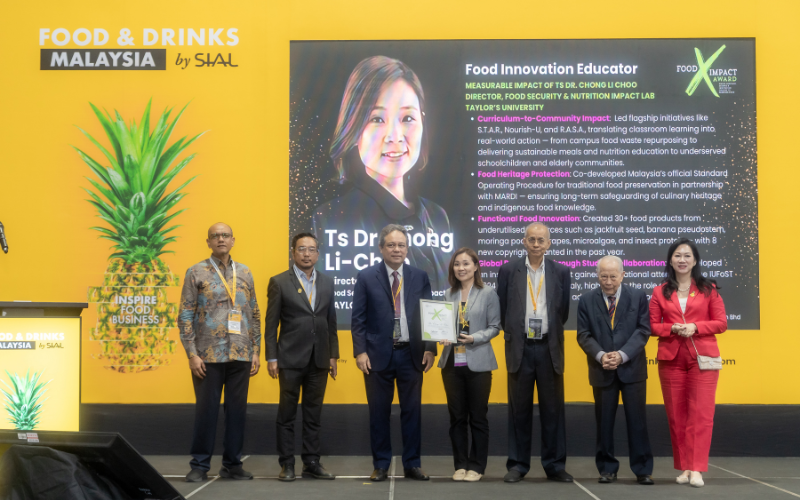
Professor Ts. Dr Chong Li Choo’s contributions to sustainable food innovation have earned her distinguished recognition, including the President’s Award by The Research Chefs Association (RCA) in 2020 and the Food Innovation Educator Award 2025 from Impact Circle Malaysia.


However, these recognitions go beyond personal milestones. 'They tell me that the direction of my work, in advancing sustainable and healthy food innovation through applied research and product development, is relevant and valued.'

A group of seven formally dressed people stand on a stage at the Food & Drinks Malaysia by SIAL event.

Among her many initiatives, one that is close to her heart is Nourish-U. Born from a simple belief, the project emphasises that every child deserves access to good, nourishing food to support their growth, learning, and overall development. Together with her team and community partners, they help design balanced, healthier meals for schools, meal providers, and food banks.


'For me, Nourish-U is not only about providing food. It is about building capability. We focus on knowledge transfer by guiding schools, caregivers, and communities on simple ways to plan meals using basic macronutrient categories so they can prepare nourishing food within limited budgets. When people have this knowledge, the impact becomes sustainable and can continue to grow.'


Her interest in food security and nutrition sustainability was sparked by a question: why do obesity and malnutrition exist at the same time, especially in countries like Malaysia? It made her reflect on how food security and nutrition security are deeply connected to education, awareness, and small practical changes. This curiosity was further shaped during her postgraduate studies, where she developed high-fibre noodles from underutilised plantain, including other agricultural by-products.


'At that time, many people viewed it more as a cooking experiment than a serious research idea. But to me, it showed that local ingredients, when reimagined thoughtfully, can become part of a larger solution. That early experience shaped how I see my role today. I may not change the whole system overnight, but I try to contribute in small, practical ways that can add up over time,' she adds. 

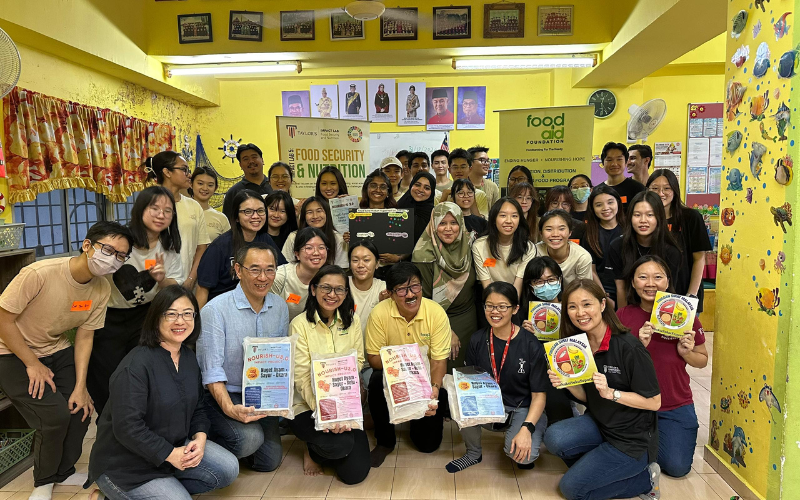
A large group of volunteers and organizers pose together inside a brightly painted yellow classroom during a Food Aid Foundation activity focused on food security and nutrition.

An important aspect of Professor Dr Chong’s career as an academic is student mentorship, particularly nurturing young female talents. She observes that female students are often very diligent, yet they tend to be harder on themselves. 'Sometimes, a small push of confidence can change how a young woman sees herself,' she shares. 'What touches me most is seeing my students succeed. It affirms to me that I am on the right path, and that the effort we put into teaching, mentoring, and guiding them truly matters.'


She believes women can contribute strongly to solving challenges such as food waste, nutrition, and sustainability by bringing a sense of care, connection, and holistic thinking into food and nutrition security innovation, complementing technical and industrial approaches.


'As a female academic, researcher, and mentor, I hope my journey can show other women that it is possible to build a meaningful career in science, education, and innovation while staying true to your values and passion.'

Professor Ts. Dr Chong Li Choo is the Director of Food Security and Nutrition Impact Lab at Taylor’s University and is passionate about transforming future foods into nutritious, sustainable, safe, yet indulgent. She strongly believes in educating children about healthy eating and nutrition through community projects and primary school activities.

YOU MIGHT BE INTERESTED
{{ item.articleDate ? vm.formatDate(item.articleDate) : '' }}
{{ item.readTime }} Min Read