The Bitter Truth Behind Medicine

{{ vm.tagsGroup }}

04 Jul 2026

6 Min Read

Dr Cheah Min Hui (Academic Contributor), The Taylor's Team (Editor)

IN THIS ARTICLE

You have probably never thought of yourself as a supertaster. Most people have not too. Taste feels like preference, something shaped by habit, culture, and the meals you grew up eating. You like what you like, you avoid what you avoid, and the whole thing feels like a choice.


But consider this: two people take the same medicine, same drug, same dose, same formulation. One swallows it without much thought while the other can barely get it down, the bitterness so sharp it triggers a gag reflex, lingers for minutes, and makes the idea of taking tomorrow's dose genuinely dreaded. Neither person is being dramatic nor being difficult, they are simply not tasting the same thing.

Why Bitterness Exists at All

To understand why this matters, it helps to go back further than the pharmacy shelf. Bitterness is not an accident of taste. It is an alarm.


For most of human history, the ability to detect bitter compounds in food was the difference between survival and poisoning. The majority of toxic plants, alkaloids, and naturally occurring poisons are bitter. The body, over millions of years of evolution, developed a remarkably sensitive system for detecting them. That system is encoded in a family of genes called TAS2R (Taste Receptor Type 2), and the average human carries around 25 variants of it, each tuned to recognise different bitter compounds across a broad chemical range.

Photo showing all the sweet food including potato chips, cakes and more

Sweetness, by comparison, is detected by just one receptor complex, a pair known as TAS1R2 and TAS1R3. The cost of mistaking a sweet food for a poisonous one is low, and the cost of missing a bitter toxin could be fatal. So the body invested heavily in its bitter detection system, building it wide, sensitive, and difficult to suppress.

What evolution could not anticipate is that many of the compounds we now need to ingest as medicine are bitter for the same chemical reasons. In antibiotics, cardiovascular drugs, and antimalarials, the molecular structures that make them therapeutically effective are often the same structures that trigger the body's oldest warning signal. The evolutionary pressures that shaped this diversity of bitter receptors run deep across human populations. The receptor that once protected our ancestors from poisoning is now, in a quiet and largely unacknowledged way, working against treatment.

Not Everyone Tastes the Same Medicine

Here is where the science becomes personal.


Within the TAS2R family, one gene has received particular attention from researchers: TAS2R38. It encodes a receptor specifically sensitive to certain bitter compounds, most notably a chemical called PROP (6-n-propylthiouracil) and its close relative PTC (phenylthiocarbamide, a synthetic bitter compound chemically similar to toxic substances found in some plants). What makes TAS2R38 significant is not just what it detects, but how differently it performs from person to person.


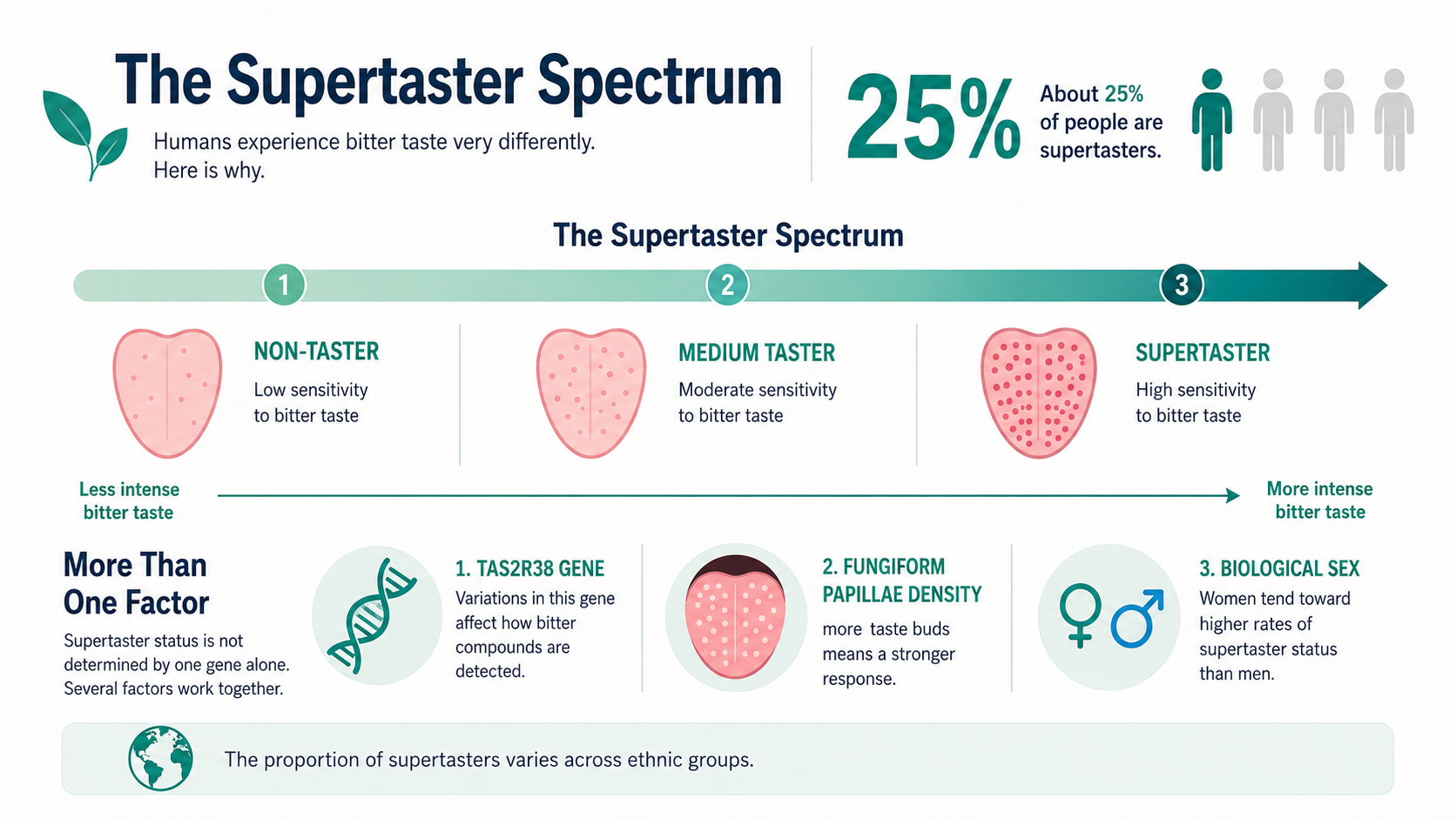
Depending on which variants of TAS2R38 you inherited, you will fall somewhere on a spectrum. Early research mapped these haplotypes systematically, showing how specific genetic variants determine whether a person is a non-taster, a medium taster, or a supertaster. (A haplotype is simply a package of DNA variations that sit together on the gene and are inherited as a group. You get one copy from each parent, and the combination is what places you on the spectrum.)


At one end are non-tasters, people for whom PROP registers as little more than a faint, almost imperceptible bitterness. At the other end are supertasters, people for whom the same compound lands with an intensity that is neurologically in a different category altogether. Not stronger in the way that a louder noise is stronger, but different in the way that a sound heard at normal volume differs from the same sound played directly into the ear.

infographic diagram showing the supertaster spectrum

Supertasters are not rare. Studies estimate they make up approximately 25% of the population, and subsequent research has shown that supertaster status depends on more than TAS2R38 genotype alone, with fungiform papillae density (the number of taste buds packed onto the tongue, which varies from person to person) and sex also playing a role. The proportion varies across ethnic groups, with women tending toward higher rates than men.

To make this concrete, there is a simple test that reveals where you sit on the spectrum. It uses a small strip of paper soaked in PROP, the same bitter compound TAS2R38 is tuned to detect. You place the strip on your tongue and wait a moment for your saliva to release the compound. What happens next depends entirely on your receptors. To a non-taster, the strip tastes of almost nothing, like licking a plain piece of paper. To a taster, a distinct bitterness spreads across the tongue. To a supertaster, it can be genuinely unpleasant, sharp enough to make them want to spit it out.


This variation is not just a curiosity of the tongue. It changes how patients experience their own treatment. Dr Cheah Min Hui, lecturer for the Bachelor of Pharmacy at Taylor's University, notes that when a patient struggles to take a medicine because of its taste, it is easy to assume the problem is behavioural, when part of it may simply be that they are perceiving the bitterness far more intensely than someone else. For her, the value of understanding this lies less in genetically testing patients and more in helping future pharmacists appreciate that patient experiences can vary greatly, even with the exact same medicine.

When Bitterness Becomes a Clinical Problem

The group most visibly affected is children. They carry the same bitter receptors as adults, but the rejection response those receptors trigger is at its most pronounced in early childhood, which is why a medicine an adult finds merely unpleasant can be genuinely intolerable to a child.


Paediatric liquid formulations, the very format designed to make medicine easier for children to take, are among the most frequently refused. Despite that, the format persists for good reason. Young children often cannot safely swallow tablets, and a liquid allows the dose to be measured precisely by volume against a child's weight, which matters a great deal when a small error can be dangerous.


Taste has long been accepted as the price of those advantages. The only problem is that the liquid format undermines itself on exactly that point: spread across the tongue, the medicine reaches far more taste receptors than a tablet would, sharpening the bitter signal and, with it, the child's urge to refuse. Research into paediatric taste sensitivity and medicine acceptance has found that this refusal is not behavioural in origin but sensory. The child who spits out the antibiotic syrup is not being defiant. They are responding to a stimulus that, from their perspective, is genuinely overwhelming.

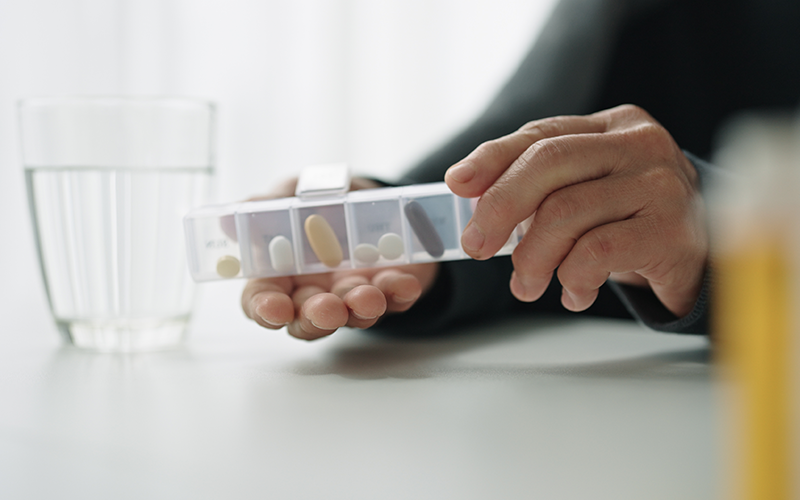
Medicine pills

The problem does not disappear with age. Older patients on long-term prescriptions face a different version of the same challenge. Polypharmacy, the concurrent use of multiple medicines, compounds the issue. Even a patient with moderate bitter sensitivity may develop a cumulative aversion when a bitter medicine must be taken daily over months or years. The taste becomes associated with discomfort, and the discomfort becomes a reason, rarely voiced to a clinician, for quietly skipping doses.

What Pharmacy Does About It

Taste masking is an active and sophisticated discipline within pharmaceutical science, and it is considerably more involved than adding a strawberry flavour to a syrup. The challenge is to prevent bitter compounds from reaching taste receptors in the first place, without compromising the drug's ability to be absorbed and do its work once it reaches the digestive system.


The techniques for masking bitter drugs are varied and well developed. Drug particles can be coated with polymers, thin protective films that remain intact in the mouth but dissolve under the different pH conditions of the stomach. Bitter compounds can be bound to ion exchange resins, which hold them in a stable complex until they are released in the gut. Encapsulation techniques enclose the active ingredient so it bypasses the tongue entirely. Each approach requires careful calculation: the coating must be robust enough to survive the mouth, but permissive enough to release the drug at the right point downstream.

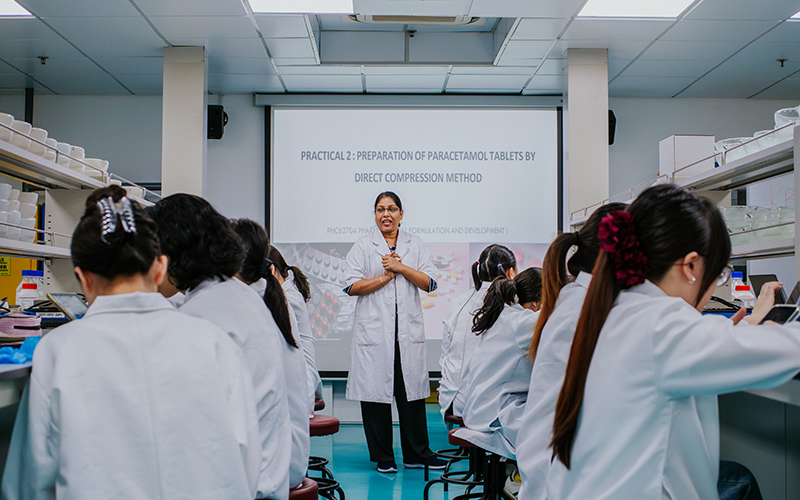
Pharmacy courses in Taylor's

More recently, researchers have begun exploring a different strategy altogether: bitter blockers. Rather than preventing the bitter compound from reaching the receptor, bitter blockers work by occupying the receptor itself. They bind to TAS2R sites without activating them, effectively holding the door closed so the bitter signal cannot get through. Specific amino acid derivatives have been shown to act as competitive antagonists of TAS2R receptors, a finding with significant implications for paediatric medicine and long-term treatment formulations.

What unifies these approaches is a principle that sounds straightforward but has taken time to gain traction in both research and practice: a drug that works in the body is not the same as a drug that works for the patient. The two are only equivalent if the patient takes it. Formulation science, at its best, is patient science. It asks not just what the molecule needs, but what the person holding the bottle can actually accept.

Closing

Pharmacy tends to get described in terms of what happens after a drug enters the body. Mechanisms, metabolism, therapeutic windows. But before any of that, there is a simpler and less glamorous problem: getting the patient to take it at all.


The body itself, in the end, is not a passive recipient. It has opinions, inherited ones from millions of years ago, about what it will and will not accept. Learning to work with that, rather than around it, might be one of the more human things a pharmacist can do.

Curious about the science behind the medicine? Talk to our education counsellor to learn more about the programmes and find out where they could lead.

Portrait photo for Dr Cheah Min Hui

This article was developed with insights from Dr Cheah Min Hui, lecturer for the Bachelor of Pharmacy (Honours) at Taylor’s University. Dr Cheah's areas of expertise include Medical and Health Sciences, Public Health, Environmental and Occupational Health and Safety, and Preventive Medicine. She can be reached at minhui.cheah@taylors.edu.my.

YOU MIGHT BE INTERESTED
{{ item.articleDate ? vm.formatDate(item.articleDate) : '' }}
{{ item.readTime }} Min Read