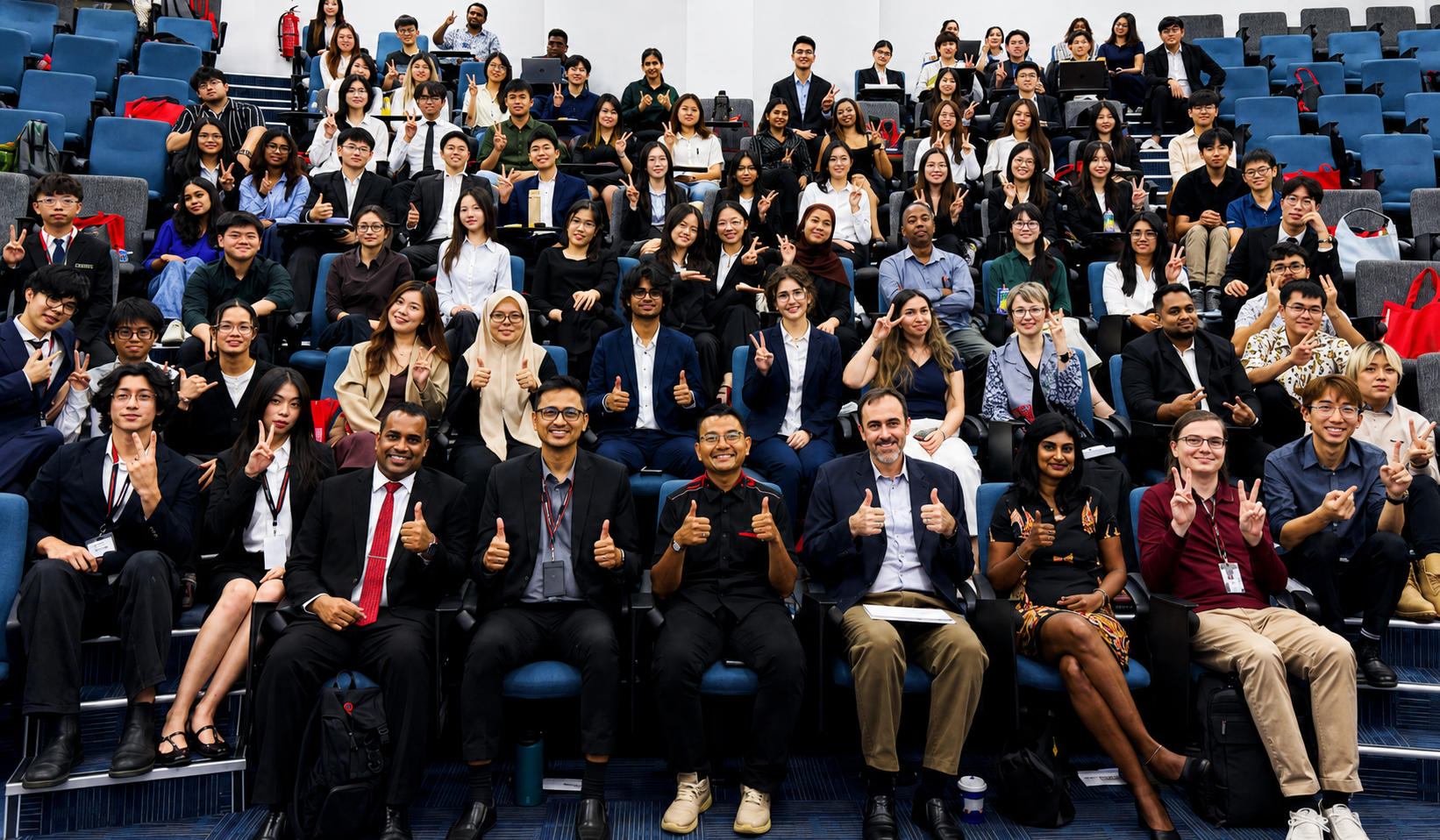

Voting is often taught as a sequence of steps: register, verify, mark the ballot, submit it. But democracy does not end at the ballot box, and neither, it turns out, did this year's conversation at Taylor's University.
{{ vm.tagsGroup }}
22 Jun 2026
6 Min Read
Dr Jenita Kanapathy (Academic Contributor), Taylor's Team (Editor)
Voting is often taught as a sequence of steps: register, verify, mark the ballot, submit it. But democracy does not end at the ballot box, and neither, it turns out, did this year's conversation at Taylor's University.
This was the premise behind the Voter Education & Democratic Governance Forum 2026, held on 6 June at Taylor's University. Organised by the Peace, Justice and Strong Institutions Impact Lab in collaboration with the School of Law and Governance, Student Development, ALSA Taylor's University, and the PPE Society, the forum brought together close to 200 students and youths for a day that moved deliberately between two registers: the procedural and the philosophical.
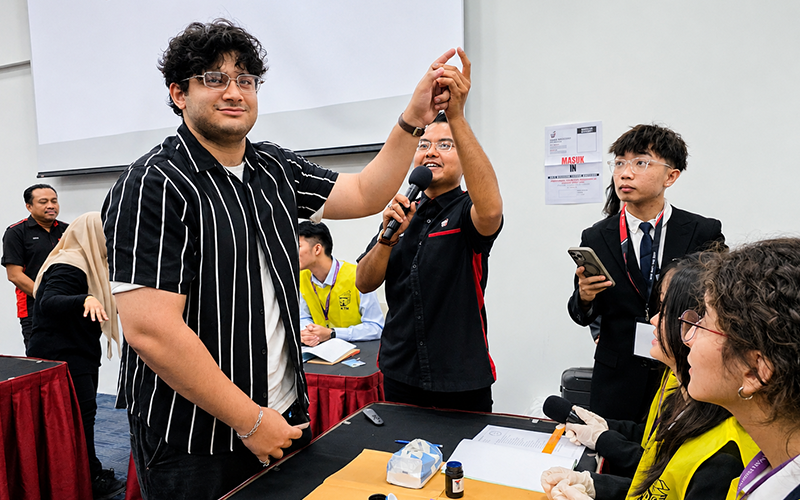
The morning opened with a voter education briefing led by officers from the Election Commission of Malaysia (SPR), covering the structure of the electoral system, the roles SPR plays, and the practical mechanics of registration and voting.
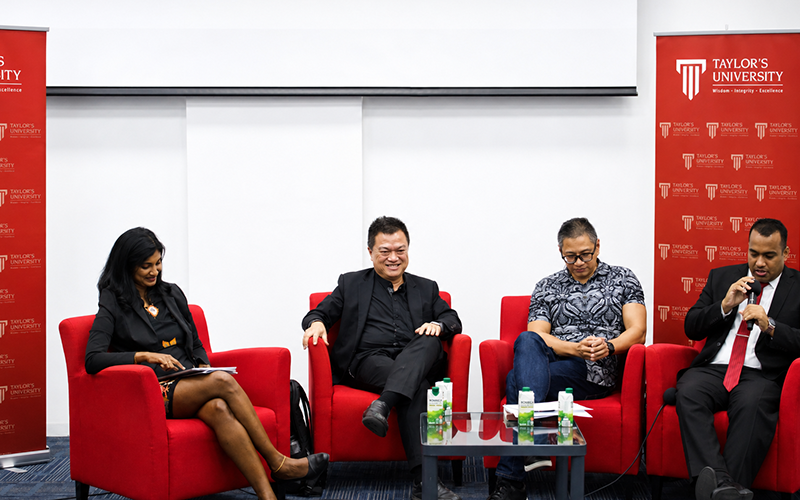
The afternoon shifted gear entirely, convening a moderated panel featuring Dr Azmi Sharom, Deputy Chairman of the Election Commission of Malaysia, Professor Wong Chin Huat, political scientist at Sunway University and Dr Jaganraj Ramachandran, Deputy Director of the PJSI Impact Office, to interrogate the constitutional and moral questions that procedure alone cannot answer. Dr Jenita Kanapathy, Director of the PJSI Impact Lab, moderated the discussion.
The decision to run both sessions back-to-back was not incidental. Effective voter education requires both procedural literacy and democratic understanding. Citizens need to know how elections work, how to register, and how votes are counted, but knowing the mechanics is not the same as understanding why participation matters.
A programme that focuses only on procedures risks producing citizens who know how to vote but not why it matters, while one that leans too heavily on theory can make democratic ideals feel removed from the practical realities of elections. The forum's dual structure was designed to close that gap, building citizens who understand both the machinery of democracy and the values underneath it.
The timing carried its own weight. With the next general election approaching within the next few years, many of the students in the room are still forming the political views they will eventually vote on. The forum offered a chance to equip them with accurate information and critical thinking skills now, before electoral discussions become more politically charged closer to polling day.
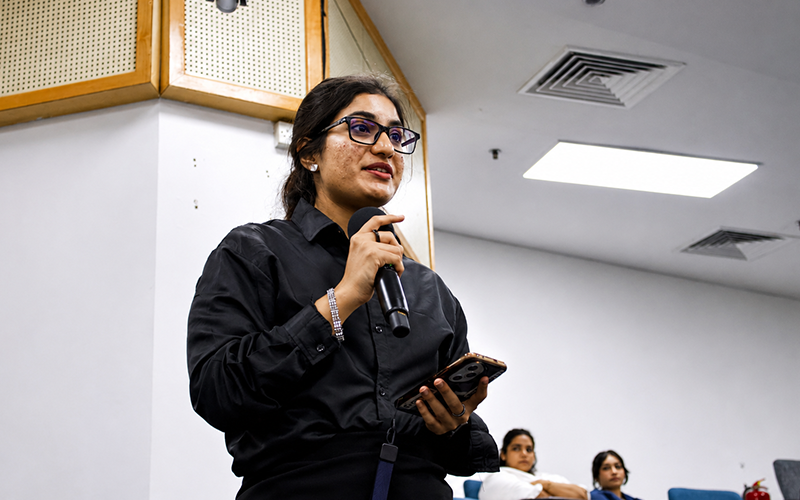
What stood out most in the afternoon discussion was not the questions the organisers expected, but the ones students actually asked. The conversation drifted quickly past the technical mechanics of elections and into something less comfortable: institutional trust and accountability. Students were not only interested in how elections are conducted, but in whether institutions are sufficiently transparent, inclusive, and responsive. That signalled a shift in how young Malaysians are thinking about democracy, not as a periodic voting exercise, but as an ongoing relationship between citizens and public institutions.
One of the more substantive threads concerned electoral disinformation in the digital age. The discussion examined how misinformation shapes voter decision-making and why digital literacy is fast becoming a core democratic skill. The most difficult issue, and one that remained largely unresolved, is balancing freedom of expression with efforts to address harmful disinformation. It is a tension expected to persist well beyond this forum, and well beyond Malaysia.
Much of the discussion's texture came from the contrast between its two speakers. Dr Azmi Sharom, speaking from within the Election Commission, and Professor Wong Chin Huat, approaching electoral governance as a political scientist, did not always arrive at the same questions the same way.
Where they agreed was foundational: both speakers shared a commitment to strengthening democratic institutions and promoting informed civic participation, with voter education, institutional integrity, and public trust treated as non-negotiable. Where they diverged was in approach. An institutional perspective tends to focus on how existing frameworks can be improved and implemented effectively, while an academic perspective is more inclined to question broader structural issues and explore alternative possibilities. Rather than producing friction, that difference gave the discussion its depth, demonstrating what is gained when reform-minded critique sits alongside institutional practice rather than apart from it.
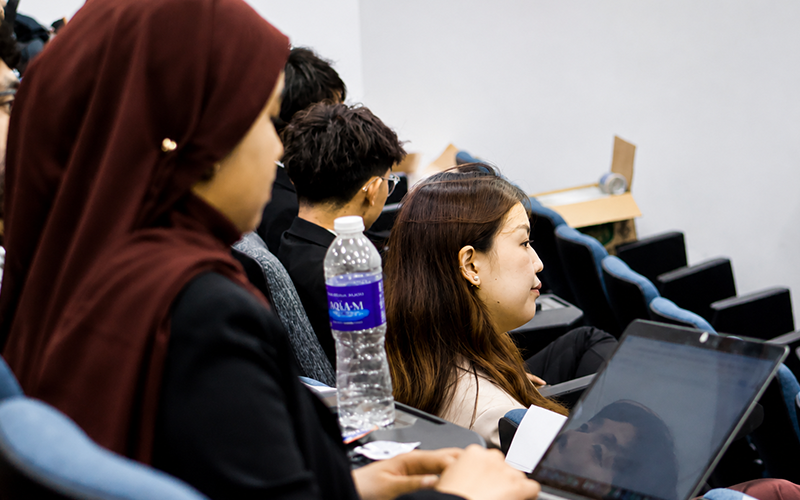
If there was a quiet thesis running through the day, it surfaced most clearly in the audience itself. The students in the room, most aged between 18 and 25, asked questions that went well beyond how to fill out a ballot. Many explored representation, accountability, political communication, and the broader role citizens play in shaping democratic outcomes. Just as notable was the manner of engagement: students pushed back and questioned critically, while staying respectful and open to different viewpoints, the kind of disposition constructive democratic participation depends on.
That raises a question worth sitting with: what does it actually mean to vote well? The answer extends far beyond election day. It requires citizens to evaluate information critically, understand policy issues, assess candidates and institutions thoughtfully, and remain engaged in public affairs beyond election periods. A well-informed voter recognises misinformation, understands the constitutional framework government operates within, and appreciates how public decisions ripple across different communities. Democratic participation, in this sense, is a continuous civic responsibility rather than a single act performed on election day.
Students who attended echoed this in their own words. Several pointed to a deeper appreciation of issues like reapportionment and the case for reforming an outdated electoral system, alongside a recognition that young voters and activists have a real role to play in improving it. Others took from the day a simpler lesson: that upholding democracy is a shared responsibility. The morning's SPR session drew its own praise, with attendees from both Taylor's and Sunway University describing the discussions as engaging, insightful, and well worth repeating.
"The electoral system is never perfect, but we can make it better. Young voters and activists have an important role to play."
"I gained a better understanding of issues like reapportionment."
"A thought-provoking discussion on why everyone has to work together to uphold democracy."
"Lots of professional insight that you wouldn't easily find on the internet."
"Overall very engaging, interactive, entertaining yet highly informative!"
"Brilliant discussions. Very insightful."
"Truly a great session."
It would be easy to treat this as simply another item on a civic calendar, something universities run because SDG 16 expects it of them. But that framing undersells it. Universities are not merely centres for professional training; they are institutions that help develop responsible and informed citizens. Democratic literacy builds critical thinking, ethical reasoning, and civic responsibility, qualities that matter regardless of what profession a student eventually enters.
This is also where the value of an academic platform like this becomes clear, distinct from what an institution such as SPR can offer on its own. SPR plays a crucial role in delivering accurate information about electoral processes, but universities can go further, facilitating deeper conversations about constitutional principles, democratic values, and public policy. These are spaces built for difficult questions, for weighing competing viewpoints, for sitting with complexity rather than resolving it on the spot.
Asked to compress the day into a single sentence, Dr Jenita offers this: "The Voter Education & Democratic Governance Forum 2026 empowered young Malaysians to understand not only how democracy functions, but why informed and responsible participation is essential to its future."
Looking further ahead, there is already a clear sense of what success will look like if the forum becomes an annual fixture, and it is deliberately not turnout. "Success would not be measured solely by voter turnout, but by the quality of civic engagement, constitutional literacy, and public dialogue that participants carry forward into their communities and professions," she says.
That distinction, between counting votes and cultivating the judgment behind them, is perhaps the clearest thread running through the entire day. Procedure tells students how to vote. The forum's afternoon session asked them to think about why, and what they owe the process once they understand it. Judging by the room's response, that question landed.
If questions about electoral integrity, democratic governance, and civic participation inspire you, a law degree at Taylor's University can equip you with the constitutional knowledge, critical thinking, and analytical skills to engage meaningfully with the issues that shape society.