From Participant to Organiser: Anuj's Full-Circle Journey

{{ vm.tagsGroup }}

27 Mar 2026

6 Min Read

Anuj (Student Writer), The Taylor's Team (Editor)

IN THIS ARTICLE

There is something different about returning to a place that once shaped you, especially when your role has changed entirely.


For me, the Oxbridge Debating Forum was once an experience I attended as a student at Kolej Tuanku Ja’afar (KTJ), an event that had long been hosted there and supported by the Oxbridge Society alongside MABECS, an organisation dedicated to helping Malaysian students transition into British universities. Years later, standing on the same platform not as a participant but as the main student coordinator felt like a full-circle moment.


This year’s forum brought together students from leading international schools across Malaysia, continuing a tradition that dates back to the early 2010s. While the debates explored global issues such as politics and emerging technologies like artificial intelligence, what stood out to me was the collective energy of students eager to question, challenge, and understand the world more deeply.
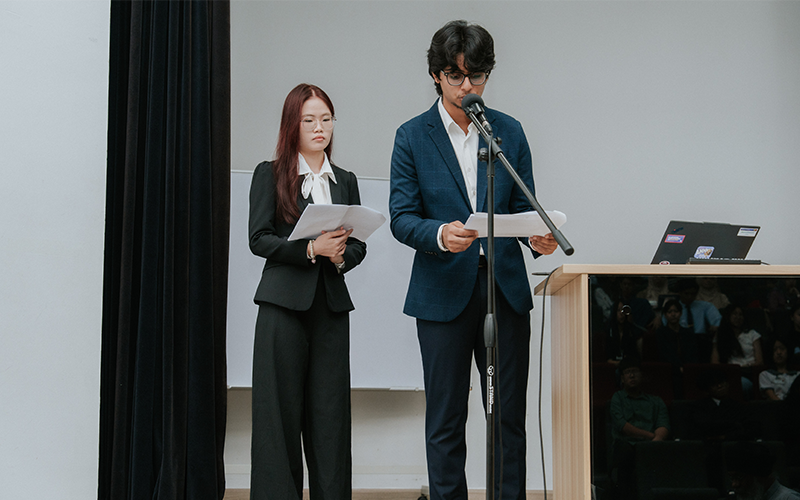
Anuj delivering his opening remarks as student coordinator at the Oxbridge Debating Forum.

Anuj delivering his opening remarks as student coordinator at the Oxbridge Debating Forum.

As part of the organising team, I worked closely with a group of 16 students to manage the event’s logistics and flow. From coordinating registration and ushering to planning university tours, every detail required careful alignment. Under the guidance of Dr Alexey and Dr Deboshree, we held regular planning sessions weeks in advance, ensuring that what could have been overwhelming instead became a well-orchestrated experience. I also had the opportunity to co-emcee the forum, returning to the stage in a completely different capacity.

What Leadership Really Looks Like

Stepping into the role of student coordinator reshaped how I understand leadership.


It is easy to assume leadership is about directing others, but this experience reinforced something far more important. Leadership is about coordination, trust, and clarity. Working with a team of 16 students meant recognising individual strengths, delegating responsibilities effectively, and creating an environment where everyone felt accountable while still being supported.

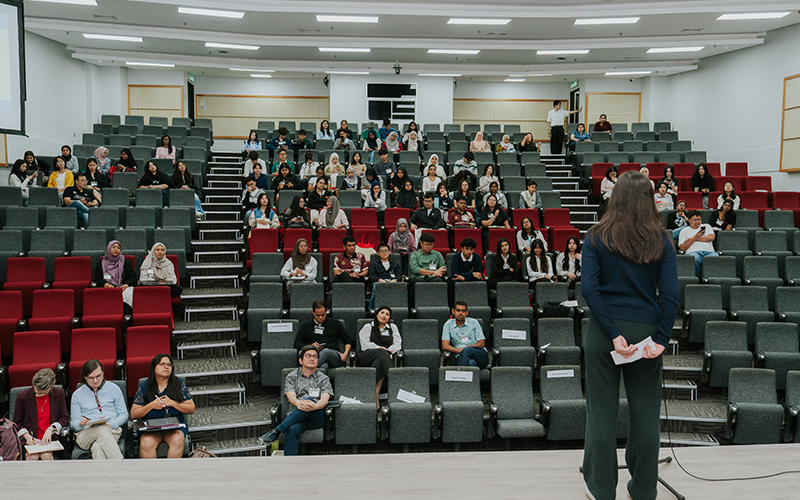
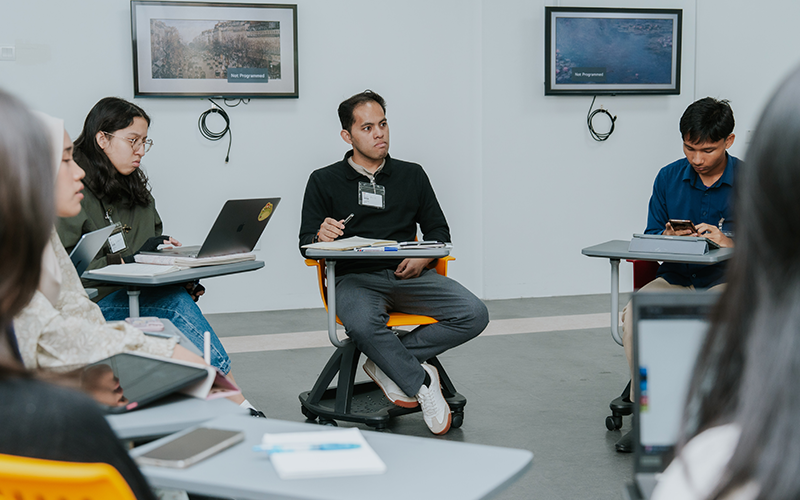
Participants of the forum

Having organised events during my time in secondary school, I realised that these skills do not disappear. They remain, often dormant, until the right opportunity brings them back into focus. What was different this time was the scale and expectations of a university-level event. The structure introduced by our lecturers, from scheduled check-ins to clearly defined roles, demonstrated how essential communication and planning are in preventing last-minute disruptions.


At the same time, adaptability became just as critical. No matter how well an event is planned, unexpected situations will arise. Being able to respond quickly, adjust decisions, and maintain composure is what ultimately keeps everything moving forward.

Debating Beyond the Stage

While the forum centred on debating, its impact extended far beyond the competition itself.


One of the most compelling discussions revolved around artificial intelligence. Rather than framing AI as a distant existential threat, the speakers approached the topic from a more grounded perspective. The real concern was not whether AI would surpass humanity, but whether societies could adapt quickly enough to the changes it brings.

Behind the stage

This perspective challenged deeper assumptions about intelligence and progress. It raised questions about what it truly means to be skilled in a world where machines can replicate or even outperform certain cognitive tasks. More importantly, it emphasised the need for human judgement, ethical reasoning, and adaptability, qualities that cannot simply be automated.

Looking Ahead: For Those Considering PPE and Beyond

For students drawn to debate or considering programmes like Philosophy, Politics, and Economics, the biggest takeaway is to embrace complexity rather than avoid it.


PPE is not just about studying three disciplines. It is about learning how they intersect to explain the real world. Debating naturally complements this, as it demands multi-layered thinking, perspective-taking, and the ability to navigate ambiguity.


However, the most meaningful growth happens beyond the classroom. Opportunities like the Oxbridge Forum are reminders that learning is not confined to lectures or textbooks. It is found in conversations, in challenges, and in moments where you are pushed to think differently.

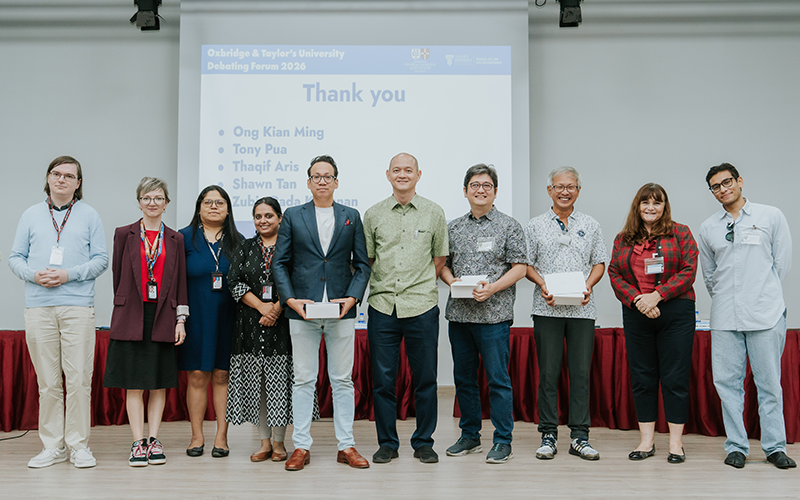
Key attendances

At the same time, it is important to stay grounded. Academic and extracurricular pressures can quickly become overwhelming, which is why having a clear sense of personal values matters. For me, staying aligned with education, empathy, and excellence has helped me remain focused, even in demanding environments.


Looking back, the forum was more than just an event. It was a reflection of growth, from being a participant trying to find my voice, to becoming someone responsible for creating that same opportunity for others.


And in many ways, that is what education is ultimately about. Not just shaping your own journey, but contributing to the journeys of those who come after you.

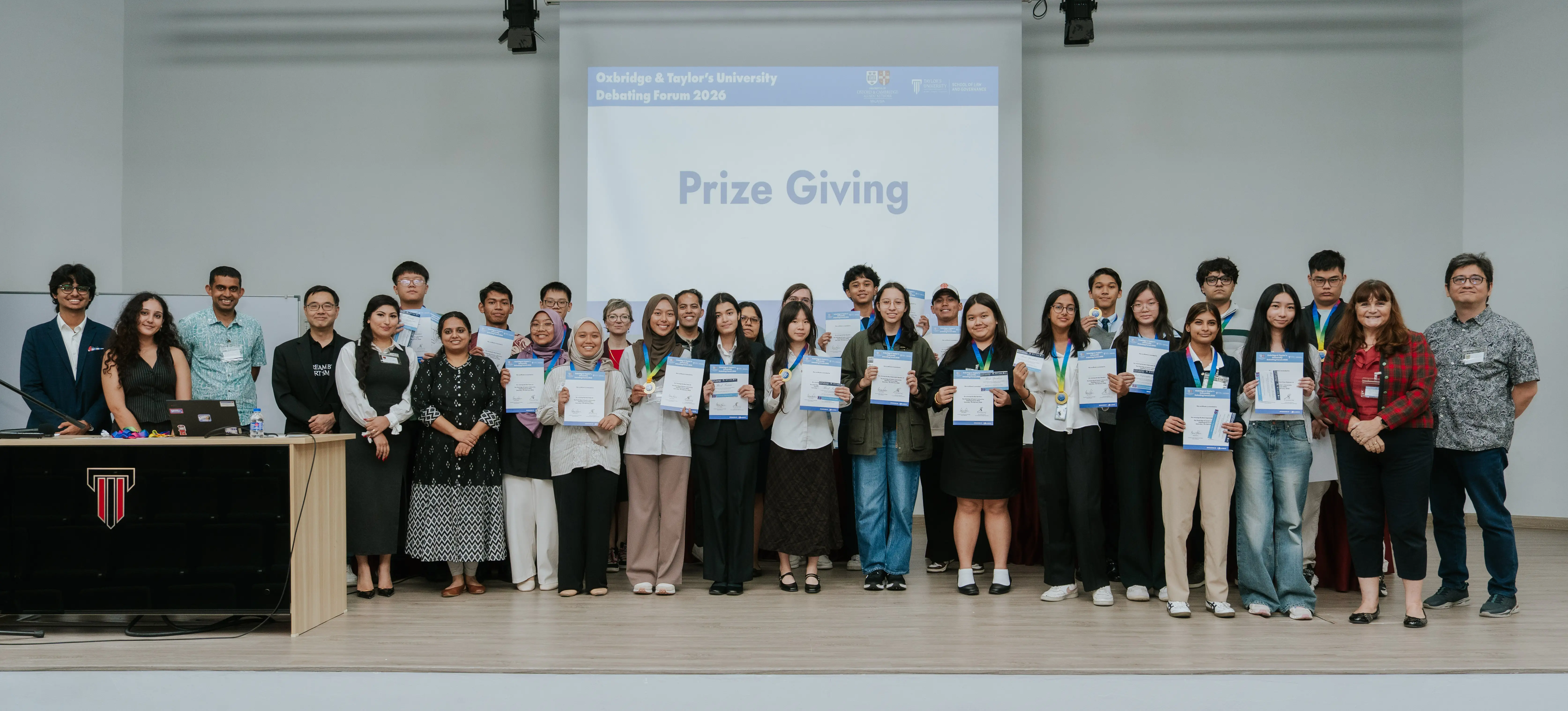
The winners

Curious about where a degree in Philosophy, Politics, and Economics could take you? Speak to our education counsellors to explore how Taylor’s PPE programme can help you develop critical thinking, communication, and leadership skills for the real world.

YOU MIGHT BE INTERESTED
{{ item.articleDate ? vm.formatDate(item.articleDate) : '' }}
{{ item.readTime }} Min Read