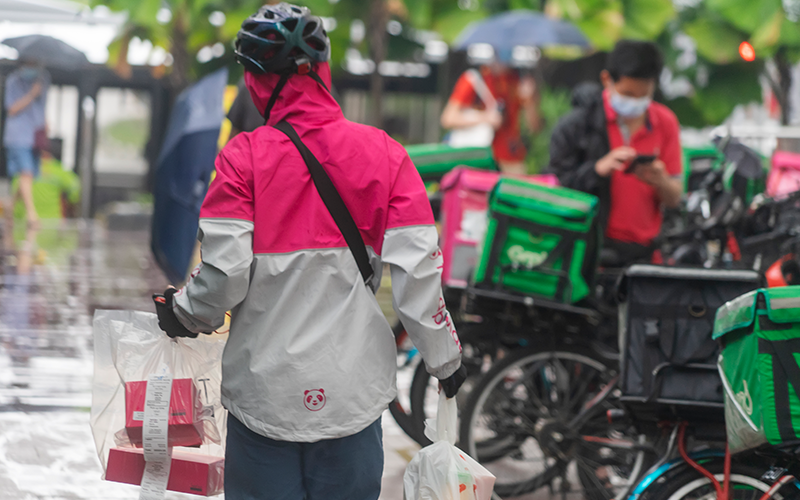
Heat transfer shapes how quickly this happens. Once food leaves the kitchen, it begins to lose heat to its surroundings through processes such as conduction and convection. Insulated bags slow this loss, but they cannot stop it completely. Larger portions tend to retain heat longer, while smaller or more exposed items cool more quickly. What appears to be a short delay can, in practice, mean a significant change in temperature.
Moisture introduces a second layer of change. When hot food is sealed, steam forms and condenses on the surface. This affects what food scientists call water activity, which refers to how much water is available for microbial growth, not just how much moisture is present.
Most bacteria grow best when water activity is high, typically above 0.90, while many cooked foods, especially rice, meats, and sauces, already fall within this range. Even small increases in surface moisture, caused by condensation, can push local conditions closer to what microbes need to multiply more easily.
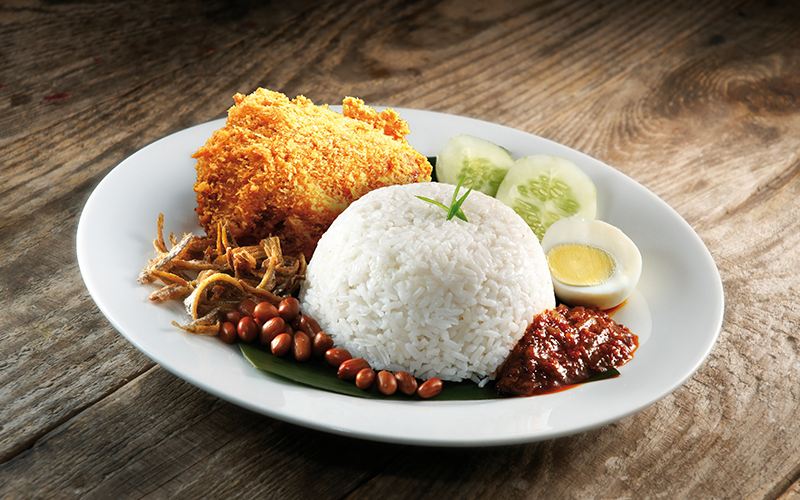
This is also why texture changes during delivery. The crisp layer of ayam goreng softens not just because it absorbs moisture, but because the balance between heat and water shifts within the food. What feels like a loss of quality is also a signal that the internal environment of the food is changing.