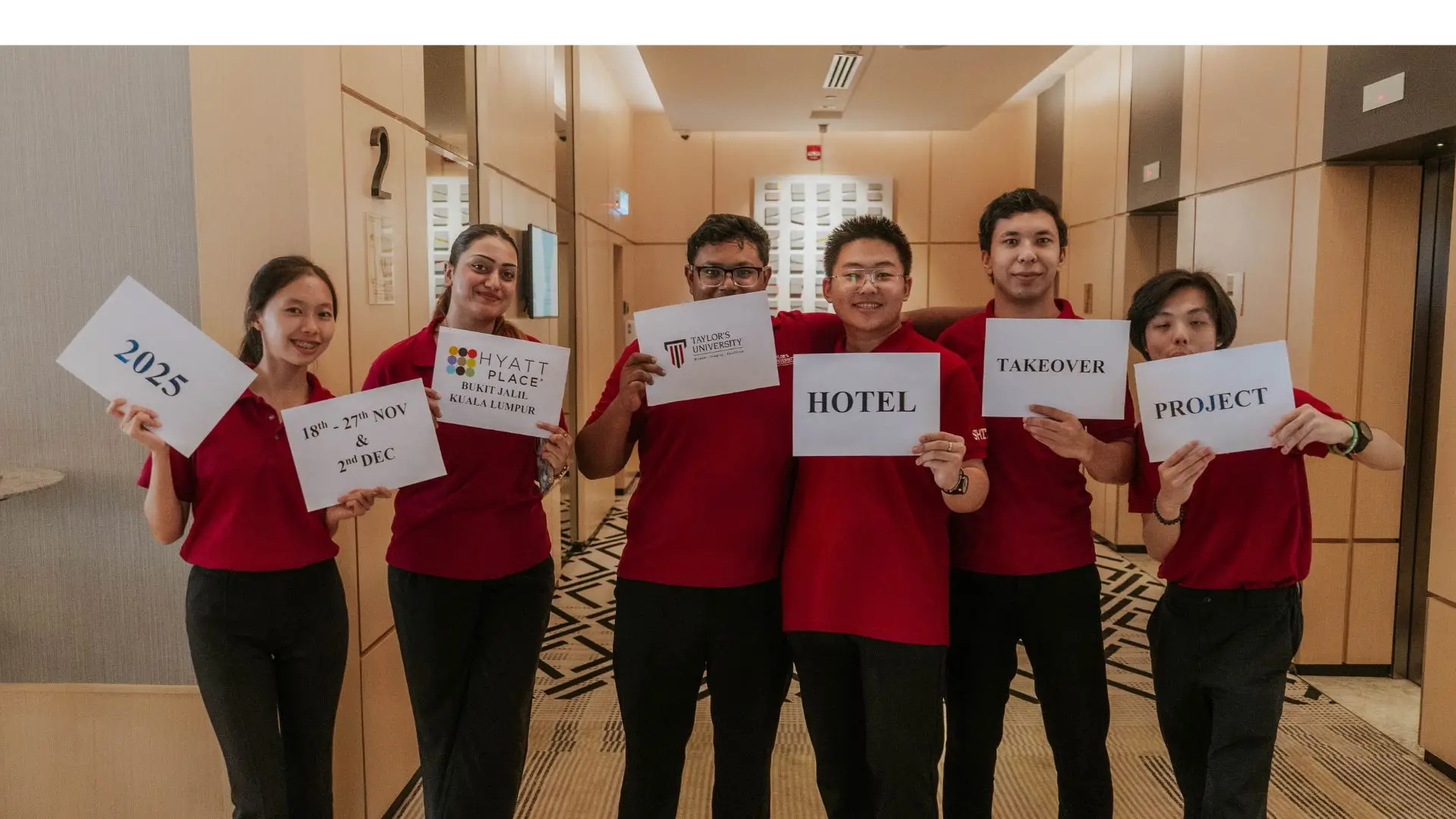
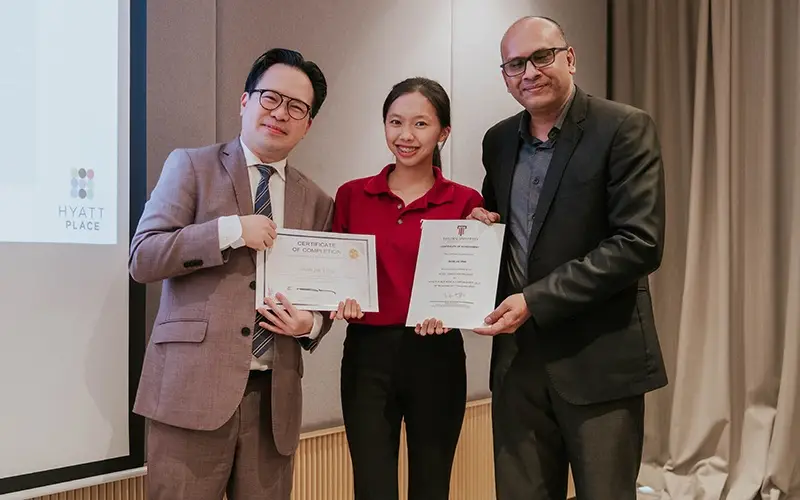
A total of 22 students underwent two weeks of on-the-job training before taking over hotel operations.
“The biggest difference between classroom learning and the Hotel Takeover Project was the level of real-time pressure and unpredictability. In class, hospitality concepts are discussed in a controlled and theoretical environment. However, during the takeover, decisions had to be made quickly, and mistakes had immediate consequences. This is an invaluable exposure for me as I head into my internship,” he added.
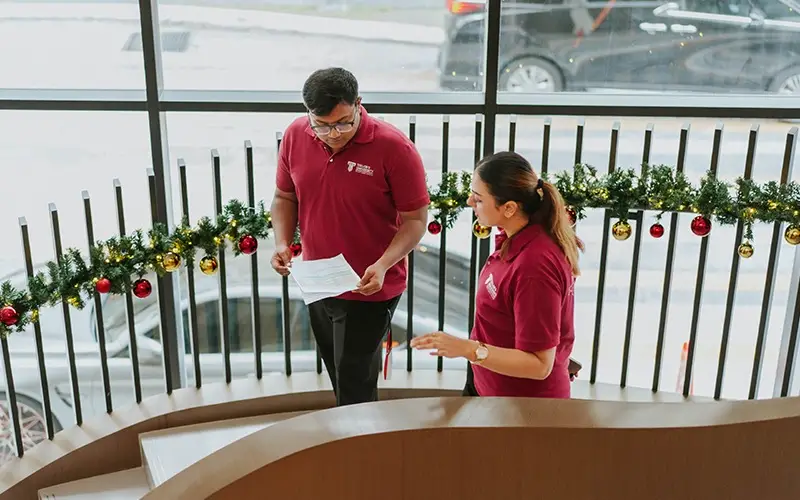
Siow Jia Ying, a Semester 3 student who took on the role of Revenue Manager, described the experience as both nerve-wrecking and empowering. A typical day for her included analysing room occupancy, monitoring demand trends, adjusting pricing strategies, and collaborating closely with reservations and sales teams to align pricing with operational capacity and guest expectations.
She echoed her teammates' experience and shared how her role had real time impact on occupancy, revenue and guests satisfaction. “The biggest difference between learning in class and being involved in Hotel Takeover Project was in addressing real-time price adjusting. Mistakes when in class are just theory, but during the takeover, all pricing decisions have an influence. The project showed me that revenue management cannot operate in isolation. It requires much coordination with the front office, reservations, sales and marketing teams to ensure smooth operations while maximising the hotel revenue,” she elaborated.
One of her challenges was making time-sensitive pricing decisions based on historical data and market conditions. “Some of the skills that I improved in were analytical and decision-making, particularly in the interpretation of data within tight timeframes. I had to consider demand patterns, occupancy, competitor pricing, special events, as well as operations before making strategic adjustments.”