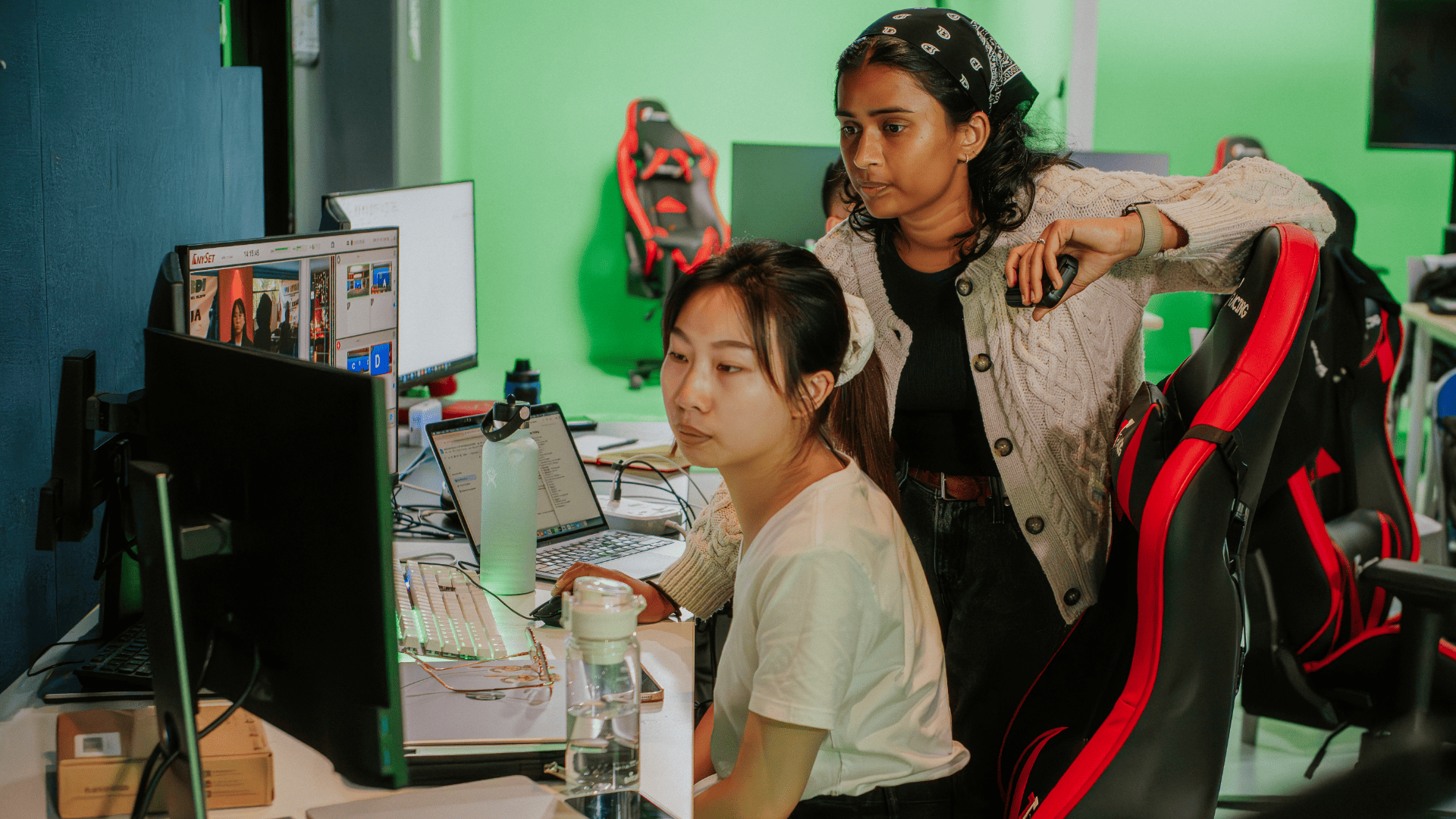
Our Doctor of Philosophy in Media and Communication Studies programme is designed to enrich your proficiency in the communication industries. It prioritises cultivating your research capabilities and fostering a profound understanding of communication theories, methodologies, and practices within media studies. You will actively engage in rigorous research, contributing significantly to advancing knowledge and ethics in the communication field. Through industrial training, you will identify and tackle intricate challenges, conducting cutting-edge studies that have meaningful implications for the field.
Throughout your journey, you will be encouraged to critically analyse and evaluate existing theories and practices while generating fresh perspectives and ideas, such as in the social media context. This process will not only refine your analytical skills but also equip you with the ability to inspire and influence others. As a doctoral candidate, you will emerge with the prowess to communicate critically, objectively, and creatively, essential qualities demanded by academia. With the programme's reputation for producing impactful scholars and thought leaders, only selective cohort of aspiring researchers gains admission. This creates an environment of intellectual rigour and collaborative innovation, where student's research will truly making a difference.
Duration
Study options
Intake Month
Offered by
Modes
Fees
To support your journey, you can also explore the scholarships offered here.
Note: Fees will be reviewed annually. For the avoidance of doubt, Taylor’s reserves the right to revise the fee payable for any given semester.
Effective 1 July 2025, a 6% Service Tax will be imposed on non-Malaysian citizens, applicable to all fees and charges, except International Security Deposit and EMGS application fees. Fees shown in the Fee Schedule are exclusive of the 6% Service Tax. The Service Tax rate and taxable fee components are subject to change as determined by government regulations.
As a doctoral student in media and communication, you will embark on a research journey that will deepen your understanding of the field and make significant contributions to knowledge. Our programme is designed to provide you with a supportive and intellectually stimulating environment, allowing you to thrive as a researcher and innovator.
Students are required to pass the Research Methodology modules (6 credit hours), which have English as the medium of instruction, in the first year of their candidature.
At Taylor's University, we believe research can help shape the future. Our postgraduate research programmes cover a broad range of topics with the aim to help shape the future in the aspects of society, technology, economy, and environment.
More than 300 postgraduates have chosen Taylor's to fulfil their research aspiration. Join us and contribute to our innovative and progressive research projects here.
We offered two entry pathway for this PhD programme, which is normal mode and prior to publication mode. Our PhD by Prior Publication mode provides a unique pathway for you to achieve a Doctoral award based on your existing body of work. We recognise the value of your prior publications and include them as a significant part of your submission for the Doctoral award.
Note:
Note:
In addition to the above criteria, those who want to join Doctoral Degree by Retrospective or Prior Publication mode must include the below to the formal application:
The minimum language proficiency of the candidates must be determined by the HEP consistent with applicable programme standards or based on the needs of the programme,
i.e., learning outcomes and the medium of instruction.
A Selection Committee must be established to review the formal application for PhD by Retrospective or Prior Publication and recommend to the Senate to obtain approval.
Criteria for published works
Note: All information is subject to change. Readers are responsible for verifying information that pertains to them by contacting the university.
When you've successfully completed this Doctor of Philosophy in Media and Communication Studies programme, you could embark on any of these exciting careers, including:
Immerse yourself with people who bring out your best – experienced lecturers, industry partners, alumni, and more.
 LEARN MORE
Embarking on your journey towards a Doctor of Philosophy in Media and Communication Studies degree represents an exhilarating advancement in your educational and professional career. We are here to guide you through the application process, ensuring it is as seamless and straightforward as possible. To discover more about the procedure and the documents required, please visit our Admissions website for further information.
In this section, you get the chance to hear directly from the vibrant voices of our media and communication school's communities. As a gathering space for insights and stories, we are excited to showcase the experiences and knowledge of our lecturers, students, alumni, and industry partners.
For Prior Publication Mode:
The minimum duration of candidature is 6 months and must not exceed 2 years.
The minimum requirement for the award of the degree is to:
Progression tracking is done by monitoring of research progress periodically through: