{{ vm.tagsGroup }}
07 Apr 2026
6 Min Read
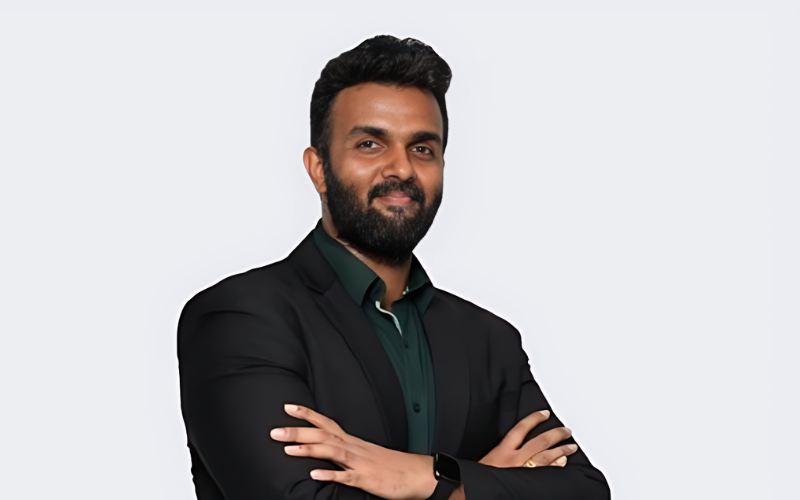
Dr Manee Sangaran Diagarajan (Academic Contributor), Nellie Chan (Editor)
We live in an age defined by constant stimulation, where notifications, screens, and endless streams of information compete for our attention. While this barrage can challenge anyone, it is even more pronounced for individuals with Attention Deficit Hyperactivity Disorder (ADHD), who may have heightened sensitivity to sights and sounds. Assistive technology that responds to these sensory stimuli—quiet, intuitive, and perfectly attuned to the user’s needs—allows attention to settle rather than splinter.
At Taylor’s University, Dr Manee Sangaran Diagarajan and his team are developing Focus Lens, a neuroadaptive assistive system that helps such individuals maintain attention through ultrafocus lenses, personalised sound therapy, and a companion mobile app. It reimagines focus not as a clinical problem to be solved, but as a sensory journey gently guided through user-centred design.
Dr Manee is a lecturer at the School of Engineering, specialising in wireless and telecommunications with a focus on radio frequency systems, as well as energy harvesting systems. His latest project, Focus Lens was awarded a silver medal at the 36th International Invention, Innovation, Technology Competition & Exhibition (ITEX 2025), alongside several notable accolades:
While many assistive technologies target a single sensory dimension, Focus Lens orchestrates visual, auditory, and digital cues into a cohesive solution that facilitates attention and accommodates diverse sensitivities.
We spoke with him to explore the project’s development, the challenges it addresses, and the capacity of this innovation to cultivate inclusivity.
Q: How would you describe Focus Lens, in simple terms?
A: Focus Lens is an assistive wearable device designed to help individuals with ADHD improve focus. It combines three complementary components: ultrafocus lenses to dim peripheral visual input, sound therapy delivered through the device to modulate auditory input, and a mobile app that tracks progress and provides real-time feedback using an inbuilt machine learning algorithm.
Q: What inspired you to pursue this project?
A: The inspiration came from observing the difficulties students with ADHD face— especially in my own classroom—and from the rising rates of diagnoses globally. We wanted to develop a user-friendly system that offers personalised support for focus while making assistive technology more accessible to neurodiverse individuals.
Q: What does the project aim to achieve, and who benefits from it?
A: Focus Lens aims to improve focus for individuals with ADHD in school and work settings. Existing solutions often rely heavily on medication or don't provide non-invasive, real-time assistance, leaving a gap that Focus Lens fills through its multi-sensory design. The device benefits students with ADHD and their educators and parents, working adults with ADHD, and other neurodiverse individuals.
Q: Why is this innovation timely?
A: Attention-related challenges are increasing among students and working adults, yet access to clinical support hasn’t kept pace. Focus Lens meets this need as an affordable, assistive technology that supports focus and fosters emotional regulation by mitigating distractions and enhancing task engagement in everyday environments.
Q: What was the biggest challenge in developing the project?
A: The biggest challenge was integrating hardware, software, and assistive architecture into a compact, user-friendly design. We addressed this through iterative prototyping, ongoing user testing, and close collaboration between engineering experts and clinical specialists.
Q: What key insights shaped its development?
A: We discovered that combining peripheral-dimming lenses with sound therapy produced a significantly stronger focusing effect than using either alone. This insight led us to redesign Focus Lens as a multi-sensory system—beyond a vision-based tool—bringing together these sensory components and a mobile app into what is the first non-invasive device of its kind.
Q: What are some common misconceptions about assistive technologies like this?
A: Many assume that assistive technologies aim to 'cure' ADHD or replace therapy. In fact, devices like Focus Lens support users in improving focus and reducing distractions, while complementing behavioural and medical strategies rather than substituting for them.
Q: What are the real-world applications and long-term impact of Focus Lens?
A: Focus Lens can be applied in schools and workplaces to help students and working adults enhance focus and task performance. Over the long term, it could inform research on attention and cognitive engagement, inspire the development of new multi-sensory assistive technologies, and promote more inclusive design principles for neurodiverse users.
Q: What would it take to adopt Focus Lens at scale?
A: To be adopted at scale, Focus Lens would need to demonstrate measurable impact while remaining feasible to implement. This would involve providing evidence of improvements in attention and task performance through pilot programmes, maintaining affordability through cost‑effective system design, and engaging relevant institutional stakeholders to enable integration into existing educational and workplace systems, as well as potentially healthcare systems.
Q: And if adopted, how could Focus Lens influence perceptions of assistive technology and neurodiversity?
A: If adopted at scale, Focus Lens could positively influence perceptions of assistive technology and neurodiversity. Early user feedback indicates a shift in how the technology is perceived, with students reporting increased confidence and feeling less stigmatised due to the device’s resemblance to everyday wearables rather than medical aids. Similarly, educators and professionals are beginning to view Focus Lens as a productivity‑ and focus‑enhancing tool rather than a specialised accommodation. Collectively, these shifts show how wider adoption could help normalise assistive technologies and contribute to a more inclusive understanding of neurodiversity as natural variation in cognitive functioning.
Q: How has your background shaped your approach to this project?
A: My background, which combines teaching experience with neurodiverse learners, an engineering education, and expertise in electrical and electronics systems, shaped my approach to this project. Teaching provided insight into real classroom attention challenges, engineering guided the project towards practical, affordable, and accessible solutions, and my electrical and electronics expertise informed the technical development of the prototype.
Q: Is there a moment that captures what this project means to you?
A: The moment a student put on the prototype and said, ‘This helped me to concentrate,’ truly captures what this project means to me. It represents the purpose behind all the refining, testing, and problem-solving: creating technology that has a tangible, positive impact on people’s lives.
Focus Lens suggests a future where assistive technology is not confined to clinics or limited to prescriptions but becomes part of everyday life, supporting attention the way glasses support vision. By leveraging multi-sensory inputs and user-centred design, it opens a window to more inclusive learning and working environments.
Building on this vision, the next steps of the project involve developing an improved version of the device by incorporating system enhancements, including artificial intelligence (AI), expanded sensor capabilities, and a more ergonomic design, followed by deployment in field settings for further testing.
Ultimately, Dr Manee’s work shows that even in a world full of noise and distractions, carefully crafted technology can act like a lens for the mind, guiding focus, honing clarity, and illuminating possibilities.