
Beyond the Delegate Badge: What I Learnt About Speaking, Listening and Leadership

{{ vm.tagsGroup }}

16 Oct 2026

5 Min Read

Mirsha Naresh Kumar (Contributing Writer), The Taylor's Team (Editor)

IN THIS ARTICLE

Standing before an international audience in Chandigarh, India, I knew the microphone came with a responsibility. I was there to share my perspective on gender equality and girls’ leadership, but I also had to remain open to experiences different from my own.


The moment came during the 19th Global Youth Peace Festival (GYPF), held from 30 September to 2 October 2026. I had been nominated by the International Youth Centre Foundation (IYC), an agency under Malaysia’s Ministry of Youth and Sports, and travelled as part of the Malaysian delegation. The festival brought young people together for dialogue on social and environmental issues, cultural exchange and community engagement.


Being part of the delegation was an honour. Yet the title itself was not the most important part of the experience. What mattered was what I could contribute, what I was prepared to hear and what I would do with the experience after returning home.
I Arrived With a Question, Not a Finished Answer

Before leaving for India, I kept returning to one question: how could ideas exchanged at an international festival become useful within the communities we already belong to?


I wanted to bring more than personal opinions to the discussions. I hoped to share what I had learnt through student leadership, volunteering and Girl Guiding while learning from people whose communities and experiences were different from mine.


At Taylor’s University, my involvement with the Taylor’s University Student Council (TUSC) had shown me how much work sits behind the word integration. Collaboration between student organisations does not happen simply because everyone shares a campus. People need reasons to take part, channels through which they can contribute and leaders who are willing to listen.


My work with youth organisations had taught me something similar. A title may give someone a position, but responsibility is built through practice: organising, making decisions, following through and creating room for other people to participate.


I travelled with those experiences, but not simply to confirm what I already thought. I wanted to contribute where my experience was relevant and to learn from the people I met.

The Panel Turned Experience Into Contribution

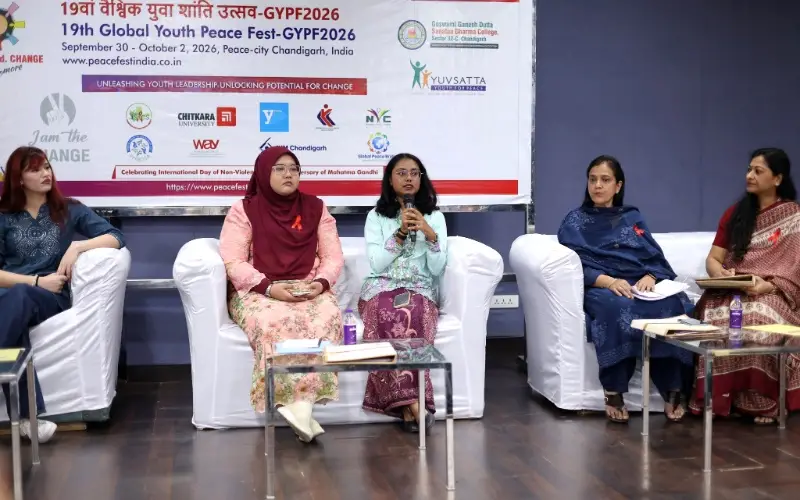
Mirsha Naresh Kumar speaks into a microphone while seated with four other participants during a festival panel on gender equality and girls' leadership

The clearest opportunity came when I joined the festival’s Gender Equality and Girls’ Leadership dialogue.


During the session, I shared my view that gender equality involves more than treating everyone identically. It also means asking whether people have equitable access to education, responsibility, leadership opportunities and decision-making.


That view was shaped by what I had seen through Girl Guiding and youth programmes. When girls and young women are trusted to lead activities, make decisions and take responsibility, they gain more than confidence. They learn that their ideas can influence what happens around them.


For me, that is the difference between symbolic inclusion and meaningful participation. Inviting someone into a conversation matters, but so does whether they have a genuine opportunity to contribute.


Speaking on an international panel also made me think carefully about how I communicated. I was sharing one perspective shaped by my experience in Malaysia, not presenting a universal answer. I needed to explain what I believed clearly while recognising that other participants could understand the same issue through different social and cultural contexts.


The experience reinforced something I had already begun to learn through youth work: leadership is not only about finding the confidence to speak. It also involves making it possible for other people to be heard.

Listening Across Cultures Changed What the Badge Required

Show All
false

Show All

Some of the festival’s most useful moments happened outside the formal discussions. During visits around Chandigarh, including Sukhna Lake and the Rock Garden, conversations began with ordinary questions about food, study, family and home.


Those exchanges were informal, but they mattered. They reminded me that collaboration often begins before anyone reaches a meeting room. It begins with curiosity, patience and the willingness to understand why another person may see the same issue differently.


As part of the Malaysian delegation, I had arrived conscious of what I wanted to share. The cultural exchange made me equally conscious of how I listened. Representation could not mean repeating prepared points and waiting for my turn to speak. It required attention to the people in front of me.


That did not mean every difference disappeared or that a few conversations produced complete understanding. The value was in recognising that useful dialogue does not require everyone to reach the same conclusion. It requires people to take one another’s perspectives seriously enough to ask better questions.

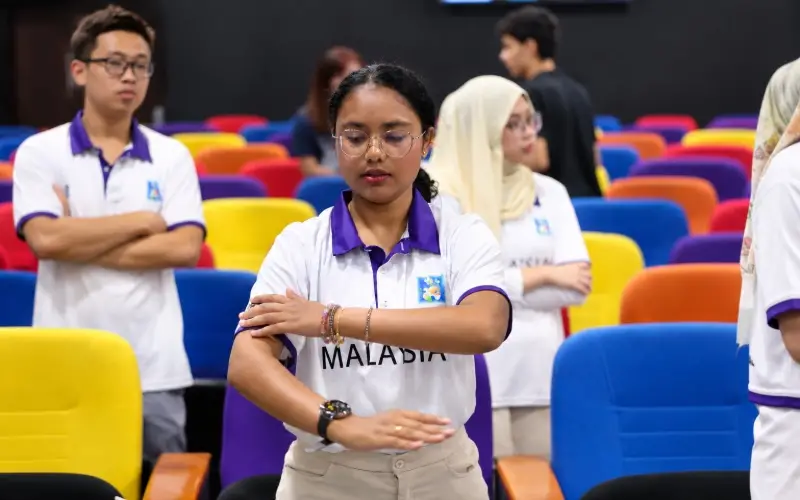
Mirsha Naresh Kumar demonstrates a hand movement while other participants stand among colourful auditorium seats

An International Forum Is Only a Starting Point

The wider programme addressed subjects including the Sustainable Development Goals, HIV awareness and climate-resilient cities. These discussions reminded me that youth leadership extends beyond any single issue. Whether a conversation focuses on equality, public health or the environment, young people need opportunities to take part responsibly.


The festival concluded with activities focused on reflection and action. I realised that international dialogue can create space to exchange perspectives, but the responsibility begins when we return to our communities and decide how to apply what we have learnt.


For me, that meant looking beyond the size of the platform. The more important question was what I would carry into the work already waiting for me at home.

Bringing the Lesson Back to TUSC

The timing of the festival coincided with a new chapter in my student-leadership journey. After serving on TUSC’s Campus Integration Committee, I was elected Vice-President for the 2026/2027 term shortly after returning from India.


During my campaign, I introduced three principles under the acronym ACT: Alignment, Collaboration and Transparency. The festival gave me another way to think about each one.


Alignment begins with understanding the needs of the people we represent, rather than assuming that holding office gives us the answer. Collaboration requires us to work across different groups and recognise the contribution each can make. Transparency helps people understand how decisions are made and how they can take part.


As I prepare to serve, I hope to use those principles to strengthen engagement between TUSC, student organisations and the wider Taylor’s community. I also hope to encourage more students to take part in leadership, volunteering, community initiatives and opportunities beyond the university.


I travelled to India as part of the Malaysian delegation, prepared to speak about issues that mattered to me. I returned with a deeper appreciation of what must happen around the speaking: preparation before it, openness during it and follow-through afterwards.


A delegate badge can open the door. What we do once we enter—and whose voices we help bring with us—is what gives the opportunity meaning.

If you want to practise leadership through service, collaboration or community-building, you can start by exploring the student bodies, clubs and societies at Taylor’s University and finding a space where your contribution is useful.

Mirsha Naresh Kumar is a Bachelor of Accounting (Finance) (Honours) student and Taylor’s Merit Scholar at Taylor’s University. Her involvement in student leadership and youth organisations informed her contribution to the Gender Equality and Girls’ Leadership dialogue at the 19th Global Youth Peace Festival in Chandigarh, India.

YOU MIGHT BE INTERESTED
{{ item.articleDate ? vm.formatDate(item.articleDate) : '' }}
{{ item.readTime }} Min Read