Degree Deep Dive: Inside A Quantity Surveying Degree

{{ vm.tagsGroup }}

19 Jun 2026

10 Min Read

Dr Soon Lam Tatt (Academic Contributor), The Taylor's Team (Editor)

IN THIS ARTICLE

When Johor became one of Southeast Asia's fastest-growing data centre hubs, the headlines went to the tech giants. Microsoft. Google. AWS. Billions in investment. Hyperscale facilities rising from palm-fringed industrial parks an hour from Singapore. The story was framed as a technology story, a geopolitical story, a story about Malaysia's digital future.


But behind every one of those facilities, before a single server rack was installed, someone had to answer the questions that make or break a building project. What will this actually cost? How do we structure the contract so the client and the contractor both understand their exposure? If material prices shift mid-build, what happens to the budget? If there is a dispute, how is it resolved? Who is responsible for what?


That someone is a quantity surveyor.

What Quantity Surveying Actually Is

Strip away the technical language and quantity surveying comes down to a single question: how do we make sure this project delivers what it promised, at a cost that everyone agreed to, with the risks properly understood and allocated?


Architects shape the vision. Engineers make it structurally possible. Contractors put it together. Quantity surveyors help ensure that the decisions behind all of that are measured, priced, documented, and managed with professional rigour.


In practice, that means preparing cost estimates before construction begins, measuring building works, preparing and reviewing tender documents, advising on procurement, administering contracts, managing cost changes as projects evolve, and helping clients and project teams make financially informed decisions at every stage.

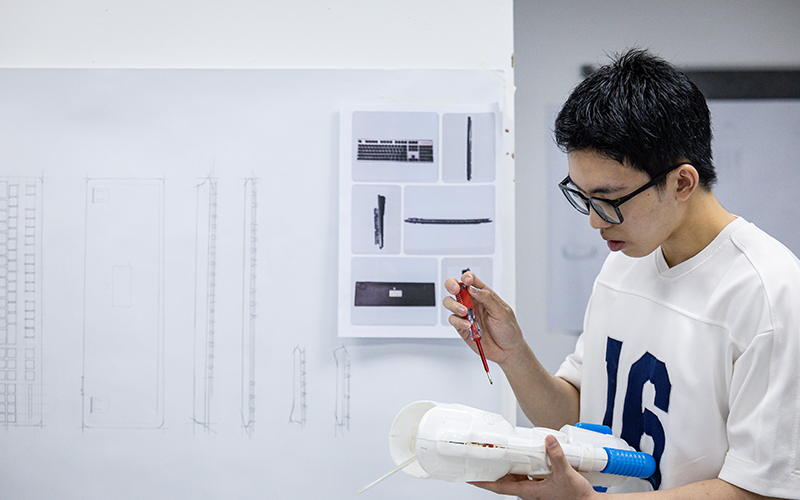
Taylor's architecture student in the lab

The common misconception is that quantity surveying is primarily about counting and measuring. Measurement matters, but it is the foundation, not the ceiling. A quantity surveyor also needs to understand construction technology, contractual law, risk allocation, procurement strategy, cost control, and how decisions made in one part of a project ripple through the financial and legal fabric of the whole. It is a field that rewards people who can hold technical detail and commercial big-picture thinking at the same time.

What it is not: architecture, civil engineering, or construction management. Each of those fields has its own domain. Quantity surveying's domain is cost, contract, procurement, and commercial accountability, which is why it exists in every significant construction project regardless of what else is happening on site.

Why This Field Matters More Than It Did Five Years Ago

Malaysia's construction sector recorded RM158.8 billion in work done value in 2024, growing 20.2% over the previous year. In 2025, that figure rose to RM178.6 billion, with sustained double-digit growth across multiple subsectors. The 13th Malaysia Plan, covering 2026 to 2030, allocates RM430 billion in development expenditure, averaging RM86 billion per year, the highest under any Malaysia Plan to date.


These are large numbers. But what they represent is a particular kind of challenge, one that makes quantity surveying more important, not less, as the sector grows.

Bridge under construction in Malaysia

Large projects are not just expensive. They are complex, multi-party, high-stakes contractual environments where cost overruns are common and disputes are costly. The bigger the project, the more critical it is to have someone who can establish a credible budget before work begins, track costs as conditions change, structure procurement to protect all parties, and provide defensible documentation if something goes wrong.

Consider what is being built. In Johor alone, data centre supply grew at an average of 145% per year between 2019 and 2024. Construction costs for a data centre in Malaysia now range from US$9.6 million to US$12 million per megawatt, according to Cushman & Wakefield's April 2026 figures, and those costs are moving upward. In August 2025, IJM Construction was awarded a RM1.4 billion contract for a single data centre project in Johor, its fourth in the state.


Alongside the data centre boom, major public infrastructure projects are entering their active construction phases, from the Penang Mutiara LRT to the Johor–Singapore Rapid Transit System. Construction activity in Selangor alone accounted for RM10.5 billion of work done value in the third quarter of 2025. Across all of this, the demand for professionals who can manage cost, procurement, and contracts is structural rather than seasonal.


And then there is sustainability. Malaysia has committed to achieving net-zero carbon emissions by 2050. The Energy Efficiency and Conservation Act came into effect in January 2025, setting new energy efficiency standards for buildings. Green certification requirements, Environmental Impact Assessments for large-scale developments, and ESG reporting expectations from major clients are all changing what construction projects must demonstrate.

What It Is Like to Study Quantity Surveying

Studying Quantity Surveying is not about spending three and a half years doing calculations. The maths matters, and you need to be comfortable with it, but the degree is fundamentally about developing the ability to make sound commercial and contractual judgements in complex, real-world construction environments.


In the early stages of the programme, you build a foundation across construction technology, legal studies, environmental science and services, building services technology, and fundamental measurement and costing. These areas give you a working understanding of how buildings are assembled and how construction work can be quantified and priced.

Taylor's student having discussion

As the programme progresses, the subject matter deepens and connects. Advanced measurement, construction economics and management, procurement and contract administration, value engineering and management, construction law and dispute resolution, engineering measurement, professional practice, and research all come into the picture. The goal is not to cover subjects in sequence but to build a way of thinking that integrates all of them.

Digital literacy is an increasingly important part of working in this field. Building Information Modelling, or BIM, is changing how quantity surveyors measure, estimate, and collaborate on projects. Research published in Malaysian academic journals between 2024 and 2025 consistently identifies BIM adoption as both an opportunity and a challenge for the profession, with firms recognising that quantity surveyors who can work with digital models and model-linked cost data bring significantly more value than those who cannot.

Is Quantity Surveying the Right Degree for You?

While architects design the built environment, Quantity Surveyors make those designs financially viable and commercially successful. If you enjoy problem-solving, strategic decision-making, cost management, and contract administration, Quantity Surveying offers an exciting career path where you can become a trusted advisor to developers, contractors, and clients, helping to shape projects from concept to completion.


Quantity surveying may suit you if you find yourself asking the questions behind the visible ones. Not just ‘what is being built?’ but ‘what will it actually cost, what does the contract say, who bears the risk if something goes wrong, and how will we know if the project delivered value?’ These are not afterthought questions. They are the questions that determine whether a project is viable.


It may suit you if you are comfortable with numbers without wanting to be defined by them. Measurement, estimation, cost planning, and financial modelling are central to the work, but so is reading contracts, writing reports, advising clients, understanding legal frameworks, and communicating clearly with people who have competing interests. The degree builds both skill sets together.

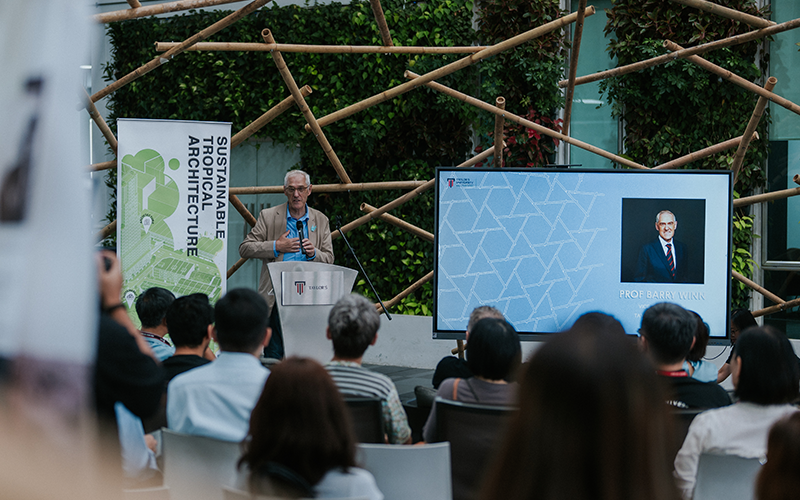
Taylor's Vice Chancellor, Professor Dr Barry Winn

You should also be prepared for a profession that is changing. BIM adoption is accelerating. Sustainability requirements are creating new areas of specialist practice. Data-driven cost planning is shifting how estimating works. The quantity surveyors entering the profession now will spend their careers navigating these transitions, which makes adaptability and a genuine interest in how the field evolves as valuable as any specific technical skill.

At Taylor's, the 3.5-year Bachelor of Quantity Surveying (Honours) equips you with both strong technical foundations and practical industry experience. You will explore construction technology, measurement and costing, contract administration, construction economics, value engineering, dispute resolution, and research.


By collaborating with Architecture students on integrated 3D building models and working through real-world scenarios, you will develop expertise in cost planning, digital construction technologies, and industry workflows, preparing you to contribute effectively from day one.


Your learning experience is further enriched through industry visits and field trips, giving you firsthand exposure to construction sites, development projects, and professional practices while helping you build valuable connections with industry professionals.

Show All
false

Show All

The programme is accredited by Board of Quantity Surveyors Malaysia (BQSM), the Pacific Association of Quantity Surveyors (PAQS), and the Royal Institution of Chartered Surveyors (RICS). The RICS accreditation is worth noting specifically: it means the degree is recognised beyond Malaysia, which matters if you eventually want to work on international projects or with global clients operating here. The programme is also recognised by the Quantity Surveying Division of the Singapore Institute of Surveyors and Valuers (SISV), further strengthening its regional relevance.


After graduating, the route to becoming a registered quantity surveyor in Malaysia runs through BQSM's Assessment of Professional Competence, which includes supervised work experience and a professional interview. It is a considered process, and the degree is your foundation for it.

What This Degree Can Lead To

Quantity surveying graduates typically enter the profession through one of three main paths, and understanding the difference early helps you think about where you want to go.


The consultant path puts you alongside clients and design teams. You are advising on cost estimates before construction begins, evaluating tenders, structuring procurement, and administering contracts through to project completion. The work is analytical and advisory, with a strong emphasis on professional judgement and client communication. Many of Malaysia's QS consultant firms work across property development, infrastructure, and the public sector — the kinds of projects that appear in the 13th Malaysia Plan pipeline.


The developer path places you on the client side, focusing on investment viability rather than project delivery. From a project's inception, you assess feasibility, calculate residual land values, and establish cost parameters to ensure financial success. Working closely with investment committees, project managers, and marketing teams, you optimise the development mix to align with market demand and target returns. In Malaysia, this includes shaping funding structures and joint ventures for major mixed-use developments, transit-oriented developments (TODs), and large-scale townships.


The contractor path puts you closer to the action on site. Here, the focus shifts to commercial management from the builder's perspective: tracking costs as work progresses, managing valuations and payment claims, handling variations, and protecting the contractor's commercial position when conditions change. It is faster-paced and more operationally intense, and it gives you a granular understanding of how construction projects are actually delivered.


Neither path is a ceiling. As you gain experience and work toward professional registration through BQSM's Assessment of Professional Competence, the field opens further. Some quantity surveyors move into dispute resolution and claims consultancy. Others specialise in infrastructure cost management, mechanical and electrical works, or sustainability-linked procurement as green building requirements become standard across Malaysian construction.

Taylor's student in the lab

For those who want to go further academically, Taylor's offers postgraduate pathways that allow you to deepen your expertise or pivot into adjacent areas of the built environment. The Master of Architecture and the Master of Science in Virtual Design and Construction both open doors into design technology, building information modelling, and the evolving intersection of digital tools and construction practice. For those drawn to research, the Doctor of Philosophy in Architecture provides the foundation for academic and advanced professional careers.

Building What Comes Next

Malaysia is building. Not cautiously, not incrementally, but substantially. The 13th Malaysia Plan. The data centre corridor from Johor to Cyberjaya. Airports. Rail lines. Industrial parks. The flood infrastructure that climate change is making unavoidable. All of it needs to be costed, contracted, managed, and kept accountable.


The cost of getting it wrong is visible everywhere: projects that run over budget, contracts that collapse into disputes, public infrastructure that takes twice as long and costs twice as much as planned. The cost of getting it right is quieter: a project that delivers on time, within budget, with every party understanding what they agreed to and why. That outcome does not happen by accident. It happens because someone who knew what they were doing was in the room from the beginning.


That someone could be you.

Speak with our education counsellors to learn more about the programme, entry requirements, and how a Quantity Surveying degree at Taylor's can prepare you for a career in one of Malaysia's most active industries.

Portrait photo for Dr Soon Lam Tatt

This article was developed with insights from Dr Soon Lam Tatt, Programme Director for the Bachelor of Qunatity Surveying (Honours) at Taylor’s University. He can be reached at lamtatt.soon@taylors.edu.my.

YOU MIGHT BE INTERESTED
{{ item.articleDate ? vm.formatDate(item.articleDate) : '' }}
{{ item.readTime }} Min Read