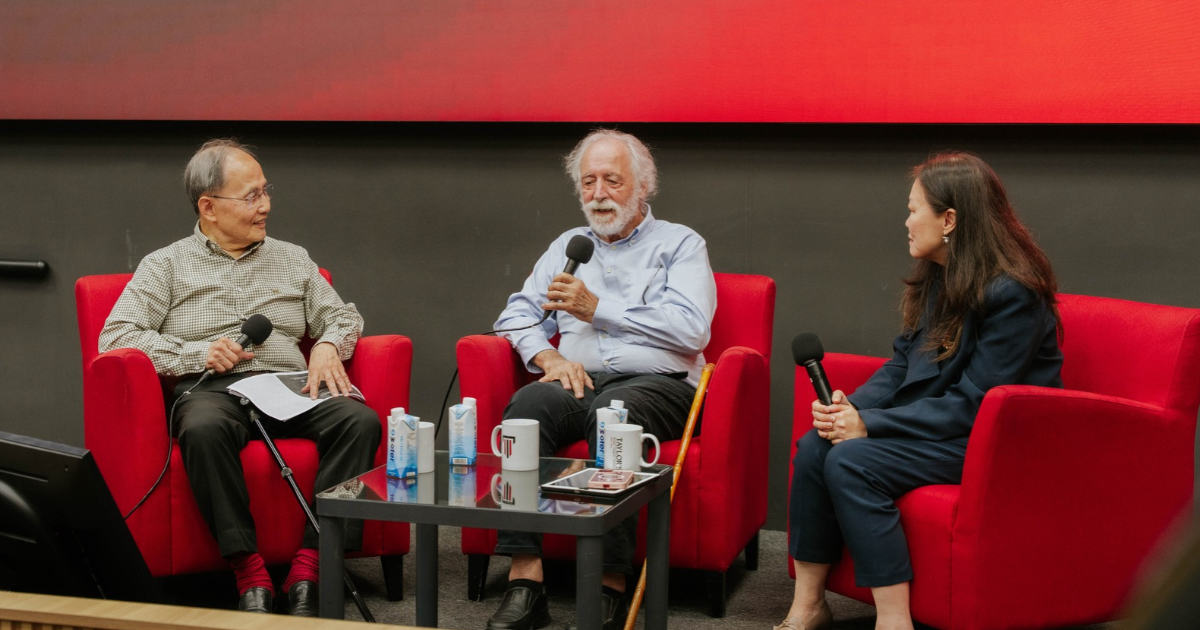
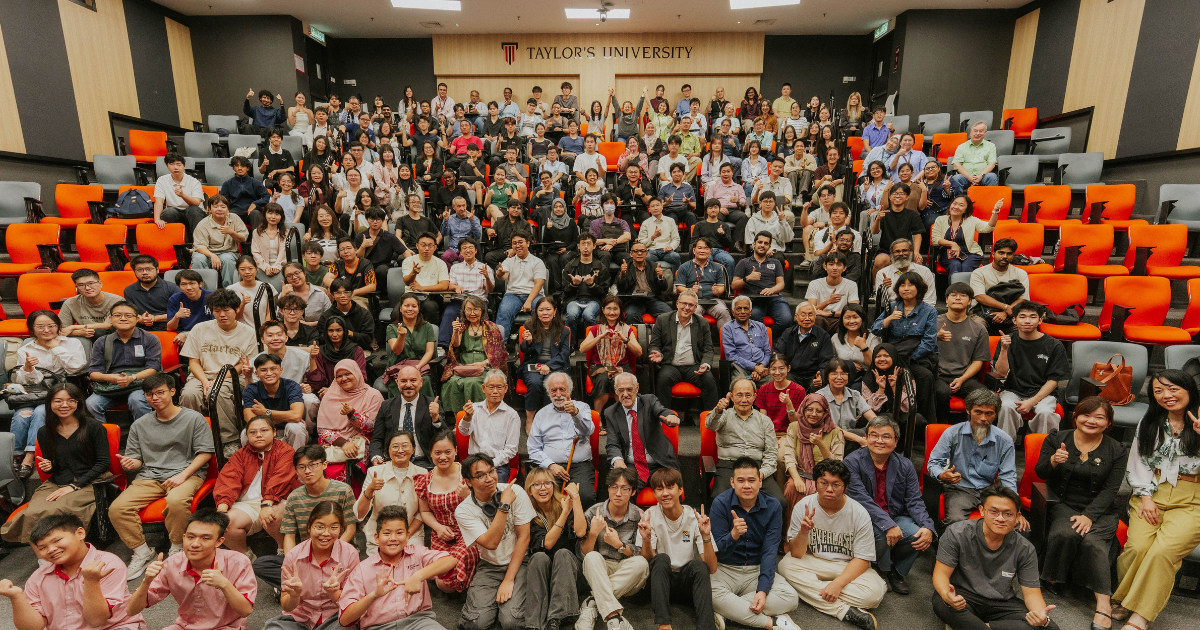
During the session, Professor Agostini delivered a scientific talk titled ‘Strong Field Photo-Electric Effect, Photons and Attosecond Pulses’, sharing insights into the experimental methods used to investigate the behaviour of electrons over extremely short timescales. The lecture was followed by an interactive session, giving participants the opportunity to engage directly with the Nobel Laureate and explore the wider significance of his career and research.
The gathering brought together members of Malaysia’s scientific community from IFM and fellow universities, creating opportunities for knowledge-sharing beyond individual institutions. Also present at the event were Professor Dr See Leang Chin, Emeritus Professor at Université Laval, Canada, and Professor Dr Tou Teck Yong, President of IFM.
Professor Agostini said, ‘Scientific discovery is a lifelong pursuit, driven by our curiosity and the willingness to keep asking questions. Research does not stop at a single breakthrough; every discovery opens the door to new questions and possibilities for the next generation. I believe it is important to continue sharing our knowledge and experiences with young scientists, encouraging them to think independently, challenge existing ideas and pursue their own discoveries. In this way, we can continue contributing to science and society throughout our lives, while helping the next generation build on what has come before them.’
Professor Dr Fadi Charchar, Pro Vice-Chancellor of Research at Taylor’s University, said, ‘At Taylor’s, research is central to our ambitions as a leading university, and we are committed to bringing together expertise from different disciplines and working with international partners to address real-world challenges. Professor Agostini’s visit is a valuable opportunity for our students and researchers to learn from a scientist whose work has changed how we study the physical world. It is our hope that engaging with his research and experiences will encourage young scientific minds to remain curious, pursue challenging questions with conviction and recognise that meaningful discoveries often begin with a willingness to explore what we do not yet understand.’