At 8.30 a.m. on the final day of the Alpro NextGen Programme, I was standing before an audience at the Alproeans Morning Sharing and thinking, ‘I really cannot mess this up.’
{{ vm.tagsGroup }}
22 Oct 2026
6 Min Read
Celeste Teo Yung Lu (Contributing Writer), The Taylor's Team (Editor)
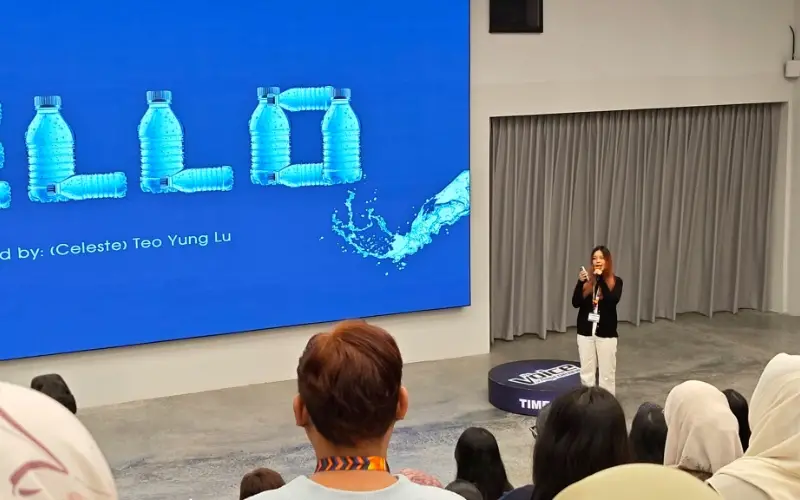
At 8.30 a.m. on the final day of the Alpro NextGen Programme, I was standing before an audience at the Alproeans Morning Sharing and thinking, ‘I really cannot mess this up.’
I had already made myself memorable. My hair was bright red, so I had introduced myself the day before as the Asian version of Ariel from The Little Mermaid. Some of the Alpro team remembered the joke and greeted me around the building. By the third morning, I was no longer an anonymous student at the back of the room.
Now I had been selected as one of two NextGen Pitch Battle Toppers and invited to present during the Alproeans Morning Sharing. I was nervous — very nervous — but telling myself not to be scared was not helping. Instead, I thought, ‘It is okay if I am scared. I will just do it scared.’ Then I stepped forward.
That morning was not what I had expected when I arrived for the three-day Alpro NextGen Programme 2026. As a pharmacy student with limited practical business experience, I wanted to see how community pharmacies made business decisions, reached and engaged customers, and remained financially sustainable while continuing to prioritise patient care. I did not expect the programme to decide my future. I also did not expect it to challenge a career preference I thought I had already settled.
My presentation was not the first time I had to speak without feeling fully prepared.
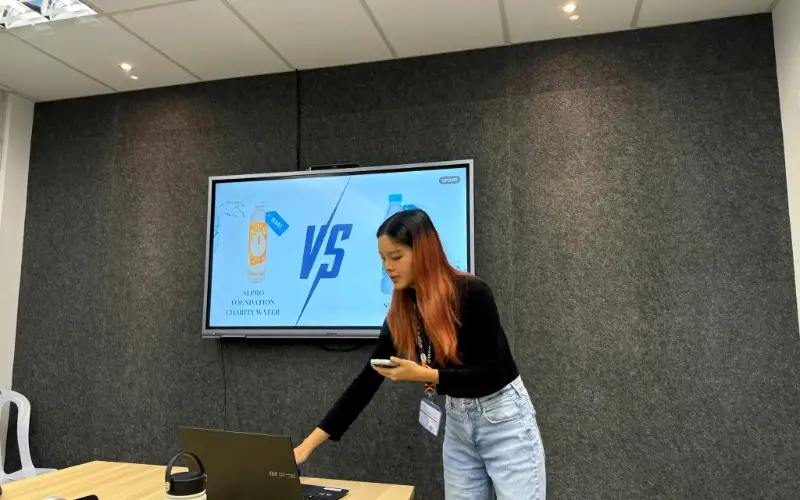
The day before, my group had been sitting in our usual classroom when Ph. Devaasiniy, a Pharmacist Trainer and programme organiser, asked us to head quickly to another meeting room. We arrived, sat down and waited in an atmosphere that felt much more serious than the session we had left.
An assessor entered and asked two of us to present our pitches. We had been selected from six candidates to present at the Alproeans Morning Sharing the next day. This earlier pitch became a practice round: we could receive feedback and identify what needed to change before the larger presentation.
I normally prepare my slides, practise my delivery and imagine what might go wrong. This time, I had to rely on how well I understood my material. Preparation, I realised, is not always knowing exactly what will happen. Sometimes it is knowing your subject well enough to adapt when the situation changes.
Being selected to present again at the Alproeans Morning Sharing did not make the nerves disappear. It gave me a reason to trust that I could work through them.
Before NextGen, community pharmacy sat at the bottom of my career preferences. I was more drawn to clinical or industrial pharmacy because I associated those paths with stronger clinical exposure and a more direct impact on patients.
My studies are naturally science-heavy: medicines, therapeutics and the clinical side of healthcare. NextGen placed those subjects beside a different set of questions about how a pharmacy operates as a business.
I had one question: how does a pharmacist remain focused on patient care while thinking about customer needs, operations, marketing and business sustainability?
I also had an assumption. I thought I already understood what community pharmacy could offer me, even though I had not properly experienced it.
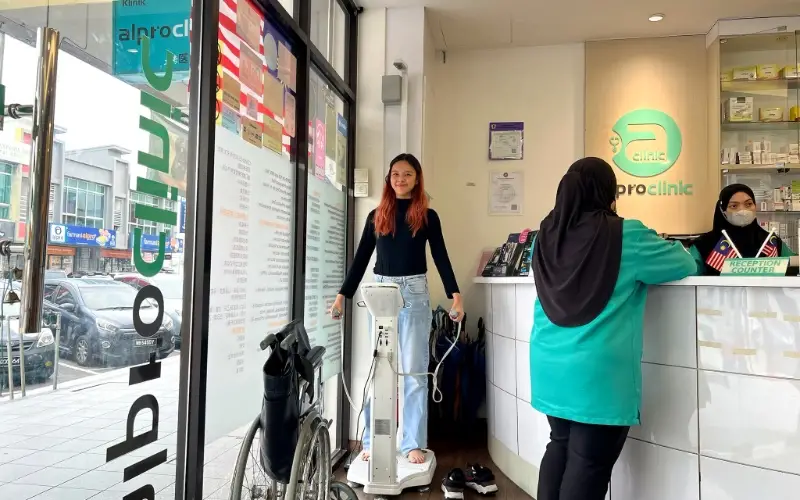
One of the most useful parts of the programme happened outside Alpro’s headquarters. We visited an area where Alpro Baby, Alpro Clinic, Alpro Physio and OptiSaver operated within walking distance of one another.
Before that visit, my picture of community pharmacy centred on the pharmacist, medicines and patients coming to the counter. Walking from one service to another made the setting feel wider. I started thinking about the different points at which someone might seek advice, assessment or support — and how a community pharmacist could be part of that network.
A presentation could have simply listed the services for us. Walking between them made me notice how the different parts of the setting connected with one another, and how accessibility and proximity could shape the way people encounter healthcare.
I was still observing as a student. Three days could not show me everything about community practice. But the visit exposed a gap between the setting I had imagined and the one in front of me.
Ph. Low Swee Siong, Founder and CEO of Alpro Group, later asked why community pharmacy ranked so low among our choices when our first preferences were mainly hospital clinical pharmacy and industrial pharmacy. He challenged our perspective by highlighting the part community pharmacies can play before a person’s condition becomes more serious — through accessible advice, health education, screening, counselling and raising health awareness.
This made me reconsider how I had been viewing different pharmacy settings. Until then, I had mainly compared them according to what I wanted to gain as a student, particularly clinical exposure. I had thought less about the different roles pharmacists can play depending on where they meet patients in the healthcare journey.
The programme did not completely change my career plan. However, it made me realise that I had been judging it through a limited understanding of what community practice could offer.
The question I left with was more specific: how can pharmacists use the trust they build in a community to support preventive healthcare, rather than meeting people only after they are already unwell?
I do not yet have the answer. That is part of why I need more experience.
During my semester breaks, I hope to take on a part-time role in a community pharmacy. I had considered doing this before, mainly as a useful way to spend my time and earn some extra money. After NextGen, I would approach it differently.
I want to observe how pharmacists speak with different patients, decide what information matters, manage the pharmacy and approach preventive care in an ordinary community setting. I also want to pay attention to approachability.
During the programme, some pharmacists made it easy for us to ask questions. With others, I hesitated because I worried about interrupting them or asking something obvious. That contrast stayed with me. Knowledge matters, but so does the way people feel when they approach us. Whatever setting I eventually choose, I want to become the kind of pharmacist people feel comfortable approaching and talking to.
If I were advising another pharmacy student, I would tell them to keep an open mind and not judge a pharmacy setting from assumptions alone. Three days did not change my entire career plan, but they gave me a better understanding of community pharmacy and made me more open to considering it.
I left with a broader view of pharmacy, a clearer idea of the skills I still want to develop and a practical way to test an assumption I had carried in with me.
If you are still discovering where pharmacy could take you, explore Taylor’s Bachelor of Pharmacy (Honours).
Teo Yung Lu, known as Celeste, is a Year 4 Bachelor of Pharmacy (Honours) student at Taylor’s University.