What a Master of Applied Computing Means in a Digital-First World

{{ vm.tagsGroup }}

30 May 2026

8 Min Read

Dr Humaira Ashraf (Academic Contributor), The Taylor's Team (Editor)

IN THIS ARTICLE

Picture this scene: a meeting is called about adopting AI in your organisation. A recommendation surfaces from a model nobody in the room fully understands. A digital initiative lands on your team, and the expectation, unspoken but unmistakable, is that you will not just participate, but lead. You look around and realise that the person best positioned to step up is not necessarily the most senior. It is the one who actually understands what the technology can and cannot do.


That moment is arriving faster than most people expect. And the question worth sitting with, before it arrives for you, is which side of that room you want to be on.

Understanding Applied Computing: What It Is, and What It Is Not

Applied Computing sits at the intersection of computing principles and practical problem-solving. It is not synonymous with coding, though programming is part of the foundation. More precisely, it is concerned with how computing knowledge is used to design, build, and improve solutions in real-world contexts: how data is structured and interrogated to support decisions, how AI systems are constructed and evaluated, how software solutions are designed for actual organisational constraints, and how digital systems can be implemented responsibly.


Think about the organisations around you. A bank wants to use AI to detect fraud earlier, but still needs people who understand how the model is trained, what data it relies on, and where it might fail. A hospital wants to digitise patient records and flag health risks automatically, but needs people who can think through both the technical design and the human implications. A logistics company wants to optimise its routes using real-time data, but needs someone who knows how to structure and interpret that data before any algorithm can act on it.


The question most organisations are wrestling with today is not whether to adopt technology. It is how to adopt it well. And the people best placed to answer that question are those who understand both the domain they work in and the computing systems reshaping it.

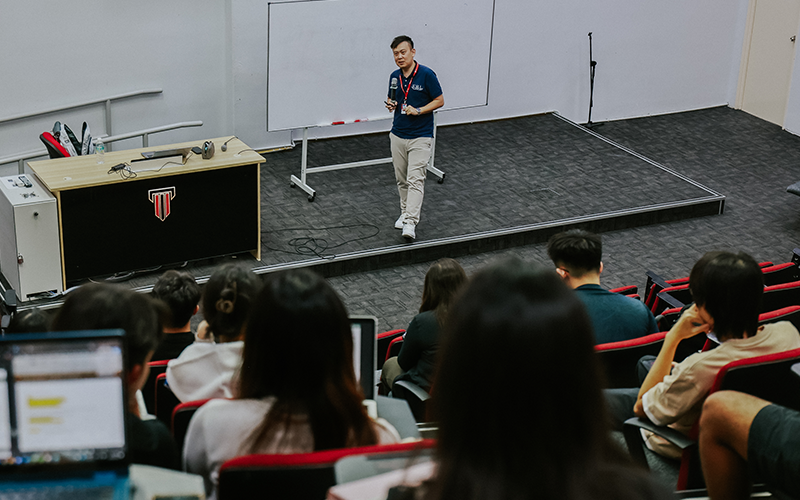
Taylor's lecturer explaining concept in the lecture hall

This also explains why Applied Computing is not the same as Computer Science, though the two are closely related. Computer Science tends to place greater emphasis on the theoretical foundations of computing: the principles, the architecture, the underlying science. Applied Computing takes those foundations and directs them toward a more specific question: how do you apply this knowledge to design, implement, and improve solutions in a real-world setting? It is technical, but its technical knowledge has a clear direction of travel.

Many people can operate AI tools. Fewer understand how data supports those tools, how the systems behind them are built, how outputs should be evaluated, and how digital solutions can be integrated into existing workflows. That difference is not just technical. It shapes how much you can contribute, and how much you are trusted to lead.

What You Actually Learn in Applied Computing

What you study follows a clear progression: computing foundations first, then data and AI, then applied project work. Each stage builds on the last, and by the end, you will have developed the kind of capabilities that employers across industries are actively looking for.


Before You Can Shape Technology, You Need to Understand How It Works


You begin by developing the ability to break down problems, think algorithmically, and write code that a system can execute. Python is central here, not only as a language of instruction but as a practical tool that carries through into data work, AI, and automation throughout the rest of the programme.


Even if your goal is not to write code full-time, this foundation changes how you engage with digital projects and technical teams. You move from someone who works around system constraints to someone who understands what is possible, and why certain choices are made.


Behind Every AI Tool Is a World of Data


AI may feel instant when you use it, but behind every intelligent system is data: its quality, structure, and management all affect the value of the final output.


The programme introduces you to data management, artificial intelligence, and data science, working through how data is collected, stored, processed, and analysed. You develop working familiarity with tools and libraries used in real data science and AI workflows, including Python-based tools for analysis and visualisation, and you begin to understand how machine learning models are built, trained, and evaluated.

Businesswomen in the boardroom

You also learn how artificial intelligence can be applied to recognise patterns, automate processes, and support problem-solving across different contexts. More importantly, you start to understand the limitations of these technologies. In an AI-driven world, that understanding is valuable because using AI well is not only about producing outputs quickly. It is also about knowing how to question, evaluate, and apply those outputs responsibly.

For someone who wants to grow in the digital economy, this is an important shift. You move from simply using AI tools to understanding the systems and data behind them. That gives you a stronger foundation to take part in conversations around digital transformation, analytics, automation, and AI adoption in the workplace.


Learning Becomes Real When You Apply It to a Problem


Technical knowledge becomes more meaningful when you can use it to solve something real. The programme's applied research component develops a habit that matters beyond the degree itself: investigating a problem systematically before reaching for a solution.


Instead of jumping straight into a solution, you learn how to investigate a problem, review relevant information, consider possible approaches, and apply computing knowledge with clearer purpose. This helps you approach technology not only as a user, but as someone who can think critically about what needs to be built, why it matters, and how it can be improved.


The project-based component gives you the opportunity to bring different parts of your learning together. Depending on your chosen area, you may draw on computing, data, AI, analytics, cybersecurity, or system-related knowledge. This helps you move beyond understanding concepts in isolation and begin applying them in a more connected way.


This is also where the ‘applied’ part of Applied Computing becomes clearer. The goal is not only to know what a technology is, but to understand how it can be used, tested, improved, or adapted for a real context.

The Career Case: Where Malaysia is Headed

According to MDEC, 70% of new job openings in 2024 required digital skills, yet only 30% of the current workforce possesses these competencies. That gap is not a future concern. It is the market you are already operating in. A 2023 DOSM survey reinforced this from the employer side, with 42% of companies reporting difficulty finding candidates with the right skills.


The picture becomes even sharper when you look at AI specifically. An AWS-commissioned study found that 81% of Malaysian employers struggle to hire AI talent, despite nine in ten making it a hiring priority. The World Bank estimates Malaysia currently has around 3,000 AI professionals, while demand is projected to reach 30,000 by 2030. That tenfold gap does not close by itself. It closes because people choose to build the skills that fill it.


The salary implications follow directly. Research shows that Malaysian workers with AI skills could see salary increases of more than 40%, with those in IT and research and development benefiting most. Employers are not just saying they want these skills; they are willing to pay a significant premium for them.

Asian programmer

The demand extends beyond AI roles. In cybersecurity, Malaysia currently has around 15,248 professionals against a projected need of 27,000 by end-2025, a shortfall the government is addressing urgently through the Cyber Security Act 2024 and accelerated talent programmes. In data analytics and software development, MDEC's Digital Talent Snapshot identifies these as the top two areas of hiring demand in Malaysia, with computer science skills growing at 71% year-on-year.

And the investment infrastructure is building around all of this. Malaysia secured over RM141 billion in digital investments in 2024, creating more than 41,000 jobs in the digital economy in that year alone. These are not projections about a distant future. They are the shape of the job market you are entering or moving within, and Applied Computing sits directly in the path of it.

Is Applied Computing the Right Postgraduate Path for You?

Choosing postgraduate study usually begins not with a clear next step, but with a question you keep returning to. Maybe it is: why do the technical teams in my organisation seem to speak a different language from everyone else? Or: I keep being handed digital projects, but I do not have the grounding to lead them confidently. Or simply: I can see where the jobs are going, and I am not sure my current skills will take me there.


If any of those questions feel familiar, Applied Computing is likely worth a closer look.

Taylor's student in the classroom

You may already be working in finance, operations, healthcare, education, or management, and watching data tools, automation, and AI gradually reshape your role. You may be planning a deliberate career shift toward technology, and want a structured pathway rather than a collection of short courses. Or you may be an early-career professional who wants to build a stronger technical foundation before entering a job market where digital literacy is increasingly the baseline, not the differentiator.

At Taylor's University, the Master of Applied Computing is a coursework-based programme that builds your computing foundations, develops your programming logic, introduces data and AI concepts and tools, and applies all of that through research-informed, project-based problem-solving.

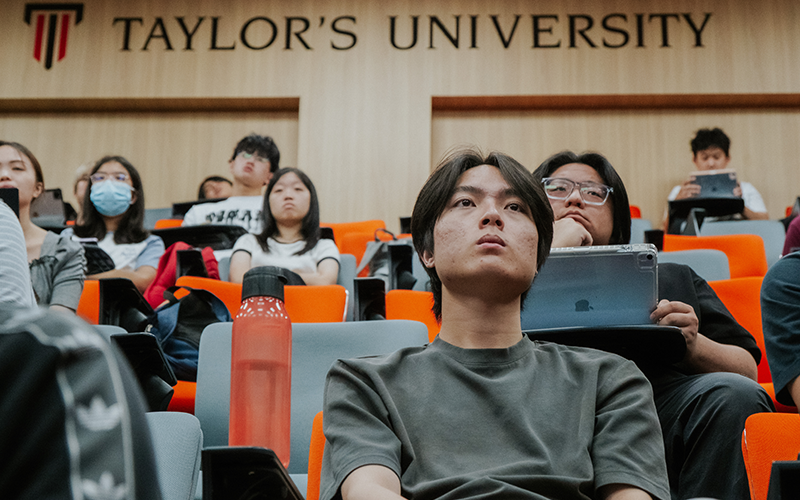
Taylor's student in the lecture hall

The programme also gives you room to shape your learning based on the direction you want to grow into. Depending on the specialisation or study pathway available to you, you may move towards areas such as artificial intelligence and machine learning, data-driven decision-making, or cybersecurity.

If you are weighing this against a research-focused Computer Science programme, the distinction matters. A Computer Science research degree takes you deeper into the theoretical and scientific foundations of computing. Taylor's Master of Applied Computing is designed for those who want to build applied technical confidence and connect computing knowledge to practical, real-world use. One is not better than the other; they serve different goals. The question is which goal is yours.

The Difference Is Where You Sit in the Room

Malaysia is at an unusual moment. The digital investments are real, the infrastructure is being built, and the demand for people who can do more than use technology is measurable and growing. What the market is short of is not enthusiasm for AI. It is people who understand what sits beneath it: the data, the systems, the decisions, and who can help organisations use it well, rather than simply use it.


That is a specific kind of capability, and it does not come from familiarity with a tool. It comes from understanding the logic behind the tool: why it was built that way, what it depends on, and what to do when it surprises you.


A Master of Applied Computing is one practical route to developing that capability. But more than a qualification, it changes where you get to stand when the important decisions are being made. Not on the outside of the conversation, waiting to be told what the technology decided, but inside it, helping to shape what happens next.

If you are ready to understand technology beyond the tools you use every day, Taylor’s Master of Applied Computing offers a practical postgraduate pathway to help you build confidence in computing, data, AI, cybersecurity, and digital problem-solving. Explore the programme to learn more about its structure, specialisations, entry requirements, and how it can support your next step in a digital-first world.

Portrait photo for Dr Humaira Ashraf

This article was developed with insights from Dr Humaira Ashraf, Programme Director for the Master of Applied Computing at Taylor’s University. She can be reached at humaira.ashraf@taylors.edu.my.

YOU MIGHT BE INTERESTED
{{ item.articleDate ? vm.formatDate(item.articleDate) : '' }}
{{ item.readTime }} Min Read