Is a Master of Science in Engineering Right for You?

{{ vm.tagsGroup }}

07 Oct 2026

12 Min Read

Professor Ir Dr Jonathan Goh (Academic Contributor), The Taylor’s Team (Editor)

IN THIS ARTICLE

In 1972, Intel opened its first production facility outside the United States: a small assembly plant in Penang, staffed by around 100 people. Over the decades that followed, Malaysia's engineers learnt to assemble, test and package chips designed thousands of kilometres away, and they became some of the best in the world at it. That plant grew into a design and development centre, and Penang grew into one of the most important links in the global electronics supply chain.


Half a century later, the AI boom is reshaping that same country. Hyperscale data centres are rising across Johor, and national data centre capacity is projected to climb from around 1GW in 2025 to as much as 3 to 4GW by 2029, while chipmakers expand their Malaysian operations to meet demand for AI hardware. Industry leaders are already warning that the country must produce more engineers to keep pace.


So where do you stand in this boom? Will you be building what others have designed, or designing what others will build?
Understanding Master of Science in Engineering

The Master of Science in Engineering at Taylor's is a research degree. Its purpose is to train you to produce new engineering knowledge, building on the foundation you established during your bachelor's. You arrive with a question, or at least the outline of one. Over the course of your candidature, you design an investigation, run it, interpret what it tells you, and defend your findings in a thesis written under the guidance of an academic supervisor.


That description can sound abstract until you see how much of the work happens with your hands. Research engineering is laboratory work, simulation, prototyping and testing, repeated until the data holds up. One project at Taylor's is studying biolubricants made from waste cooking oil, and whether natural antioxidants recovered from palm oil processing residues can stop them breaking down. A candidate on work like this might spend weeks extracting and blending the antioxidants, more weeks testing how well each blend resists oxidation, and several more working out why one batch holds up while the next does not. The thinking and the making are inseparable.


At the macro level, engineering is a national system. Malaysia is trying to move from assembling and testing other people's chips towards designing its own, to shift its power supply towards renewables, and to raise how much it invests in research overall. Each of those ambitions is, at bottom, a set of technical problems that someone has to solve for the first time. Policy can fund the effort, and investment can build the factories, but the knowledge itself comes from engineers trained to investigate problems no one has solved before.


At the micro level, engineering research zooms in on one small problem. Why does a 3D-printed metal wall cool unevenly? How quickly does a filter membrane clog with kitchen grease? These questions are narrow enough to answer properly within two years, and that focus is what makes a solid answer possible.

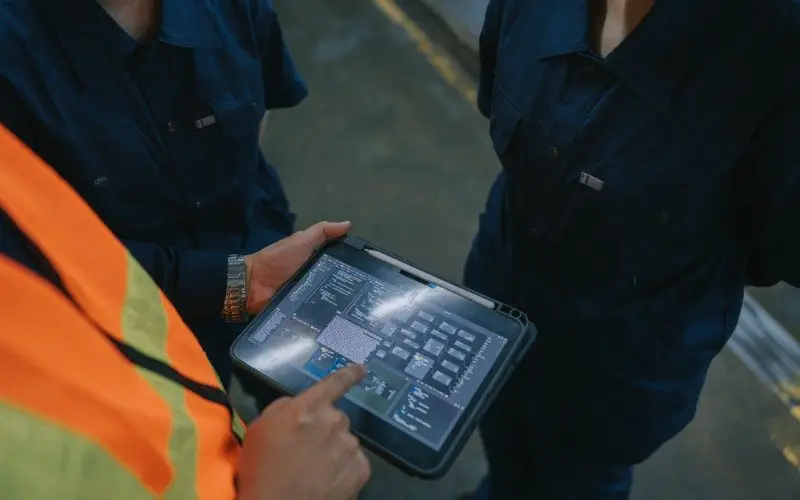
Engineers in work uniforms reviewing system data on a tablet on a factory floor

The most valuable work moves between these two heights. A finding about how a solder alloy behaves at low temperatures looks tiny on the lab bench, yet it can shape whether an entire packaging line can take on a new generation of heat-sensitive chips. Learning to see both ends of that chain is a large part of what the degree develops in you.

What You Will Study

A research master's does not hand you a fixed syllabus. Instead, it offers a set of open problems within the areas where Taylor's engineering academics are actively working, and you choose where to focus based on the questions that interest you most. Several of these areas are organised through the university's Centre for Sustainable Societies and Centre for Intelligent Innovations.


Entry Requirements


You will need a bachelor's degree at Level 6 of the Malaysian Qualifications Framework in a relevant field. Applicants with a minimum CGPA of 2.75 meet the standard requirement. Those between 2.50 and 2.75 may be accepted following an internal assessment, and those between 2.00 and 2.50 may be considered with at least five years of relevant work experience. International applicants need IELTS 6.0 or a TOEFL internet-based score of 60. Intakes open in February, April, June, September and October.


Getting Started


Because a research degree is built around your own inquiry, every application requires an approved research proposal. That means identifying a direction and a matching supervisor is part of getting in. It pays to browse the university's supervisor directory early and start a conversation before you apply, since the pairing shapes everything that follows.


Once you begin, your first year includes six credit hours of research methodology: a core module, Research Method for Social Science, plus a choice of Qualitative or Quantitative Research Methods. This is where you learn to turn an engineer's instinct about what is going wrong into a testable question, and to choose methods that will hold up under scrutiny. Get it right, and the rest of your research has a solid foundation.


Research Areas


The School of Engineering's research sits across two of the university's research centres. The Centre for Sustainable Societies is home to its materials, chemical and thermo-fluid engineering research, while the Centre for Intelligent Innovations covers mechatronics, electrical and electronic, and systems engineering. Between them, they offer seven research clusters where your inquiry can take shape.

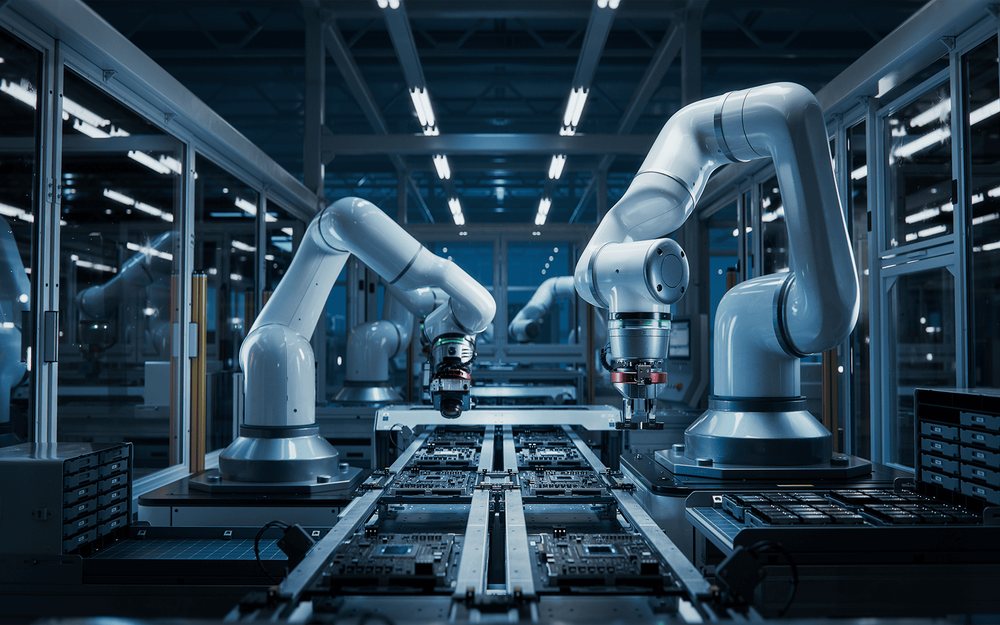
  1. Robotic arms working along an automated electronics production line

    01 / 07

    Advanced Materials and Manufacturing for Sustainable Engineering

    Centre for Sustainable Societies

    How do you make things with less waste, less energy and materials that last longer?

    This cluster works on eco-friendly materials, low-carbon production and circular materials that can be reused or recycled, and its questions are often the ones that stall real factories. One ongoing study examines the thermal behaviour of low-temperature tin-bismuth solder for energy-efficient electronics packaging, the kind of question that decides whether a packaging line can take on the cooler, more efficient chips that AI hardware increasingly demands. Another develops heat source models and grain size prediction for wire arc additive manufacturing (WAAM), helping engineers predict how thick metal structures will behave before they are printed. Picture yourself running simulations in the morning, comparing them against physical samples in the afternoon, and spending the evening working out why the two disagree.

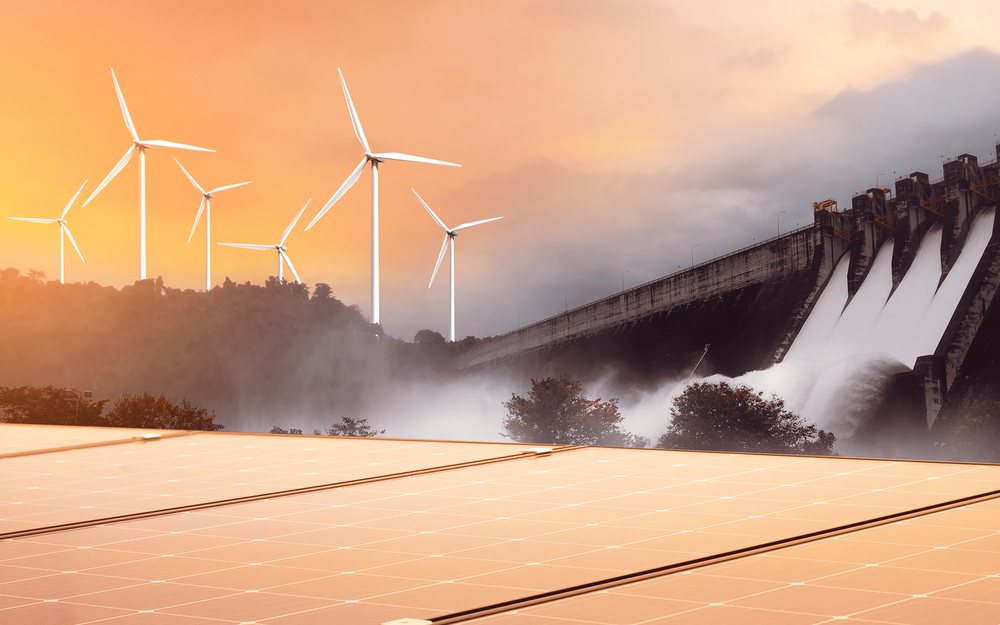
  2. Wind turbines and a hydroelectric dam above a field of solar panels at sunset

    02 / 07

    Renewable Energy

    Centre for Sustainable Societies

    How do you keep clean power flowing when the sun and wind will not cooperate?

    This cluster covers smart grids, energy storage and optimisation, fluid dynamics and the low-carbon infrastructure behind the clean energy transition. It is also home to some of the school's more surprising ideas: Taylor's researchers have developed a hybrid solar cell designed to generate power in rain as well as sunshine, a direct response to the reality of tropical weather. A candidate here might spend a semester testing how a storage system or control algorithm handles sudden changes in load, the kind of fluctuation a grid faces every afternoon when clouds roll in.

  3. Mist rising over a dense tropical rainforest canopy

    03 / 07

    Environmental Protection

    Centre for Sustainable Societies

    What happens to everything industry leaves behind?

    This cluster focuses on advanced water and wastewater treatment, air pollution control, biomass processing, and turning waste into valuable resources. Much of the work involves industry partners who bring real problems to the table. One project investigates a solar-powered evaporator to treat industrial wastewater from an electronics manufacturer; another tests temperature-responsive membranes that resist clogging in kitchen wastewater. Research here tends to end with a question every candidate learns to expect: will it work at scale, and what will it cost?

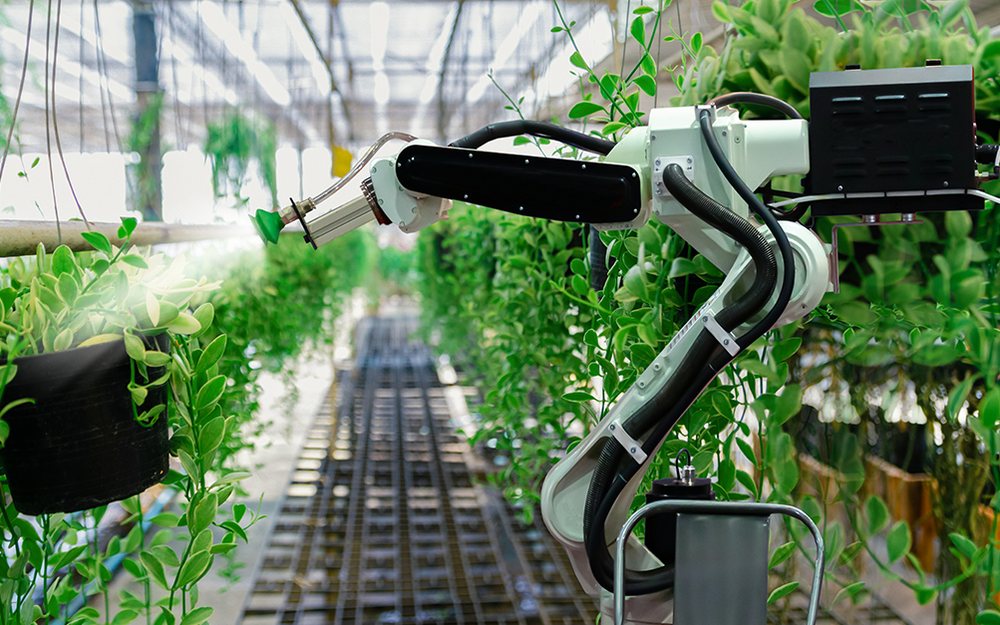
  4. A robotic arm tending plants in an indoor vertical farm

    04 / 07

    Intelligent Robotics

    Centre for Intelligent Innovations

    How do you build a machine that people can trust to act on its own?

    This cluster works on drones, robots whose decisions are trustworthy and explainable, and smart manufacturing systems connected through the Internet of Things (IoT). A candidate might spend weeks refining a drone's control algorithm in simulation, then test whether it holds steady once real wind, real obstacles and real sensor noise enter the picture.

  5. A glowing digital globe made of connected data points

    05 / 07

    AI-Enabled Pervasive Networks

    Centre for Intelligent Innovations

    What does it take for millions of connected devices to talk to each other reliably?

    This cluster covers smart sensors, adaptive wireless communication, embedded IoT systems and edge computing, where data is processed close to where it is collected instead of in a distant data centre. One current project uses machine learning to understand how user behaviour affects the performance of 5G networks, with the aim of using network resources and energy more efficiently.

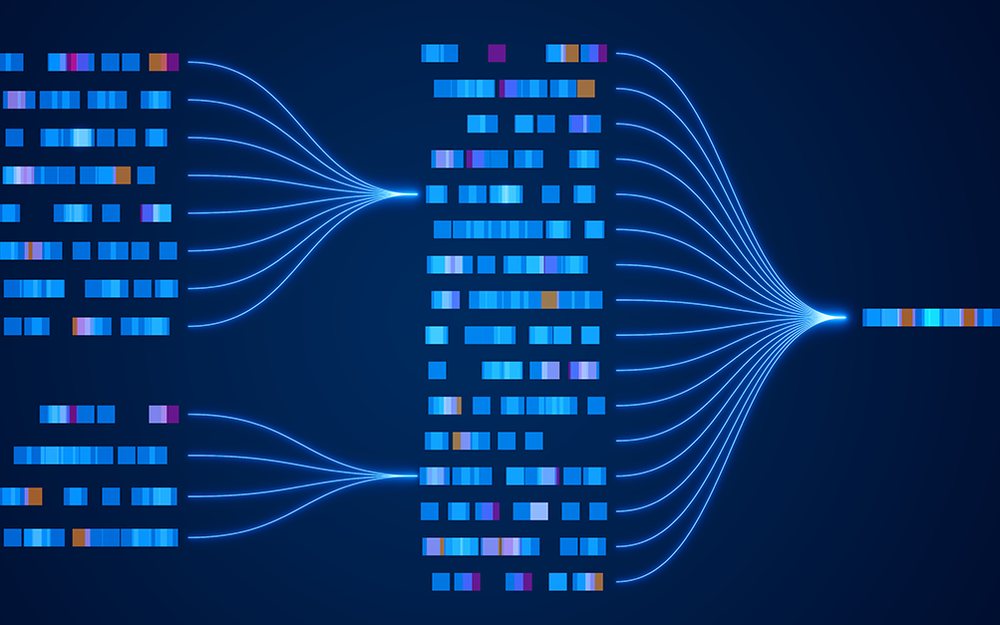
  6. Streams of data blocks converging into a single output, illustrating a machine learning model

    06 / 07

    AI and Data Informatics

    Centre for Intelligent Innovations

    How can a factory predict a problem before it happens?

    This cluster applies machine learning and computational intelligence to industrial systems, building predictive models and optimising processes. Think of a production line that flags a failing component days before it breaks, or a plant that adjusts its own settings to cut energy use without losing output.

  7. Layers of floating digital screens and circuitry in a dark blue data space

    07 / 07

    Smart Cybersecurity and Cyber Defense

    Centre for Intelligent Innovations

    What happens when the systems running a power grid or a factory come under attack?

    This cluster protects cyber-physical systems, smart grids and the industrial control infrastructure that essential services depend on. As more engineering systems connect to networks, securing them becomes an engineering problem as much as an IT one.

What Is Happening in Malaysian Engineering Right Now

The case for research engineers in Malaysia has rarely been stronger. Under the National Semiconductor Strategy, the country is working towards 60,000 highly skilled professionals by 2030 across chip design, advanced packaging, wafer fabrication, and research and development. By mid-2026, the government reported that just over 18,000 had been developed. Industry voices increasingly argue that short training courses alone will not close the remaining gap, and have called for greater focus on master's-level education as the work moves into design and innovation. The data centre build-out adds its own pressure: the ASEAN+3 Macroeconomic Research Office reports that the sector already faces shortages of specialised talent in areas such as infrastructure management and environmental controls, with Singapore competing for the same people.

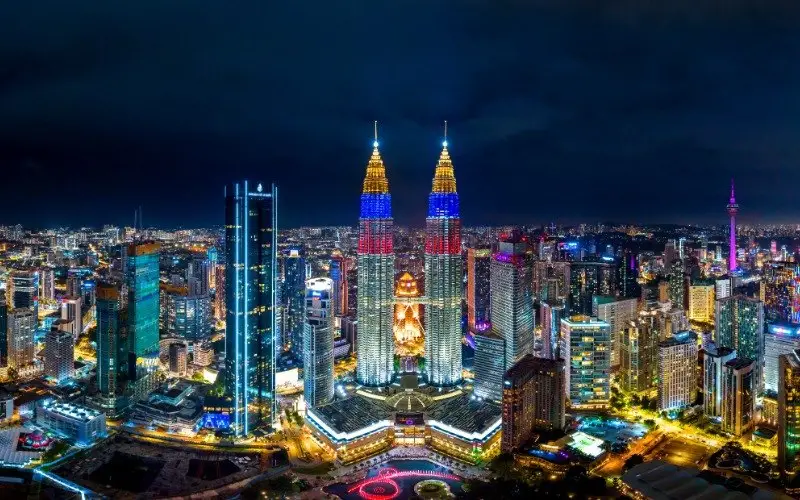
Kuala Lumpur city skyline at night with the Petronas Twin Towers lit up

The wider research picture tells a similar story. Malaysia's spending on research and development reached 1.01% of GDP in 2022, against a national target of 3.5% by 2030. The same report shows the number of researchers rising to 55 for every 10,000 people in the labour force, up from 33 just two years earlier. Money can be allocated in a budget cycle. The people capable of spending it well on genuine inquiry take years to develop, and that is precisely the gap a research master's is designed to fill.

Where the Degree Takes You

Graduates of research engineering degrees tend to follow one of three broad paths, and many move between them over a career.


The first is industrial research and development. Imagine yourself three years from now in the design centre of a multinational or a growing Malaysian firm, leading the investigation when a product line fails in a way nobody has seen before. Your value lies less in what you already know and more in your ability to find out what nobody yet knows, quickly and credibly.


The second is academia. For graduates who discover they love the inquiry itself, the master's is often the first step towards a PhD, a lectureship and a research group of their own.


The third is entrepreneurship. A well-defined thesis finding, whether a cheaper membrane, a more efficient inverter design or a new use for waste material, can become the foundation of a start-up or a licensing arrangement with industry.


Across all three, what the degree gives you is a transferable capability: the discipline to lead an inquiry from question to evidence to conclusion. Technologies change every few years. That capability does not.

Is This Programme Right For You

This degree tends to suit a particular kind of engineer. You are the one who keeps asking why after the fix has already worked. You can tolerate weeks where the data refuses to make sense, and you are motivated by a question more than by a timetable. Perhaps you are a recent graduate whose final-year project left you wanting to go further. Perhaps you are a working engineer who has watched the same unsolved problem return to your plant three years running.


Be honest with yourself about the commitment. Full-time candidature runs two to four years, and part-time study can stretch to six. Much of that time is self-directed, and a great deal of research consists of experiments that do not work the first time, or the fifth.


If you are the reader this degree was designed for, the environment matters. The programme is led by Professor Ir Dr Jonathan Goh, a Professional Engineer and Chartered Engineer whose research on renewable and hybrid energy systems has earned a Google Scholar H-index of 47. Taylor's School of Engineering was the first in Southeast Asia to adopt the Conceive, Design, Implement, Operate (CDIO) Initiative, an international framework for engineering education built around real-world problem solving.

Past the Edge of the Manual

Every process manual, textbook and standard operating procedure you have ever used was written by someone who once stood in front of a problem with no answer. Experience teaches you which of those answers to reach for. Research teaches you how answers come to exist in the first place, and that second kind of knowledge is the one that keeps its value when the technology in front of you changes.


The engineers who walked into that Penang plant in 1972 learnt to build what others had designed, and they did it well enough to put Malaysia on the map. The engineers entering the AI era have a different opportunity: to decide what gets designed in the first place.

Ready to explore your research direction? Book an appointment with our team to discuss potential supervisors, research areas and funding options for the Master of Science in Engineering.

Portrait photo of Professor Ir Dr Jonathan Goh Hui Hwang

This article was developed with insights from Professor Ir Dr Jonathan Goh Hui Hwang, Programme Director for the Master of Science in Engineering and PhD in Engineering at the School of Engineering, Taylor’s University. He can be reached at jonathan.goh@taylors.edu.my

YOU MIGHT BE INTERESTED
{{ item.articleDate ? vm.formatDate(item.articleDate) : '' }}
{{ item.readTime }} Min Read