Nikhil Purlackee's First-Year Computing Work Earns a Global Commendation

{{ vm.tagsGroup }}

18 Nov 2026

2 Min Read

The Taylor's Team (Editor)

IN THIS ARTICLE

Nikhil Purlackee earned a Highly Commended distinction in Computer Science at the 2026 Global Undergraduate Awards for a paper that grew out of a first-year assignment. It placed in the top 10% of submissions in its category. The commendation made Nikhil the first Taylor’s University student to be recognised by the Global Undergraduate Awards.


Nikhil, who is from Mauritius, began exploring the idea during his Bachelor of Computer Science (Honours) studies. What would it take to design an AI tool for young adults who might find it difficult to seek emotional support?
Where the Assignment Began

In his first year, Nikhil took a module in systems analysis and design. For his assignment, he looked at existing wellbeing apps and read research on the barriers young adults can face when seeking support. A questionnaire and interviews helped him explore what people might want from a tool and what could put them off using it.


Availability was part of the appeal. A digital tool could be there at any hour. But being able to open it easily was only part of the question for Nikhil. People would also need to know what the tool could do and how it would use the personal information they shared.

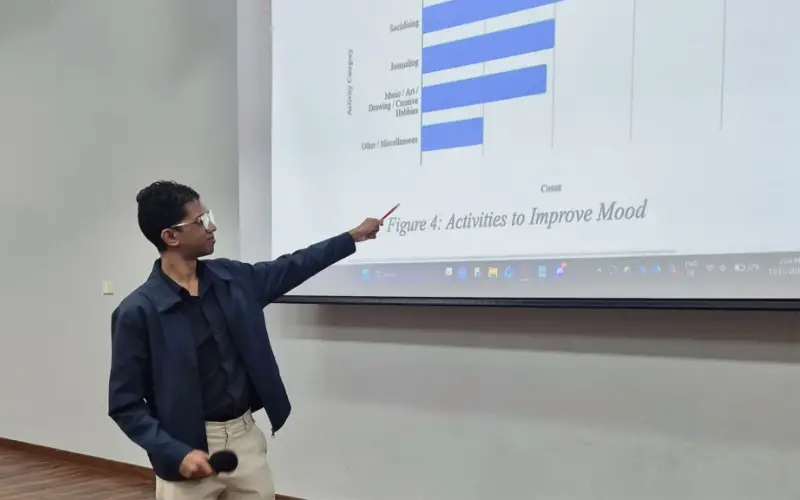
Nikhil points towards a projected chart with blue horizontal bars

Nikhil Purlackee points to a chart from his paper showing activities respondents reported using to improve their mood.

The Data Behind a Suggestion

One proposed feature was a short message offering a personalised self-care suggestion. To work out how the system might choose that message, Nikhil had to think about what it would draw on: an entry about the user’s mood, for example, or a previous interaction.


He used diagrams to trace how that information would move through the system. Diagramming turned a feature he could describe in a few words into something he had to account for. A recommendation would need information about the person receiving it, and that meant deciding what the system would record and how it would use those records.

When the Chat Would Give Way to Human Support

There was another decision to make about the chat itself. In Nikhil’s proposal, language that might signal serious distress would prompt the system to interrupt the conversation and show options for reaching a trusted person or accessing professional and emergency support. The aim was to make those options easy to find at a point when navigating a complicated screen could get in the way.


Nikhil developed the interface mock-ups with a collaborator. Those screens show how the options could be presented. Whether a working system could reliably recognise when to show them would still need to be tested. Nikhil sees an interactive prototype, usability testing and specialist input on safety and privacy as possible next steps.

What an Assignment Could Become

For Nikhil, the commendation changed how he saw the work he did for class. ‘An assignment can be more than something completed for a grade, it can become a starting point for deeper investigation, thoughtful design and opportunities beyond the classroom.’

If tracing the decisions behind a feature is the kind of work you’d like to try, see where systems analysis fits into the Bachelor of Computer Science (Honours).

YOU MIGHT BE INTERESTED
{{ item.articleDate ? vm.formatDate(item.articleDate) : '' }}
{{ item.readTime }} Min Read