Postgraduate Deep Dive: Inside The Master of Counselling

{{ vm.tagsGroup }}

24 Jul 2026

8 Min Read

Dr Ahmad Mustaqim Bin Yusoff (Academic Contributor), AP Dr Zainah Binti Ahmad Zamani (Academic Contributor), The Taylor's Team (Editor)

IN THIS ARTICLE

At some point, life stopped feeling manageable for some people. Not dramatically most of the time, but quietly, persistently harder. The signs are familiar: a creeping sense of burnout, relationships under strain, grief that has no clear name, and an overwhelming feeling of not knowing how to cope.


These struggles have always existed. What has changed is that more people are now naming them, and seeking help for them, than ever before. The demand has outpaced the profession's capacity to meet it. And sitting at the front line of all of it, yet rarely the first option people consider, is the counsellors.

The Profession at a Turning Point

When someone is struggling, seeing a counsellor is seldom the first thought. They might first call their best friend. And then they might try talking to a parent, though not every problem is one you can bring home, if you are an Asian, you will know it. They will then turn to their faith, or push through the week, or tell themselves it will pass. Counselling, for most people, is something you arrive at after the other options have not worked.


By the time someone books a session, they are often not at the beginning of their struggle. They are somewhere in the middle of it, sometimes deep in it, having already tried the things that felt safer or more familiar but found them unable to hold the weight. The counsellor sitting across from them needs to be prepared for that.

Image showing dice with happy and unhappy face

According to the World Health Organization (WHO), more than 720,000 people die by suicide every year worldwide. This sobering statistic highlights the growing global mental health crisis and underscores the urgent need to strengthen access to professional mental health and counselling services. Helpline calls to Life Line Association Malaysia nearly doubled between 2020 and 2024. One in six children is now affected by mental health problems, double the rate recorded in 2019, according to the National Health and Morbidity Survey 2023.

The gap between how many people need support and how many qualified practitioners are available to provide it has prompted some to look for alternatives.


AI has arrived with a compelling offer: always available, never judgmental, no waiting list. AI-assisted tools can track mood, walk someone through a Cognitive Behavioural Therapy (CBT) exercise, or provide a structured space to process feelings at 2am when no one else is reachable. For certain bounded tasks, the early evidence suggests they help. But research consistently draws a line at complexity. When a case involves trauma, grief, or something the client themselves cannot yet name, AI systems have been found to fall short. AI can accompany someone, but it cannot stay with them through the parts that are hard to hold.


What separates a trained counsellor from everything else is not availability or information. It is the capacity to stay with someone through the parts that are genuinely difficult, and to know what to do when they get there.

Understanding the Programme

A Master of Counselling is a coursework-based postgraduate degree, which means the learning is structured, assessed, and delivered through taught modules and supervised practice rather than through self-directed research. The programme runs over two to three years, with full-time and part-time pathways available, and it is explicitly designed to meet the registration requirements of the Board of Counsellors Malaysia, known as Lembaga Kaunselor Malaysia or LKM.

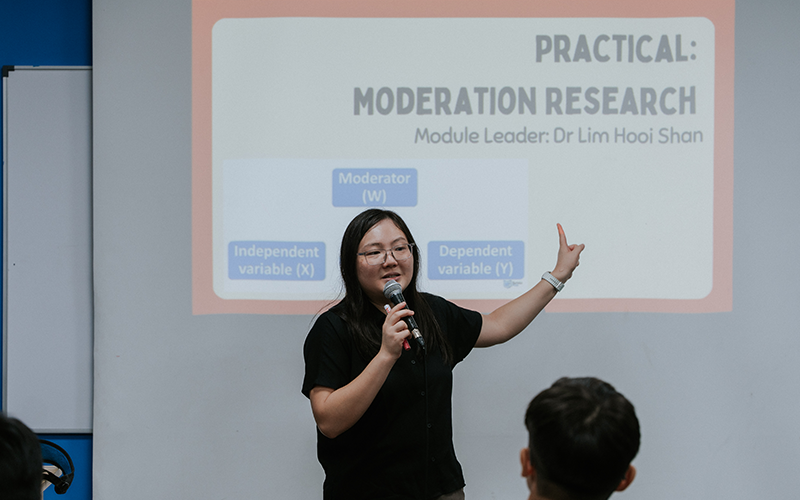
Taylor's counselling lecturer in the classroom

To practise formally as a counsellor in Malaysia under Act 580, you must be registered with LKM and hold a biennial Practising Certificate. Registration requires a recognised master's-level qualification, supervised practicum hours, and an interview process. The programme is built around these requirements, which means completing it does not just give you a degree. It positions you for professional licensure.

Counselling in this context means working with individuals experiencing milder to moderate mental health challenges: life stressors, adjustment difficulties, relational and family issues, grief, career transitions, anxiety, and early-stage psychological distress. This is not clinical psychology nor psychiatry; the scope has its own logic and its own professional rigour, and understanding that boundary, knowing what falls within it and what to refer on, is part of what the programme trains you to do.

What You Actually Learn

The programme runs across two years for full time and three years for part time.. The first builds the theoretical and clinical foundation, the second puts it to work: in supervised practice, in real client settings, and in research that demands you think like a reflective practitioner rather than just a student completing coursework.


The Language of Therapy


In the first year, the learning is theoretical. Every counsellor needs to understand the major schools of psychotherapy, not just know their names, but know how each one frames the client's experience and what it demands of the practitioner. 


Approaches such as cognitive-behavioural, humanistic, psychodynamic, and integrative therapy will shape how you listen and what questions you ask. Part of the work here is developing your own clinical orientation: a coherent personal stance toward the therapeutic relationship that is grounded in evidence rather than intuition.


Running alongside this is the biopsychosocial dimension of human development. A client's current presenting issues do not exist in isolation. They are shaped by developmental history, life stage, biology, and social context. Understanding what is developmentally typical, what psychopathological patterns look like across the lifespan, and how these interact is what allows you to conceptualise a client's situation rather than just respond to it.


The Technical Craft


A significant part of Year One is devoted to developing the actual skills of counselling: opening and holding a therapeutic relationship, listening in a way that is active and purposeful rather than passive, using assessment tools appropriately, and working with groups and families as well as individuals.

Testing and measurement in counselling is part of this.


Standardised assessment data is used in counselling settings to inform intervention planning and track client progress. You are not being trained as a diagnostician, but you need to be able to read and apply that data competently.

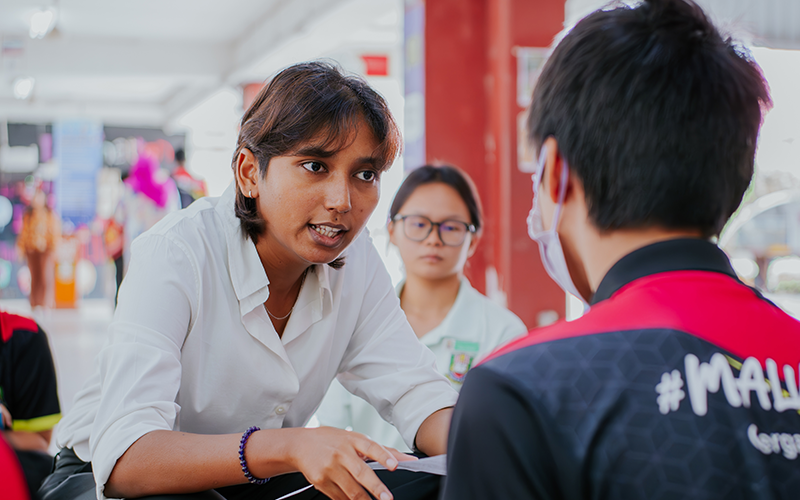
Taylor's master of counselling student in the school

The multicultural dimension is also taught as a core competency, because in a country as pluralistic as Malaysia, the ability to work thoughtfully across ethnic, religious, linguistic, and generational contexts is not optional.

Clinical Work Under Supervision


Year Two shifts from learning about counselling to doing it. The practicum puts you in direct client work under close supervision from experienced practitioners and faculty. This is where classroom knowledge is stress-tested against real presenting cases, and where the gap between knowing a technique and being able to deploy it thoughtfully becomes very apparent. The supervision structure is designed to give you rigorous, specific feedback on your actual practice, not encouragement, but genuine clinical mentorship.


The internship that follows is a culminating field placement, embedding you in a real counselling setting: a hospital, school, corporate environment, community organisation, or clinic, under supervision. It provides the practical hours required for LKM registration, and it is also where you discover what kind of counsellor you are becoming and what kind of setting suits your strengths.


The research project runs alongside this. You develop a proposal, conduct the research, and communicate findings in both written and oral form. The goal is to help you develop the evidence-based orientation that separates a reflective professional from one who relies on habits.

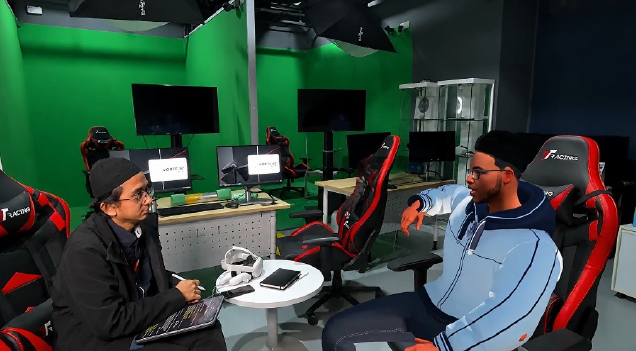
Vortex

Who Is This For?

This programme is for you if you are already in the field. It is looking for self-awareness, motivational clarity, and the relational capacity that the work demands.


People who arrive here tend to come from one of a few directions. You might be a school counsellor or community service worker who has been doing this work informally or without formal credentials and have reached a point where you want professional recognition and deeper clinical grounding.


Or you might come from an allied health background such as nursing or social work, where the mental health dimension of your work has grown beyond what your original training covers. Or you might be a recent graduate in psychology or social science who has a clear sense that counselling is the direction you want to go and are ready to pursue it at a professional level.


What these starting points share is that you might have already had experience working with people who required help, and have felt the limits of what you could offer them. That is exactly the gap the programme is designed to close.

Where It Takes You

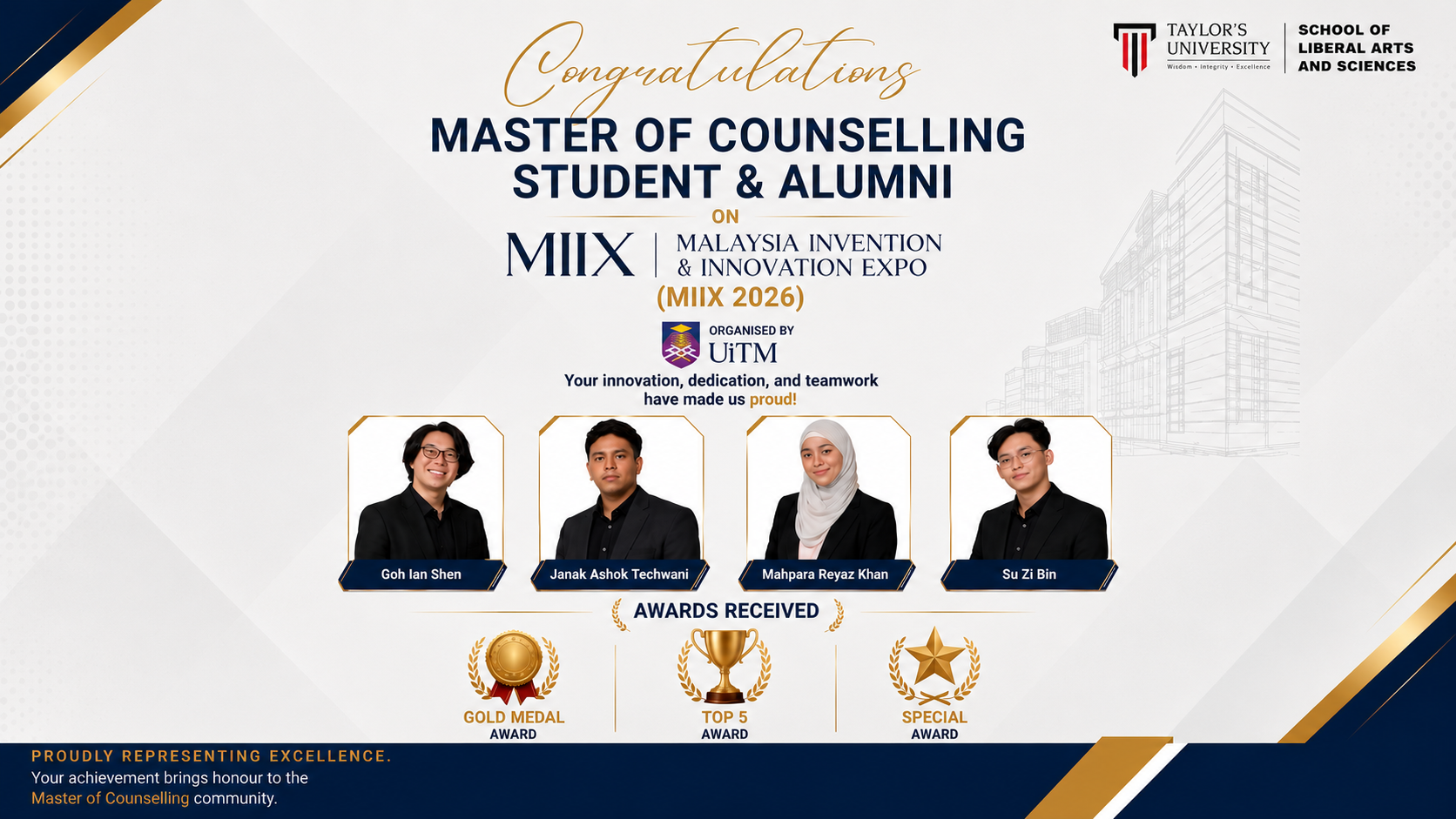
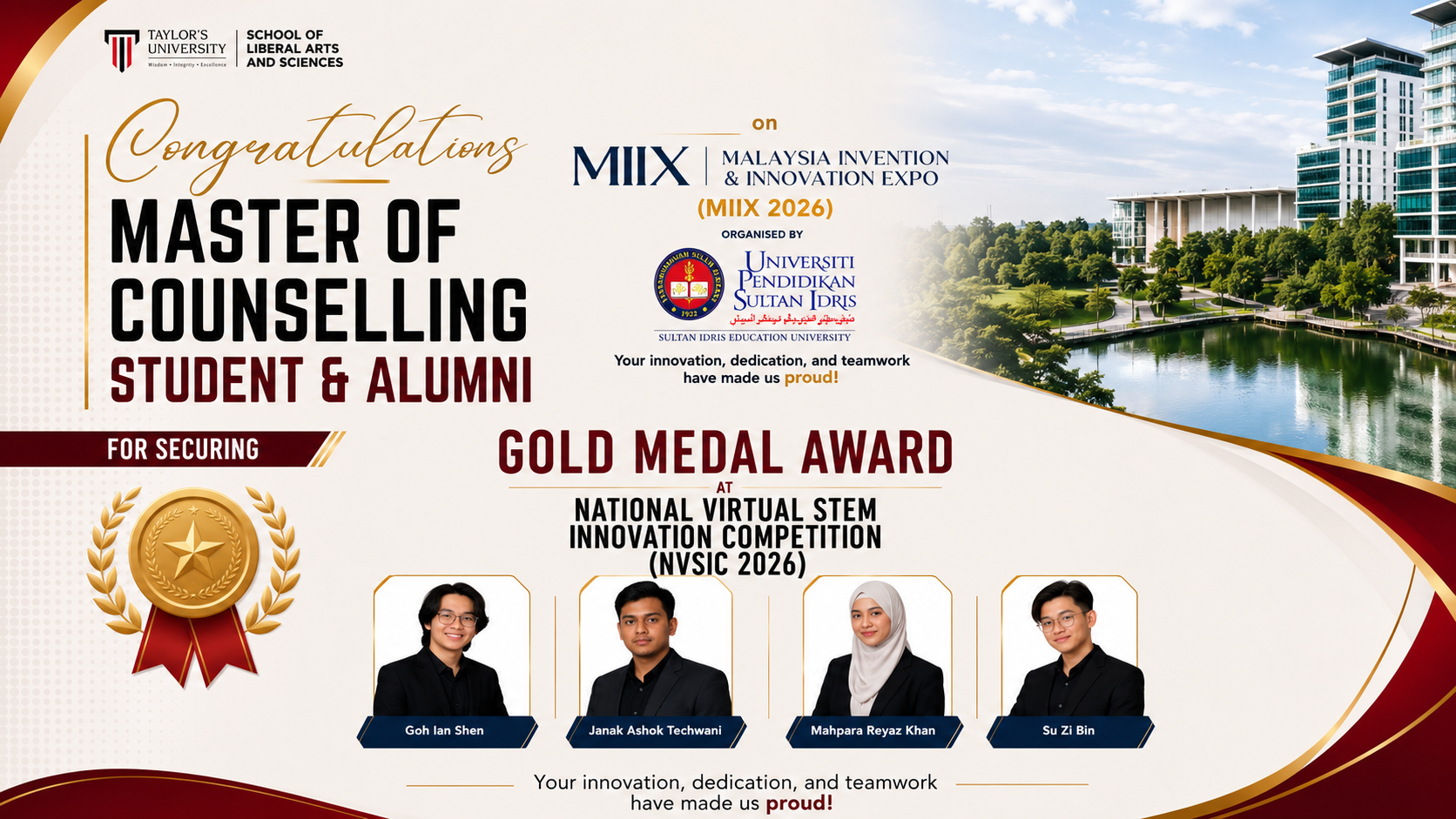
The Master of Counselling programme at Taylor's University goes beyond experiential learning by actively preparing students to excel in both national and international innovation competitions.


Through this unique emphasis on innovation, students are encouraged to integrate emerging technologies into counselling practice, equipping them with the knowledge, skills, and adaptability needed to meet the evolving demands of the counselling profession. This approach develops graduates who are not only competent practitioners but also innovative professionals capable of leading the future of technology-enhanced mental health services.

Taylor's student achievement

The most immediate outcome of completing this programme is eligibility to apply for registration as a licensed counsellor with the Board of Counsellors Malaysia (LKM). In addition to meeting the Board's registration requirements, graduates are required to successfully undergo the LKM registration interview before they can be registered as licensed counsellors.


This is the professional license that allows you to practise formally in Malaysia, and it is what separates a trained counsellor from someone who helps informally. The programme is structured around LKM's requirements so that graduation is not just an academic milestone but a direct step toward professional standing.


As a licensed counsellor in Malaysia, you have a wider range of settings available to you than is commonly assumed. The public sector, which includes Ministry of Health facilities, university counselling centres, and government schools, is one pathway. The private sector is growing faster: private hospitals, wellness clinics, corporate EAP providers, and international educational institutions are all actively building out their mental health capacity.

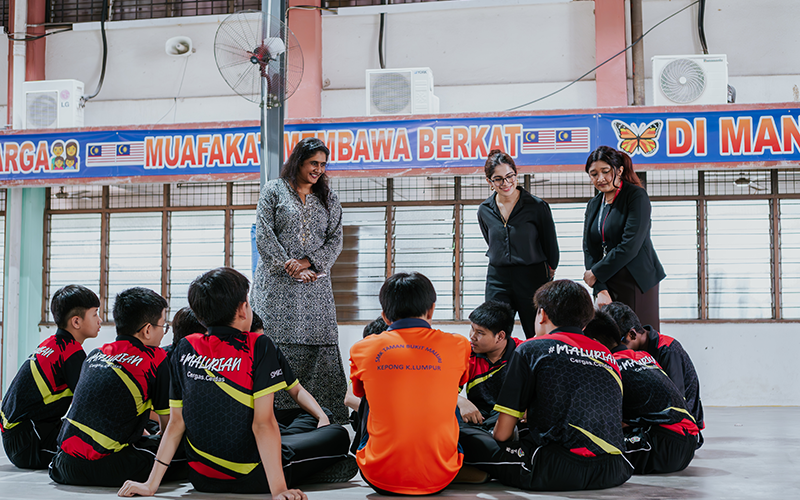
Taylor's student in the secondary school

NGOs working on child protection, domestic violence, crisis intervention, and community health are a significant employer of counsellors, often in roles that require more clinical depth than frontline support positions. Private practice is another important career pathway. Through the Professional Issues, Ethics and Law in Counselling module, you will develop the ethical, legal and professional competencies required to practise responsibly, while also acquiring entrepreneurial knowledge and skills to establish and manage your own private counselling practice.

If the above resonates, Taylor's University offers the Master of Counselling, a programme built around LKM's registration requirements and available in both full-time and part-time modes, so you can pursue it without stepping away from the work you are already doing.

The Question Worth Sitting With

As a counsellor, you will be the last door someone knocks on before they stop knocking altogether. What you bring into that room will subsequently shape whether they find their way through, or walk away still carrying what brought them there.


That is worth getting right. And you might find that this programme is where that preparation begins.

Ready to take the next step? You can book an appointment with our education counsellors to find out if this programme is the right fit for where you want to go.

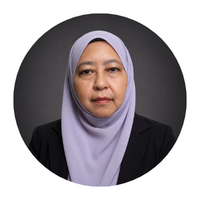
Portrait photo for Associate Professor Dr Zainah Binti Ahmad Zamani

This article was developed with insights from Associate Professor Dr Zainah Binti Ahmad Zamani, Programme Director for the Master of Counselling at Taylor’s University. She can be reached at zainah.ahmadzamani@taylors.edu.my

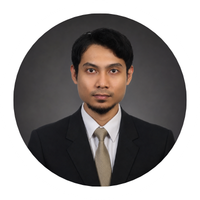
Portrait photo for AP Dr Jasmine Jain

This article was developed with insights from Dr Ahmad Mustaqim Bin Yusoff, Senior Lecturer for the School of Liberal Arts and Sciences at Taylor’s University. He can be reached at 

YOU MIGHT BE INTERESTED
{{ item.articleDate ? vm.formatDate(item.articleDate) : '' }}
{{ item.readTime }} Min Read