Taylor's Tax Forum 2026 Brings MOF, MIA, CTIM and Maybank to One Table Ahead of Budget 2027

{{ vm.tagsGroup }}

05 Oct 2026

9 Min Read

Associate Professor Dr Nor Shaipah Abdul Wahab (Academic Contributor), Dr Nurliyana Haji Khalid (Academic Contributor), The Taylor's Team (Editor)

IN THIS ARTICLE

Ask a tax practitioner what clients most often want to know, and the answer is often some version of the same question: how can I reduce or avoid paying tax? Mr Alan Chung, President of the Chartered Tax Institute of Malaysia (CTIM), raised that question in a lecture theatre at Taylor’s University Lakeside Campus. He used it to make the case for a stronger culture of compliance. Mr Surin Segar, Head of Group Tax at Maybank, saw it differently. In his experience, businesses are generally willing to pay. The harder part is working out what the right tax actually is.


That exchange, which drew the strongest reaction of the morning, captured what the forum had set out to do. Held on 18 September 2026, three weeks before Budget 2027 is tabled in Parliament on 9 October, One Table, Many Voices: Bridging Authorities, Professionals and Taxpayers to Shape National Budget put the people who draft tax policy, the people who interpret it and the people who pay it in the same room. YBhg. Dato’ John Patrick a/l Antonysamy, Under-Secretary of the Tax Division at the Ministry of Finance Malaysia (MOF), and Mr Ahmad Syahazan Yaacob, Vice President of the Malaysian Institute of Accountants (MIA), completed the panel. Associate Professor Dr Nor Shaipah Abdul Wahab, Head of the School of Accounting and Finance, moderated the forum, which was organised by Taylor’s Centre for Accountancy Studies (TCAS) and the School of Accounting and Finance at Taylor’s Business School.
Are We Hearing Enough Voices?

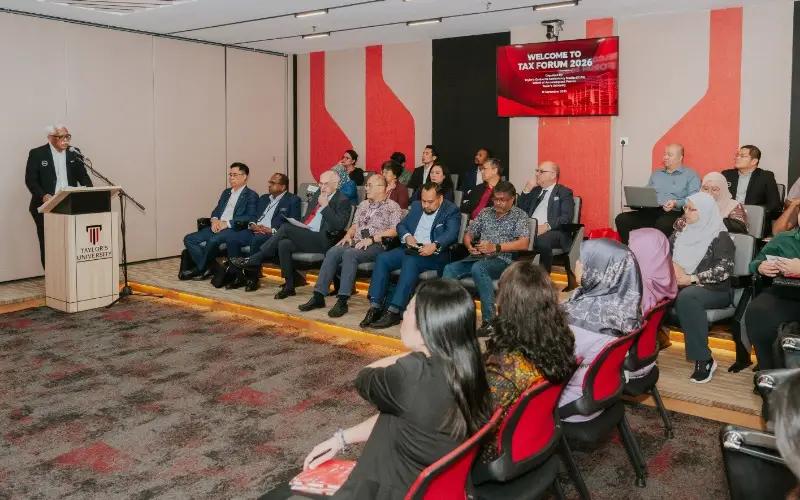
A speaker at the Taylor's University lectern opens the Tax Forum 2026 as panellists and participants listen in Lecture Theatre 27

Opening of the Tax Forum 2026 in Lecture Theatre 27, Taylor’s University Lakeside Campus.

Preparing the national budget already involves extensive consultation. The organisers wanted to know whether that consultation reaches far enough. ‘We felt it was important to hear directly from policymakers, practitioners, industry representatives, academics, and the wider community on whether the various voices and perspectives that matter are being adequately reflected,’ said Associate Professor Dr Nor Shaipah.

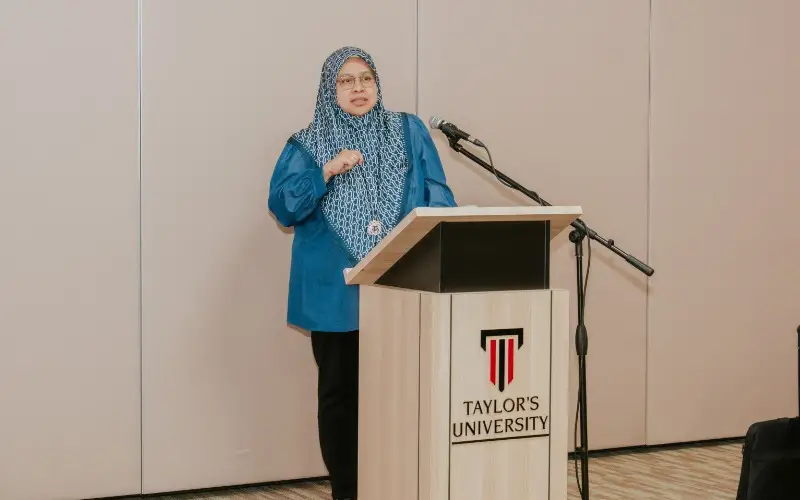
Associate Professor Dr Nor Shaipah Abdul Wahab speaking at the Taylor's University lectern

Associate Professor Dr Nor Shaipah Abdul Wahab, Head, School of Accounting and Finance, Taylor’s University.

The panel was asked: ‘Are we hearing enough voices in the budget-making process, and how can we ensure that the perspectives of businesses, taxpayers, practitioners, policymakers, and the wider community are meaningfully reflected in national budget priorities?’ From there the discussion moved to how stakeholder feedback is gathered, how difficult it is to balance interests that do not always align, and what more could make the process inclusive, responsive and effective.


From the Ministry’s side, Dato’ John Patrick described the scale of engagement behind Budget 2027. He said MOF had consulted widely in preparing the budget and that diverse voices had been heard through those consultations. He drew attention to the Pre-Budget Statement released in August, which sets out three pillars of the MADANI economy: good governance in public administration, raising the ceiling for national growth, and raising the floor for people’s living standards. Much of the discussion centred on what these pillars mean for Malaysia’s economic and fiscal priorities. No new policy measures were announced. His remarks gave context on the consultation process and the broad direction of the budget, and the details will be confirmed when it is tabled.


The question of whose voices are heard produced the longest discussion of the morning. With government, the accounting profession, tax practitioners and corporate taxpayers all represented, the panellists agreed broadly on the importance of consultation and compliance, then set out different priorities, ranging from policy objectives and professional standards to administrative practicality and business realities. The range of views gave participants a clearer sense of the considerations that go into tax policy and budget formulation.

Is the Profession Ready?

Mr Ahmad Syahazan turned the discussion to readiness. He emphasised that practitioners and businesses must be prepared for emerging regulatory and tax developments, and that professional bodies have a role in upholding standards, building technical competency and developing capacity across the profession. New initiatives, he said, need to be practical, well understood and workable in implementation, and that depends on continuous engagement between policymakers, regulators and practitioners. In his view, building capacity and maintaining high professional standards are what allow tax and regulatory reforms to achieve their intended outcomes.


Readiness begins well before practice. Taxation is a core area of the School’s accounting curriculum, and discussions of tax policy, administration, compliance and fiscal sustainability help connect classroom learning with practice. ‘The forum also reflects our commitment to developing graduates who understand not only technical tax rules but also the broader economic, regulatory, and societal context in which those rules operate,’ said Associate Professor Dr Nor Shaipah. The faculty’s research covers tax compliance, public policy, fiscal sustainability, governance and transparency, along with the effect of tax measures on businesses and society. Engagement of this kind with policymakers, professional bodies and industry is also what the Association to Advance Collegiate Schools of Business (AACSB) and the School’s professional accreditation partners expect of a business school.

What Is the Right Amount of Tax?

Mr Alan’s point came from practice. Because taxpayers so often ask how to pay less, he argued, the profession has to steer them towards compliance. ‘The focus should be on paying the right tax, not finding ways to avoid tax,’ he said. An effective tax system, he added, relies on more than enforcement. It also needs clarity, fairness and mutual trust between taxpayers, practitioners and the tax authorities, along with rules and administrative processes practical enough for taxpayers to comply accurately and efficiently. Tax professionals, in his account, have a part to play in guiding taxpayers towards responsible compliance and supporting the integrity of the system.


Mr Surin disputed the premise. Speaking from the corporate taxpayer’s side, he said businesses are generally willing and prepared to pay their fair share. The difficulty lies in establishing the right tax when tax laws are complex, open to differing interpretations, and in some cases resolved only in the courts. He also pointed to the strain on businesses when significant tax changes are introduced with limited notice, leaving too little time to assess the implications, adjust systems and prepare for implementation. What business values, he said, is a tax environment that is predictable, transparent and consistent, so that companies can comply effectively and plan with confidence. Continued engagement between the Government, the tax authorities, practitioners and the business community, he added, is essential to support both compliance and economic growth.


Set side by side, the two positions brought the problem into sharper focus. Reluctance to pay explained only part of it. Clarity, certainty, transparency and mutual understanding between taxpayers, practitioners and policymakers mattered at least as much. On one point the panel agreed: taxes matter for the country’s economic and social development alike.

What Makes a Tax System Fair?

The discussion ranged across several taxes and principles. Dato’ John Patrick, Mr Alan and Mr Surin compared the Goods and Services Tax (GST) with the Sales and Service Tax (SST), looking at revenue generation, compliance, administration and their impact on different groups. Each set out the advantages and challenges of the two systems as he saw them, without arriving at a collective position.


Mr Surin discussed tax exemptions as a policy tool that can support targeted economic and social objectives, while noting the need to assess their effectiveness and wider fiscal implications. Mr Alan raised progressive and regressive taxation (whether a tax takes a larger or smaller share of income as income rises), framing it around fairness, equity and the effect of tax policy on different segments of society, and the trade-offs policymakers face when designing a tax system.


The ‘wholly and exclusively’ principle (the test under Malaysian income tax law that an expense must be incurred entirely in producing a business’s income to be deductible) came up as an example of how hard tax legislation can be to apply in practice. Deciding the appropriate treatment of certain expenses is not always straightforward, and it can lead to disputes that need judicial clarification. Mr Alan and Mr Surin also drew a clear distinction between legitimate tax planning, tax avoidance and tax evasion, with the emphasis on compliance, transparency and responsible taxpayer behaviour.

What Did the Room Want to Know?

About 75 participants attended from eight universities and seven industry organisations. They were joined by members of Taylor’s University senior leadership: Professor Dr Barry Winn, Vice-Chancellor and President; Professor Dr Fadi Charchar, Pro Vice-Chancellor (Research); Professor Dr Anthony Ho Siong Hock, Pro Vice-Chancellor (Global Engagement); Angie Ng Sok Ping, Chief Planning and Performance Officer; Wee Shang Li, Chief Financial Officer; and Professor Dr Chong Siong Choy, Executive Dean of the Faculty of Business and Law.


The audience pressed the panel on matters close to home. One participant asked how the Government could improve transparency and give businesses enough lead time to prepare for major tax changes, citing recent announcements on e-invoicing and other tax measures. Another asked how the Government should weigh support for large corporations against the cost-of-living pressures facing many Malaysian households. A third asked whether taxpayers could expect changes to personal tax reliefs in Budget 2027 to help individuals and families cope with rising living costs.

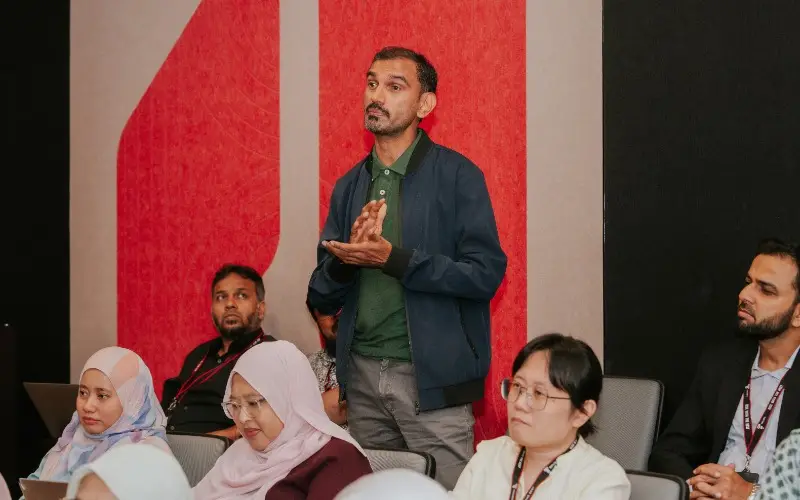
A participant in a navy jacket stands to put a question to the forum panel

A participant puts a question to the panel.

Several participants approached Associate Professor Dr Nor Shaipah afterwards to say how engaging they had found the session, which held their attention from start to finish. ‘I had never attended a session that is very engaging like this. It sounded very natural and at times was funny too,’ said a participant from Sunway University.


Associate Professor Dr Nor Shaipah credited the panellists’ openness. ‘Rather than simply agreeing on key topics, the panellists constructively challenged one another’s perspectives, making the conversation both insightful and engaging,’ she said.

What Remains Unresolved?

The forum did not settle the question that divided the panel most: how willing taxpayers are to pay, and how that willingness is perceived. With different interests around the table, it may never be fully agreed. No commitments or announcements came out of the session.


‘Tax policy and the national budget affect everyone, and meaningful outcomes require input from a broad range of stakeholders. No single group has all the answers,’ said Associate Professor Dr Nor Shaipah. The forum, she added, reinforced the importance of listening to diverse voices, fostering greater transparency and understanding, and working together towards a tax system that is fair, practical and supportive of Malaysia’s long-term economic development.


On 9 October, the budget will reach the same groups that sat in Lecture Theatre 27: the Ministry that drafted it, the professionals who will interpret it, and the businesses and households that will pay under it. The test the forum set is whether each of them finds its own concerns somewhere in the final document.

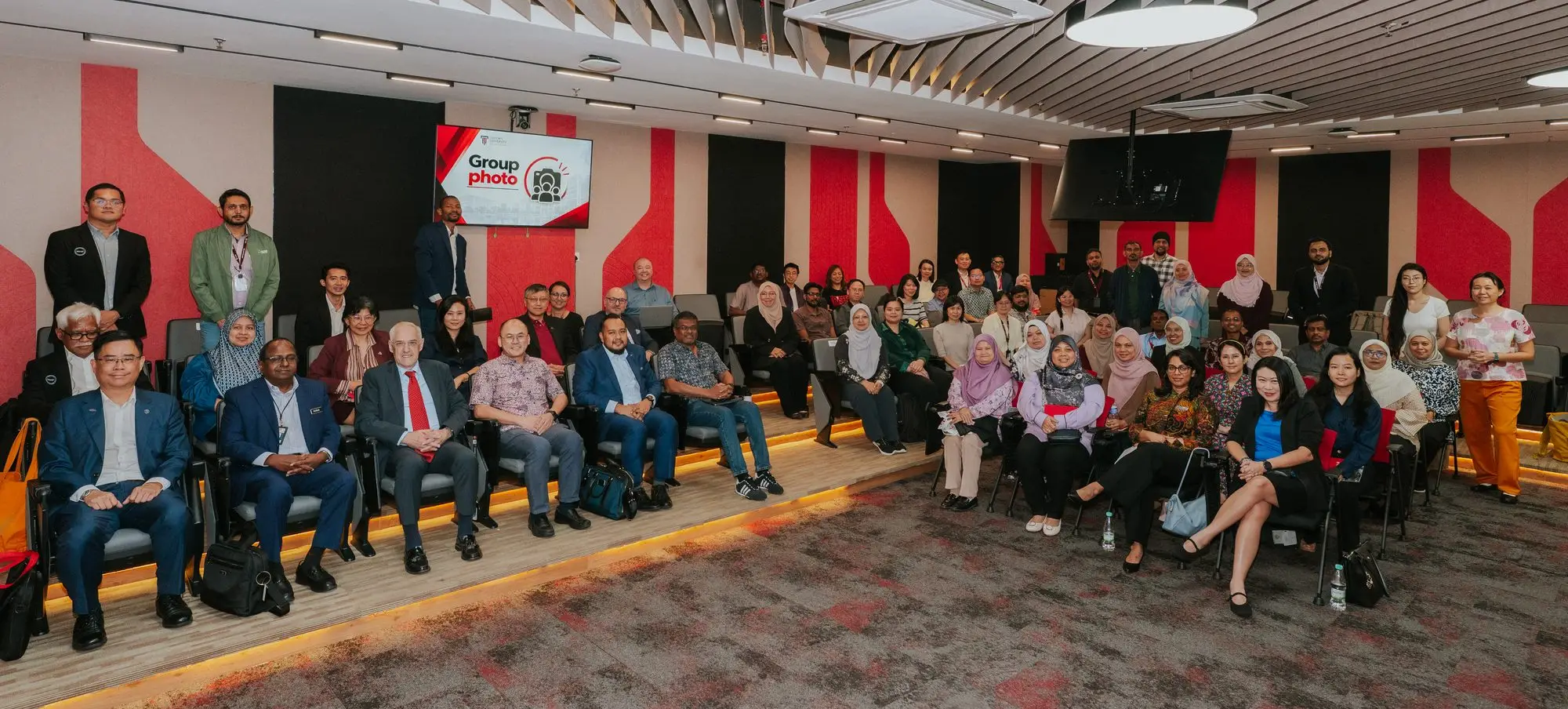
Panellists and participants of the Tax Forum 2026 seated together in Lecture Theatre 27 for a group photo

Panellists and participants at the Tax Forum 2026, Taylor’s University Lakeside Campus.

Want to be part of the conversations that shape a national budget? In the Bachelor of Accounting (Finance) (Honours) or the Bachelor of Accounting with Fintech (Honours) at Taylor’s Business School, taxation is a core part of your studies, and you will learn tax rules alongside the economic, regulatory and societal context in which they operate.

YOU MIGHT BE INTERESTED
{{ item.articleDate ? vm.formatDate(item.articleDate) : '' }}
{{ item.readTime }} Min Read