Turning Food Research into Food People Eat: Professor Dr Chong Li Choo's Inaugural Lecture

{{ vm.tagsGroup }}

29 Oct 2026

12 Min Read

Professor Ts Dr Chong Li Choo (Academic Contributor), The Taylor's Team (Editor)

IN THIS ARTICLE

On the evening of 20 October 2026, a working prototype called FitFuel Station™ stood on display at Taylor's University. Designed to explore how a person's body data could be translated into fresh, solid nutrition prepared on demand, it is one of the newest projects from Professor Ts Dr Chong Li Choo of Taylor's Culinary Institute. Inside a full lecture theatre, she was about to explain why projects like it matter, and why so many promising foods never make it into people's daily lives.


Her lecture, 'Sustainable Food Systems for a Healthier Future: From Research-Led Food Innovation to Food Systems Change', opened Taylor's Inaugural Lecture Series 2026, which recognises the university's newly appointed professors. Its central argument was that scientific potential becomes useful when it can be translated into food that works in practice: food people can access, afford and want to eat again.


Her own story with that idea began with plantain.

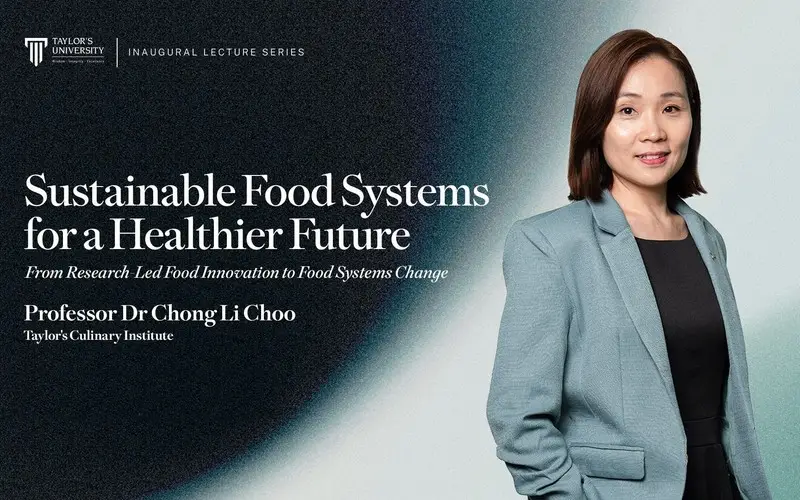
Poster for Professor Dr Chong Li Choo's lecture, Sustainable Food Systems for a Healthier Future

A Curiosity That Started with Plantain

Long before cultivated fish or personalised nutrition, what caught Professor Chong's attention were local agricultural resources with relatively few food uses. Plantain was one of them. She wanted to know how crops like it could become healthier foods, and how their nutritional value could be made easier for people to reach.


'My motivation was practical: to help people obtain good nutrition through everyday foods they could afford and enjoy,' she recalls.


That motivation found a home in Culinology®, the discipline that brings culinary arts and food science together. It gave her a field in which to pursue an approach she already believed in, one where an ingredient's nutritional properties matter, and so do its taste, texture and place in a dish. Her contributions to Culinology® at Taylor's were later recognised with the 2020 Research Chefs Association (RCA) Culinology President's Award.

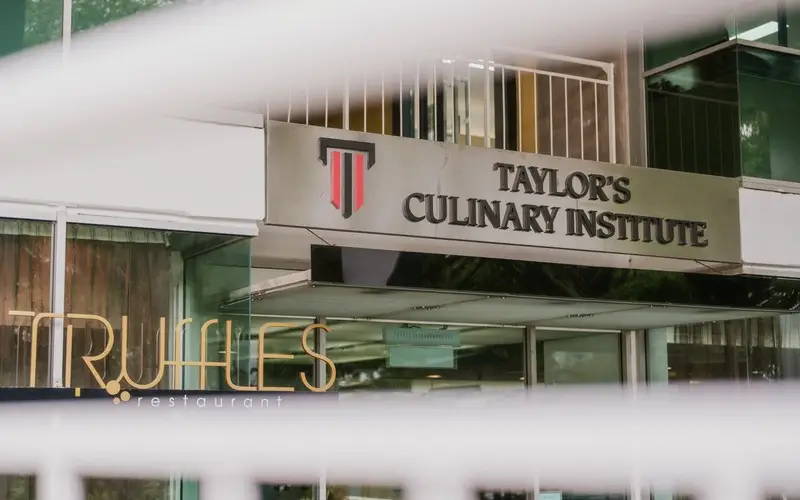
The Taylor's Culinary Institute sign above the entrance to Truffles restaurant

The same practical question runs through her lecture. Food security means being able to obtain enough safe and nutritious food consistently. Nutrition security goes a step further, asking whether the food people eat, along with the conditions that support good health, actually meets their nutritional needs.


'Having enough to eat does not automatically mean having a balanced diet,' she points out.

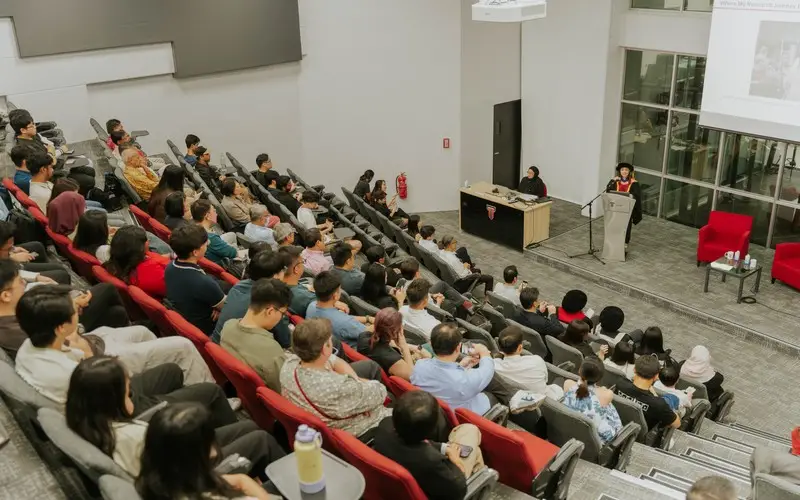
A full lecture theatre listens to Professor Chong's inaugural lecture

For a Malaysian family, the gap shows up in ordinary ways: healthier choices that cost too much, take too long or are hard to find, or regular meals that still fall short on dietary fibre or a suitable balance of nutrients. In her view, a nutritionally promising ingredient has limited value if the resulting product is beyond people's budget or does not fit the way they eat. Over the years, working with students and industry partners has made production, cost and consumer expectations as important to her as the formulation itself.

When the Lab Meets the Kitchen

In Professor Chong's work, food science and culinary design do different jobs. Food science explains an ingredient's behaviour, safety, nutrition and sensory properties. Culinary design carries those findings into the decisions that shape a meal: preparation, flavour, texture and how the food fits on the plate.


'For me, culinary design closes an important gap between developing a food with nutritional potential and creating something people want to eat,' she says.


Banana pseudostem (the trunk-like stem of the banana plant, formed from tightly layered leaf sheaths) shows the two at work. It already has a place in traditional Indian cooking, which gave the team a starting point. The scientists were drawn to its dietary fibre and fibrous structure, and working with Back2Nature Regenerative Farm, they explored how processing and formulation could turn those qualities into a prototype plant-based slice or chunk with a meat-like bite. Culinary design then connected the ingredient with the plate, working out how that bite should feel, how it should be seasoned, how it holds up in cooking and which dishes it could belong to.

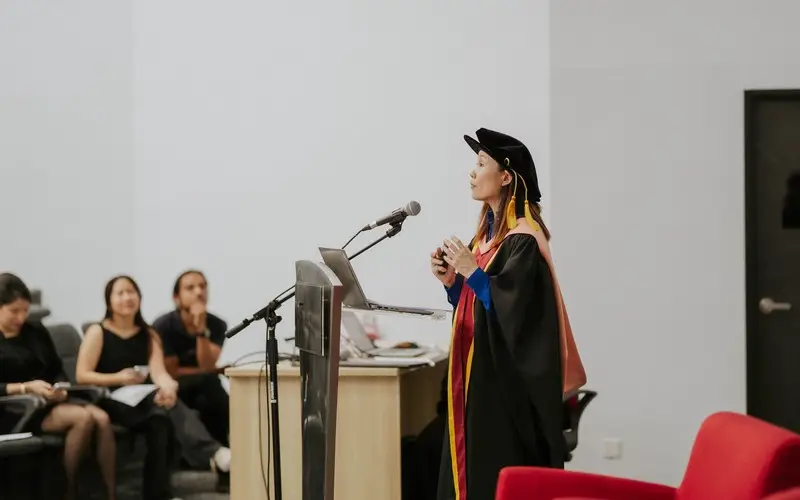
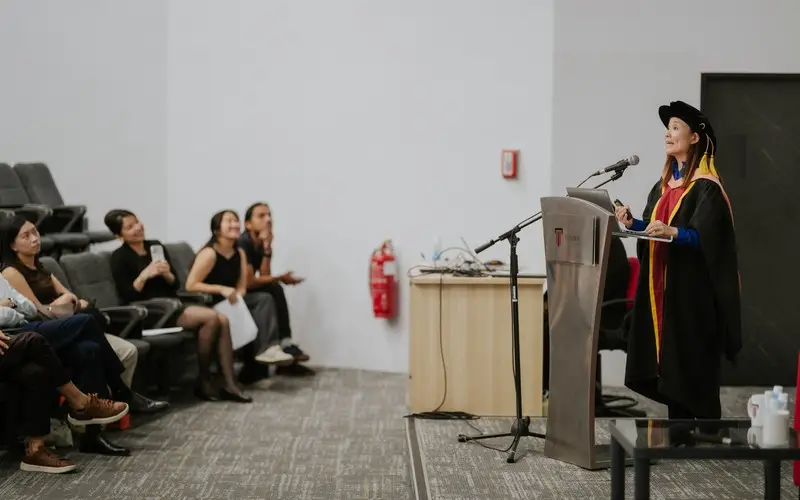
Professor Chong speaks at the lectern during her inaugural lecture

Teh tarik (milk tea) posed a different kind of puzzle. Its sweetness and creaminess are part of what makes it teh tarik, so cutting calories risked taking away the very thing people order it for.


'That familiar taste is part of the drink's identity and shapes what people expect when they order it,' she explains.


The team turned to flavour delivery. Carrageenan, a seaweed-derived food ingredient, was used to carry flavour compounds, and ultrasound treatment modified the structure of the system. In the test samples, the approach helped enhance perceived sweetness and creaminess in a lower-calorie formulation, keeping the character people associate with the drink. For Professor Chong, both projects make the same point: taste and mouthfeel need attention from the very start, and culinary knowledge is what helps new technology fit people's tastes and food culture.

What Cultivated Fish and Insects Taught Her

Some of the most useful lessons in Professor Chong's work have come from foods that succeeded in the laboratory and then met the real world.


With Cell AgriTech, a Malaysian cultivated meat company, her team developed several food applications to explore how cultivated fish muscle could become finished products. Cultivated fish is grown from fish cells rather than caught or farmed, and the material did not behave like conventional fish in a formulation. Getting it to bind and hold an appealing texture became a challenge of its own, and the work raised harder questions about which formats people would enjoy, what ingredients and processing they would need, and what all of it would cost.


'People may be curious enough to try a new food, but choosing it again depends on their confidence in it, its taste and texture, and whether the price represents value to them,' she observes.


A successful prototype, she learned, does not automatically become an affordable product that people buy regularly. Establishing commercial viability needs further work on production economics and consumer response, and the experience taught her to think about the pathway to adoption from the very beginning.

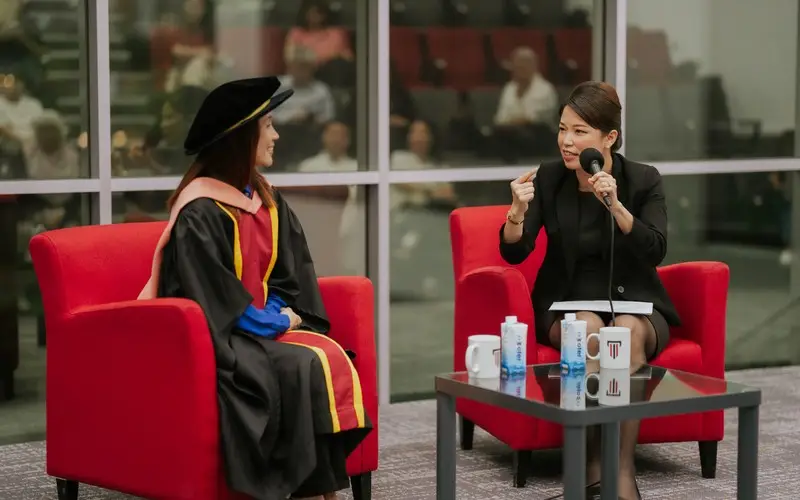
Professor Chong in conversation with the host during the lecture's dialogue session

Insect protein took a more surprising turn. Working with Entomal Biotech Sdn Bhd (an insect biotechnology company), the team first explored insect-derived ingredients for human food, and the research showed real possibilities for product development. Conversations with the industry partner, however, brought the road to market into sharper focus. Consumer acceptance, regulatory requirements and halal considerations, which are important in Malaysia and other Muslim consumer markets, still had to be addressed before those foods could reach the people they were meant for.


The more immediate opportunity, it turned out, lay in pet food and animal feed, where the nutritional and functional properties of insect protein could be put to practical use. The team shifted its priorities accordingly.


'A promising ingredient may have several possible uses, but they do not all have the same route or timeline to market,' she says.


Both experiences shaped how she works today. Industry partners help her see which applications are ready to pursue and which need more time, and bringing them into the conversation early reduces the avoidable gaps between a successful study and its use.

A Second Life for Durian Seeds and Spent Hens

Banana pseudostem is one of several underused resources Professor Chong has worked with. Others include durian seeds, jackfruit seeds, green plantain, young jackfruit and spent hens, each with its own possibilities, and each explored alongside growers and food businesses who understand the practical needs.


With Hernan Corporation, the team turned durian seeds into a plant-based beverage, gelato and a coffee alternative. These are still prototypes, with industry interest in potential commercialisation. With SunFresh Fruit Hub Sdn Bhd, research on jackfruit seeds investigated pretreatment and processing to make them more suitable as a food ingredient.

Professor Chong addresses the audience from the lectern

Some of the work has already reached the market. A banana flour made from green plantain and a plant-based patty made with young jackfruit have both progressed to commercial application, and the flour brings her story back to the crop where her interest in food innovation began.


The most unexpected success involves spent hens, which are hens at the end of their egg-laying cycle. Their meat is tough, so working with a local egg producer, the team used processing and formulation to address that texture and developed two commercialised products.


'This supports a circular economy approach within egg production by retaining the hens' value as a food resource and broadening their use in appealing products for human consumption,' she notes.


These are selected examples from a broader research programme, with outcomes ranging from processing knowledge and prototypes to commercial adoption.

The Question She Is Still Answering

For all the products that have reached the market, Professor Chong is candid about what has not yet been proven.


'Establishing their wider sustainability contribution requires further evidence, and strengthening that assessment is part of my research agenda,' she acknowledges.


Her approach starts with a clear comparison: what does the new food improve on, compared with the product or practice it replaces? Turning a by-product into food can recover value, yet processing may also use energy, water or refrigeration, so life cycle assessment, a method that tracks a product's environmental impact from raw materials to disposal, can help show whether the benefits hold across the supply chain. She would weigh that alongside edible yield, production cost, selling price, nutritional composition and consumer acceptance, each measured against a defined baseline with its assumptions made explicit.


For Malaysia, she adds food supply resilience to the list. Local resources can broaden supply options, but the assessment still has to look at resource reliability, dependence on imported inputs and whether production holds up during disruption.


'Local origin alone is insufficient evidence of resilience or environmental benefit,' she cautions.

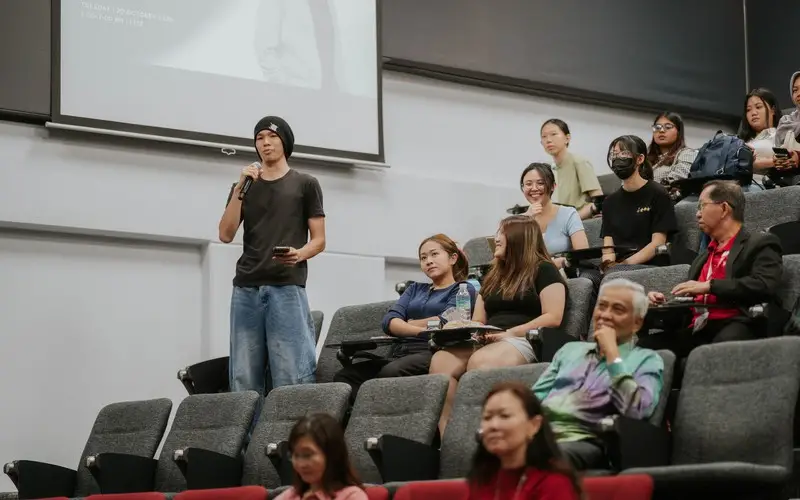
A student asks Professor Chong a question during the audience session

Proving a product's value is only half the challenge. For an innovation to change a food system, its use has to spread into how businesses operate, how institutions provide food and how people choose what to eat. That calls for clear, science-based regulation for safety assessment, permitted uses and labelling, shaped through early dialogue with regulators. It also needs supply chains able to deliver food-grade by-products through segregation at source, traceability, safe handling and consistent quality, building on Malaysia's circular economy policy direction, with processing facilities and practical support for manufacturers and foodservice operators who want to try these ingredients.


Education is where she looks furthest ahead. She points to Japan's food education (Shokuiku, 食育) approach, which connects nutrition education with school meals, food origins and responsible consumption, and sees room in Malaysia for closer alignment between classroom learning, school food and family habits. Children who grow up experiencing nutritious, culturally relevant food, she believes, will shape what the market demands in the years to come.


Change can also start at home. Her suggestion for families is to build variety and appropriate portions into everyday meals, exploring different vegetables, staples and protein foods to suit their tastes, culture and budget, and serving amounts suited to each person's appetite, with the option to add more. Buying and cooking what a household can realistically eat also cuts avoidable waste and makes better use of the money, ingredients and resources behind every meal.

Food Designed Around the Person Eating It

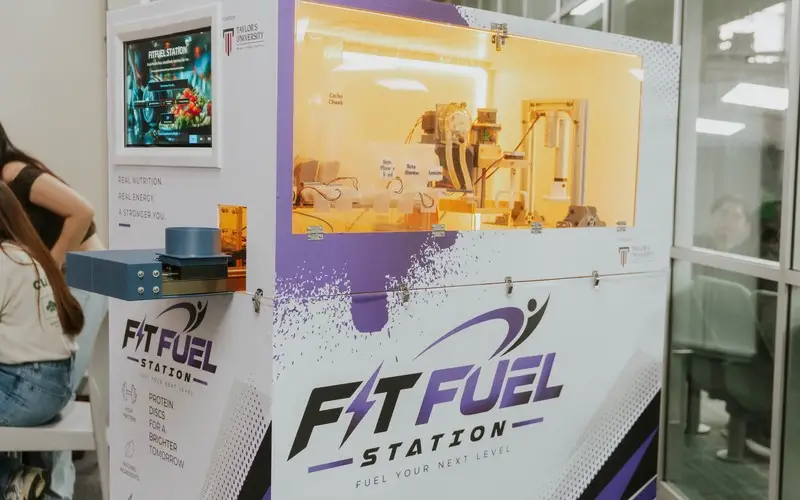
The prototype on display that evening points to where Professor Chong wants to go next: personalised nutrition, with foods developed around people's nutritional needs, daily routines and eating preferences.


FitFuel Station™ grew from a question she wanted to explore: could individual body data be translated into fresh, solid nutrition prepared on demand? Its working prototype brings together nutrition formulation, software and engineering. The next step is turning it into a reliable system for real settings, starting with pre- and post-workout nutrition, which opens the door to collaborations in ingredient production, automation and real-world trials.

The FitFuel Station prototype on display at the lecture

The durian seed products are part of that future too. Building on the prototypes, she wants to establish their nutritional suitability, sensory appeal and shelf life, find viable routes to production and develop them for defined nutritional needs and consumer groups.


'Both directions bring together questions that no single discipline can address alone,' she notes. At Taylor's, she sees a foundation for connecting food development with technology, engineering and consumer research, and she is looking for manufacturers and partners who can help test these ideas in practice.


Further ahead, she regards microbial protein, including yeast protein produced through controlled fermentation, as a promising option for Malaysian and Southeast Asian diets over the next decade, alongside the plant and animal proteins that will remain important. It is an area she is already working on. For any new protein to earn people's trust, she believes they need clear information about what it is, how it is made and how its safety is assessed, while researchers and producers listen to consumers' concerns and cultural expectations, with regulatory approval and halal assurance where relevant.


Students will be part of that journey. They bring curiosity and a willingness to explore, which matters most with unfamiliar food sources. In her black soldier fly larvae project, students were hands-on from farming the larvae to exploring their use in food, and their questions and observations fed into the research. The Cell AgriTech partnership, signed in 2024, was also designed to involve final-year Culinology® students in studying Malaysian consumer acceptance of cultivated meat and the innovation potential of cultivated fish products.


'Students bring questions and perspectives that enrich the work,' she says, 'while my role is to guide their curiosity with scientific understanding and critical judgement.'


As a professor, she sees her responsibility as helping promising research move towards practical use, and helping early-career researchers develop the judgement to connect rigorous work with practical questions: recognising the limits of a finding, identifying the next evidence needed and working across disciplines and with industry. Leading by example, including sharing the difficulties along the way, is part of that.

Believe That Your Contribution Matters

There was one thing Professor Chong had hoped to say during the lecture but did not have time to cover: a personal message for the students and younger researchers in the audience.


Her advice is to give yourself permission to pursue a question you believe matters, even when it is not yet receiving much attention. Some ideas take time to develop, particularly when the subject is unfamiliar, so she encourages young researchers to start exploring a problem worth addressing, learn from the setbacks, listen to others and let the evidence shape their next step.

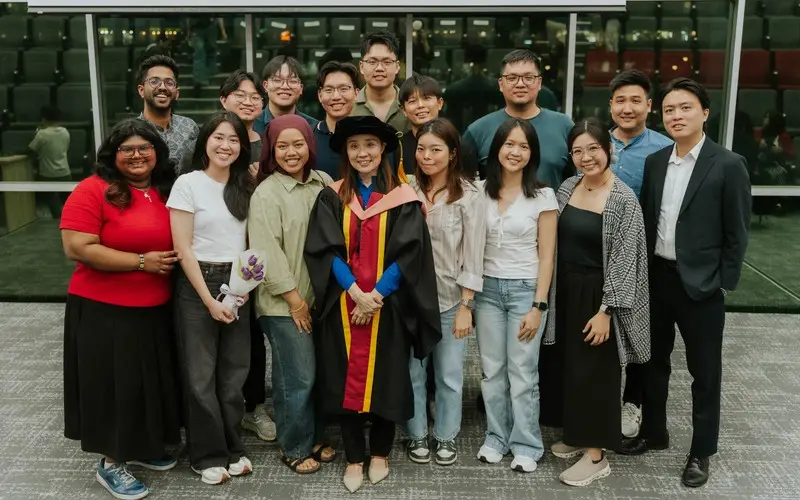
Professor Chong with students after her inaugural lecture

Looking back, she can see how much has grown from small beginnings. 'At the time, we do not always know what a study, a student project or a collaboration might lead to,' she says. 'Believe that your contribution matters, and be prepared to work patiently to make it useful.'


If readers remember only one idea from her lecture, Professor Chong hopes it is this: 'Food innovation matters when it helps people eat better and makes better use of the resources we have.'

If you want to create foods that are both nutritious and enjoyable to eat, the Bachelor of Science (Honours) in Culinology at Taylor's Culinary Institute brings culinary arts and food science together to prepare you for developing the healthier, more sustainable foods of the future.

YOU MIGHT BE INTERESTED
{{ item.articleDate ? vm.formatDate(item.articleDate) : '' }}
{{ item.readTime }} Min Read