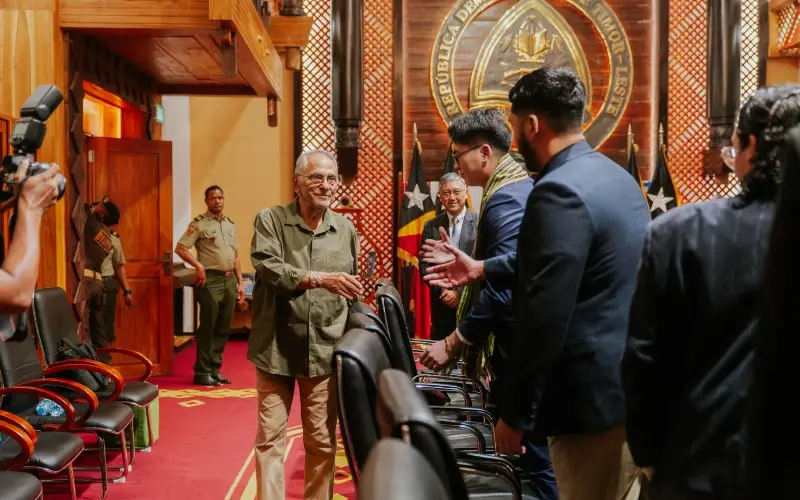
On 26 August, the Taylor's delegation met President José Ramos-Horta at Nicolau Lobato Presidential Palace. According to the Presidency's account, he spoke about science and technology, entrepreneurship, civic responsibility, education and environmental care.
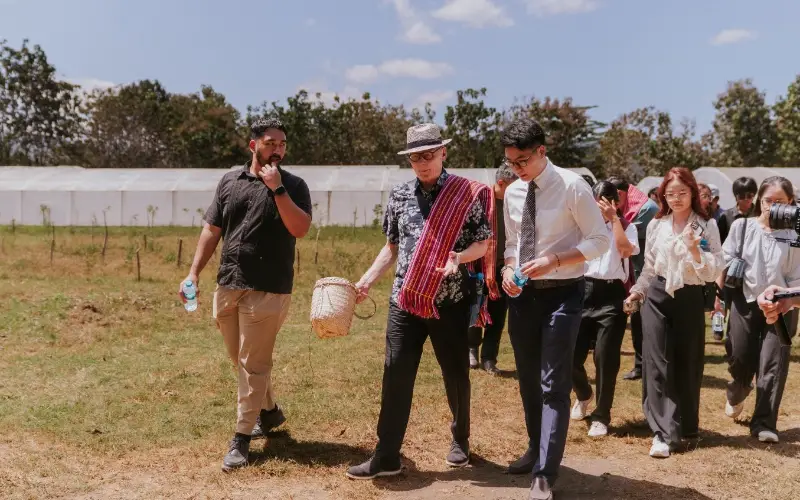
As a social-science student, I initially felt defensive when I heard such a strong emphasis on science and technology. I quickly asked where my own field fitted in. That reaction followed me during the drive down from the coffee plantation, when the open windows gave me room to think.
I also kept thinking about a conversation with Cornelio Cardoso Bere from the President’s administration, one of the people who supported us during the trip. He spoke about how poverty could narrow the choices available to young people, but his words were not only about what was difficult. He also spoke with hope about the next generation.
That conversation did not answer the larger question for me. It did, however, make me reconsider how quickly I had responded. I had reacted from the position I knew best: that of a student who valued the social sciences and did not want them dismissed. I had not spent enough time asking what immediate priorities might look like to someone living and working in a different context.
I found myself returning to the is-ought distinction: the difference between describing the world as it is and deciding how it ought to be. The distinction did not tell me which field should receive greater emphasis, and it did not require me to abandon the value I placed on social science. It reminded me to understand the conditions behind a position before judging it from my own.
That was uncomfortable in a useful way. I began to understand context as more than a paragraph of background at the start of a case study. History matters, but so do the political and cultural conditions in which a decision is being made. In future PPE work, I want to make those layers part of the analysis rather than reach for a familiar comparison too quickly.