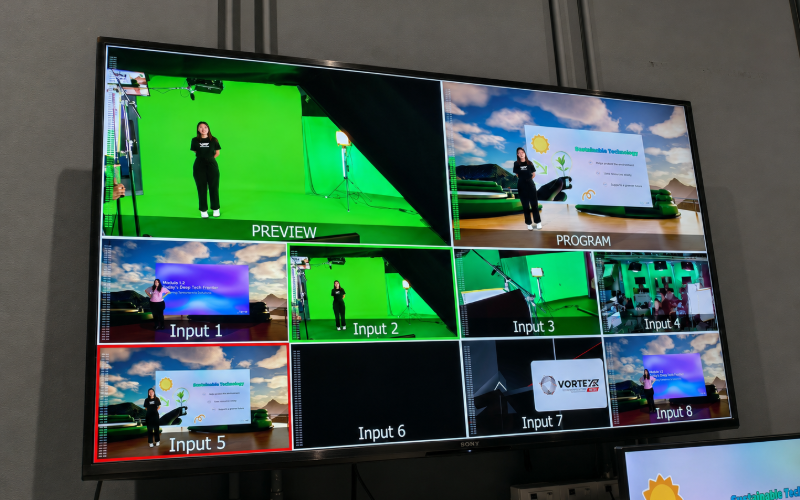
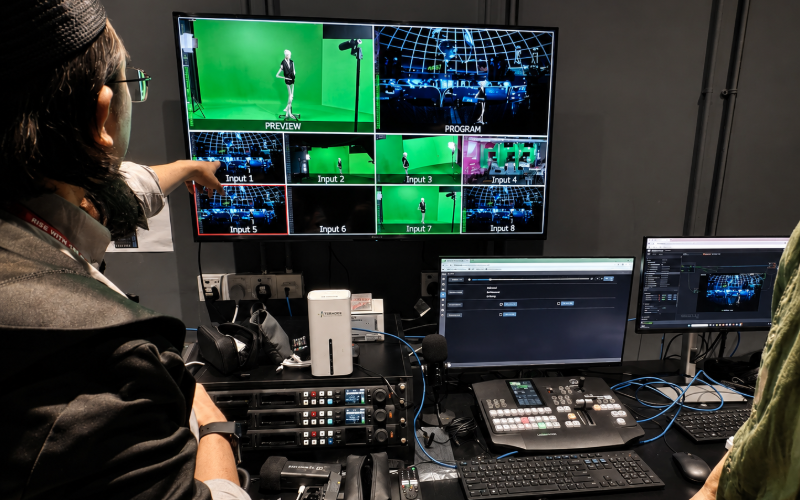
Working alongside people with different specialisms became the most valuable part of the experience. In the studio, the filming process felt familiar to the Digital Media Production students. In the control room, the 3D systems initially felt like a different world. The project became easier to understand as we kept talking, comparing what each group could see and applying our different skills to the same image.
That exchange also affected the storytelling. As I remember it, the script was read and adjusted several times on set after we saw the combined footage and heard how the lines were delivered. I could see that the live image gave the team new information to respond to. Rather than treating the first plan as untouchable, people could discuss whether a change would communicate the intended message more clearly.
The activity also made me think more broadly about AI and automated media tools. Generative AI was not part of the shooting workflow, although ChatGPT was used in a limited way to rephrase parts of the script. My wider reflection is about what can be lost when efficiency becomes the only goal. On this set, people brought different skills, ideas and judgements to the same production. We could disagree, notice an unexpected problem or make a creative adjustment that was not in the first plan. Communication was not an obstacle to the technology; it was how we made use of what the technology showed us.
The experience reminded me that media creators cannot remain inside one narrow role. We should be proud of our own skills without being limited by them. Learning how another field works can widen our view of our own work and help us recognise what we can contribute. We should neither trust every new technology blindly nor reject it because it is unfamiliar.
This project sparked my curiosity enough that I set up a workstation at home to continue researching and experimenting with virtual production. I now see the value of these tools less as a way to remove people from production and more as a way to give people from different fields a shared image around which they can make better decisions. For me, the future of storytelling depends on combining technology with camera craft, communication and the human judgement to know what the story needs.