SOMACfest 2026 Puts the Communicators Who Master AI in the Centre Stage

{{ vm.tagsGroup }}

05 Aug 2026

6 Min Read

Jason Desmond Chin (Contributor), The Taylor's Team (Editor)

IN THIS ARTICLE

AI is already reshaping how people create, consume, and communicate information, and universities that wait for the disruption to settle before responding will graduate students for a world that no longer exists.


That was the premise behind this year's SOMACfest theme, ‘Responsible AI, Responsible Communication,’ chosen by the School of Media and Communication (SOMAC) at Taylor's University to lead a conversation instead of sitting one out. Rather than resisting the shift, the School set out to prepare graduates to use AI ethically, critically, and responsibly, balancing technological innovation with human judgment, creativity, integrity, and accountability. The ambition was not simply to produce AI-literate graduates, but trusted professionals who can harness AI to create meaningful, ethical, and socially responsible communication.
Redefining, Not Replacing

The ceremony's keynote came from Dato' Dr Gerald Hans Isaac, Chairman of FINAS (National Film Development Corporation of Malaysia) and Adjunct Professor at Taylor's, and its central idea was one that stuck: AI is not replacing communicators. It is redefining what makes them valuable.


Dato' Hans acknowledged that AI is transforming how content gets created and produced, but argued it can never replace human creativity, ethical judgement, trust, and meaningful storytelling. He challenged universities to prepare graduates not just for today's jobs, but for roles that do not exist yet, through AI literacy, deeper industry collaboration, and a genuine commitment to responsible AI practice.


His closing line became the line of the day: 'AI will never replace great communicators. But great communicators who master AI will lead the future.'

When Regulators, Academia, and Industry Agree

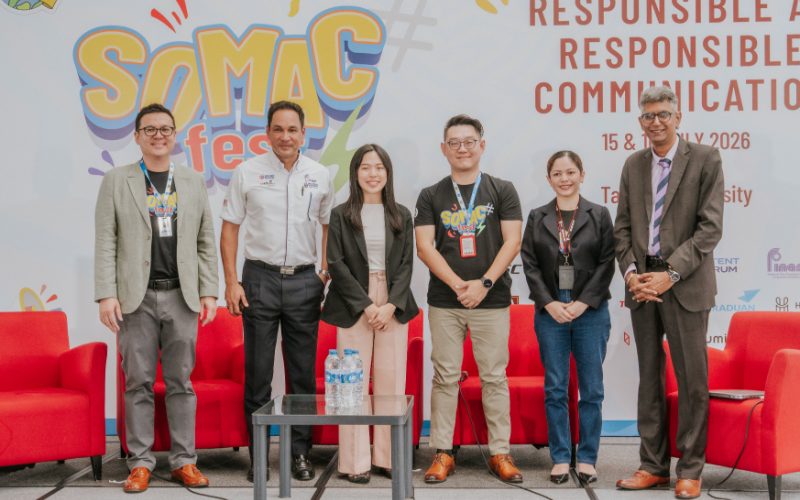
The VIP panel brought together voices that do not always sit at the same table: Professor Dr Adrian Lee Yuen Beng, Head of the School of Media and Communication, representing academia; Dato' Dr Gerald Hans Isaac, Chairman of FINAS and Adjunct Professor at Taylor's, representing the creative and regulatory side; Esther Low, Marketing Lead of KABEL, representing industry; and Kok Jia Wern, Programme Director of the Bachelor of Mass Communication (Hons) in Digital Media Production and a Taylor's graduate himself, representing alumni. The session was moderated by Dr Diyana Kasimon, Senior Lecturer at SOMAC. What made it notable was not disagreement, but how much consensus there was despite the different vantage points.


Every panellist arrived at the same conclusion: AI proficiency is rapidly becoming an expectation, not a competitive advantage. The real differentiator will be the human qualities AI cannot replicate: critical thinking, ethical judgement, creativity, cultural sensitivity, strategic communication, and the ability to build trust.

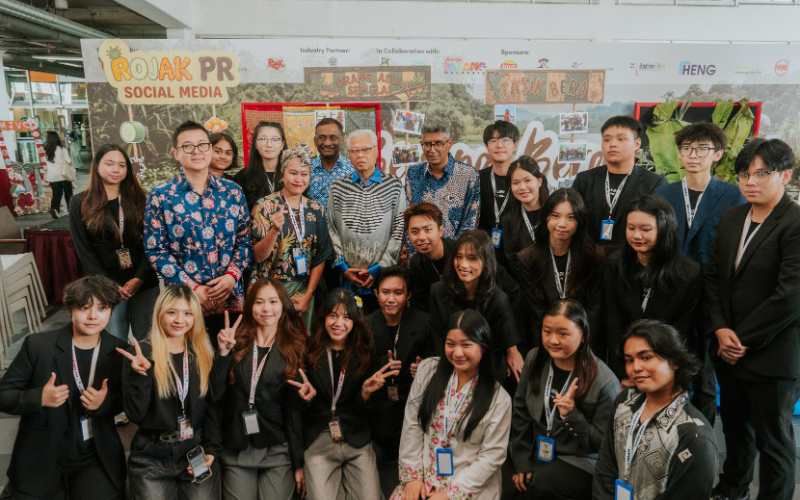
Group photo

The panel also surfaced a real tension. AI enables faster content creation and greater efficiency, but speed should never come at the expense of authenticity, accuracy, or responsible decision-making. Whether the perspective came from a regulator, an educator, or an employer, the message was consistent: organisations are no longer just looking for graduates who know how to use AI. They want professionals who know when to use it, how to use it responsibly, and when human insight should take precedence.


For SOMAC, that reinforced the entire purpose of the festival and this year's theme. The role of educators, as the School frames it, is not just to teach students how to adopt emerging technologies, but to develop communicators who combine technological capability with integrity, creativity, and sound judgement.

One Theme, Different Answers

SOMACfest's showcase spanned client-based advertising and PR campaigns, short films, and journalism, four disciplines that produce very different outputs but share a common thread: using communication responsibly to create meaningful impact.


Where AI entered the picture, it acted as an amplifier rather than an author. Students used it to speed up research, drafting, and iteration, but the judgement calls, what to say, who to say it for, and where to draw the line, stayed firmly human. That distinction showed up most clearly in three projects that pushed past the classroom brief and into real audiences, real clients, and in one case, a real ambassador.

Five student from advertising and brand management participating in the Spiderman poster competition

Advertising and Brand Management Took the Global Stage. The Bachelor of Mass Communication (Hons) in Advertising and Brand Management, led by Programme Director Cindy Poh, partnered with Sony Pictures to produce multi-platform promotional artwork for the latest Spider-Man film. Selected works were exhibited throughout SOMACfest before going on to be displayed at Golden Screen Cinemas, Mid Valley Megamall, giving students the rare experience of seeing their work reach a genuine commercial audience.

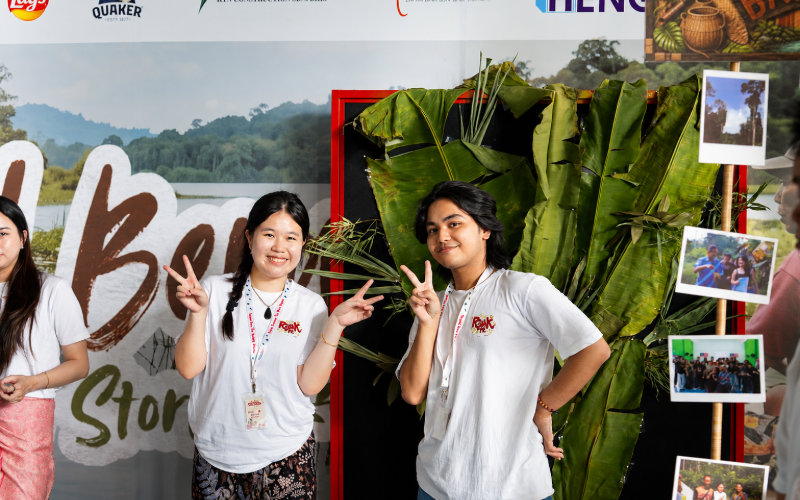
The Unheard Voices: Orang Semelai

Public Relations Served a Community's Story. Under Programme Director Nurun Najah Tarmidzi, the Bachelor of Mass Communication (Hons) in Public Relations and Marketing presented The Unheard Voices: Orang Semelai, a social impact project celebrating the heritage and lived experiences of the Semelai community in Bera. It was PR used the way the theme intended: not just persuasive, but responsible, and in service of a community rather than only a client.

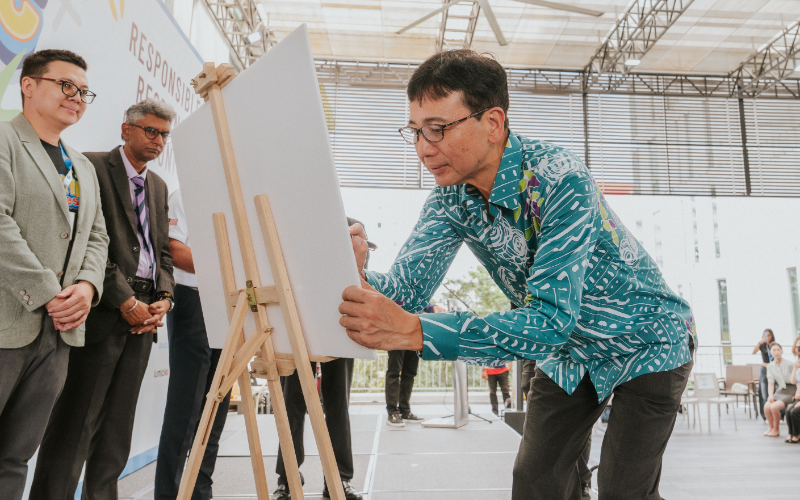
Japanese Ambassador to Malaysia, Noriyuki Shikata

Event Management Drew a Real Ambassador Into the Room. The Bachelor of Mass Communication (Hons) in Public Relations and Event Management, led by Dr Manickam, delivered the Malaysia Japan Visionaries Conference 2026 to promote Hiroshima. Its exhibition booth received a visit from the Japanese Ambassador to Malaysia, Noriyuki Shikata, a validation of the kind students rarely get before they graduate: a foreign dignitary engaging directly with work they built.

Trained to Interrogate, Not Just Prompt

The showcase reflected a deliberate pedagogical stance SOMAC has built into how students engage with AI in their coursework, not just how they talk about it.


At SOMAC, students are pushed to treat AI as a creative collaborator, not a creative replacement. They are trained to interrogate every AI-generated output with the same set of questions: Is it accurate? Is it ethical? Does it align with the client's objectives? Does it genuinely connect with the intended audience? AI can generate ideas and accelerate workflows, but it cannot replace critical thinking, cultural understanding, strategic insight, or human judgement. By requiring students to justify their creative decisions and reflect on how AI was used throughout their projects, the School pushes them toward becoming professionals who use AI thoughtfully and purposefully, not as a shortcut.


The results this year gave that approach some real evidence behind it. Students made informed calls about when AI added value, when human creativity had to take over, and who stayed accountable for the final outcome, the kind of judgement that is usually harder to teach than the tools themselves. For SOMAC, it confirmed something more than technical competence: graduates leaving with the ethical instincts the industry is now actively hiring for.

SOMAC student

The One Skill That Will Outlast the Tools

For prospective students, parents, and industry partners walking the floor, the takeaway was meant to be simple: a SOMAC education is practical, industry-connected, and built on real work done for real clients, not simulated briefs.


Asked what will separate the communication graduates who thrive over the next five years from those who do not, the answer SOMAC keeps coming back to is adaptability grounded in ethical judgement. Technologies, platforms, and AI tools will keep evolving, but the ability to think critically, learn continuously, and make responsible decisions will remain indispensable.


The graduates who thrive will not simply master the latest technologies. They will understand when, why, and how to use them responsibly, combining technological fluency with creativity, strategic thinking, empathy, and integrity, recognising that while AI can enhance communication, trust, credibility, and meaningful human connection are qualities only people can build.

Wondering why study media and communication at Taylor's University? It is where classroom learning meets industry practice. From your first year to your final project, you will work on real-world challenges with industry partners, build a professional portfolio, and learn from academics and practitioners who understand how fast the communications landscape is moving. SOMACfest is a reflection of that experience: it showcases not only what our students create, but the confidence, professionalism, and industry readiness they develop along the way.


If you want an education that prepares you to lead in an AI-driven world while staying creative, ethical, and future-ready, explore SOMAC's programmes at Taylor's University and see where you fit in.

YOU MIGHT BE INTERESTED
{{ item.articleDate ? vm.formatDate(item.articleDate) : '' }}
{{ item.readTime }} Min Read